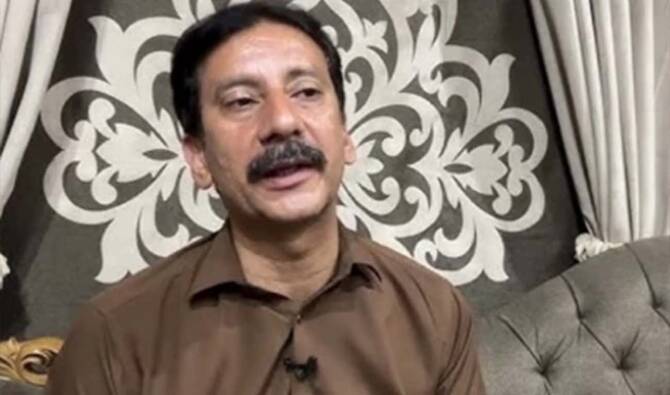

MUZAFFARABAD, Pakistan: Police in Azad Kashmir on Tuesday arrested a senior leader of an outlawed political group that has led weeks of protests over legislative seats reserved for refugees, officials said.
Shaukat Nawaz Mir, a key member of the banned Joint Awami Action Committee, or JAAC, was arrested during a raid on a house, government administrator Munir Qureshi said.
He said Mir faces sedition charges for allegedly inciting violence during protests earlier this month that left at least four security officers and three civilians dead.
Mir’s arrest came weeks after authorities announced a reward of 10 million rupees (about $35,000) for information leading to his arrest and that of three other wanted members of the group, promising to keep the identities of informants confidential.
The regional government banned the JAAC earlier this month, citing threats to public order, and detained dozens of its supporters.
The JAAC is demanding the abolition of 12 seats in the regional Legislative Assembly reserved for refugees who migrated to Pakistan from Indian-controlled Kashmir decades ago.
The group argues the seats give disproportionate political influence to people living outside the territory.
The dispute escalated after the Supreme Court of Azad Kashmir ruled that the refugee seats are constitutionally protected and cannot be abolished without a constitutional amendment.
The regional Legislative Assembly has completed its five-year term, and the issue has become a key political flashpoint ahead of elections scheduled for next month.
The refugee seats were created to represent people displaced from Indian-controlled Kashmir by the decades-old conflict over the Himalayan region. India and Pakistan each administer part of Kashmir but claim the territory in its entirety.
They have fought two of their three wars over Kashmir since gaining independence from British rule in 1947.