

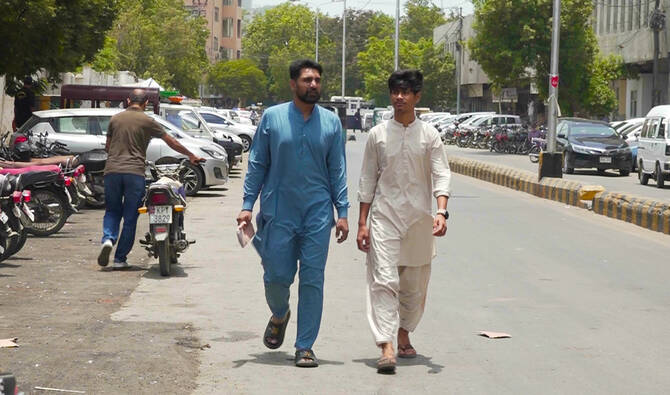

KARACHI: For the past five to six months, Maria Ismail, a woman journalist, has been searching for a job after losing the one she had for years. She says she has been surviving on her savings like millions of other Pakistanis, uncertain how much longer they will last.
Her experience reflects a worsening employment crisis highlighted in Pakistan’s Economic Survey 2025-26, which showed unemployment rising to 7.1 percent, its highest level in 21 years despite 3.7 percent economic growth claimed by the government in the outgoing fiscal year that ended in June.
The number of unemployed people rose from 4.5 million to 5.9 million in FY26, indicating that the current growth rate was not enough to generate sufficient employment in the South Asian country of more than 240 million people, leaving people like Ismail struggling to find a job.
“The difficulty due to not having a job is that I support my family,” she told Arab News on Friday. “The government is saying that ‘we have created a lot of jobs. Young people are getting a lot,’ but there is nothing like that.”
While Finance Adviser Khurram Schehzad did not respond to requests for comment on rising unemployment, Finance Minister Muhammad Aurangzeb last month said the government had achieved a “broad-based” economic recovery in FY26 despite the Middle East conflict.
The latest Economic Survey, an annual government document that highlights the performance of key sectors in the outgoing fiscal year, showed poverty rising from 22 percent in FY19 to an 11-year high of 29 percent and income inequality reaching a 27-year high as real incomes and household consumption declined over the past seven years.
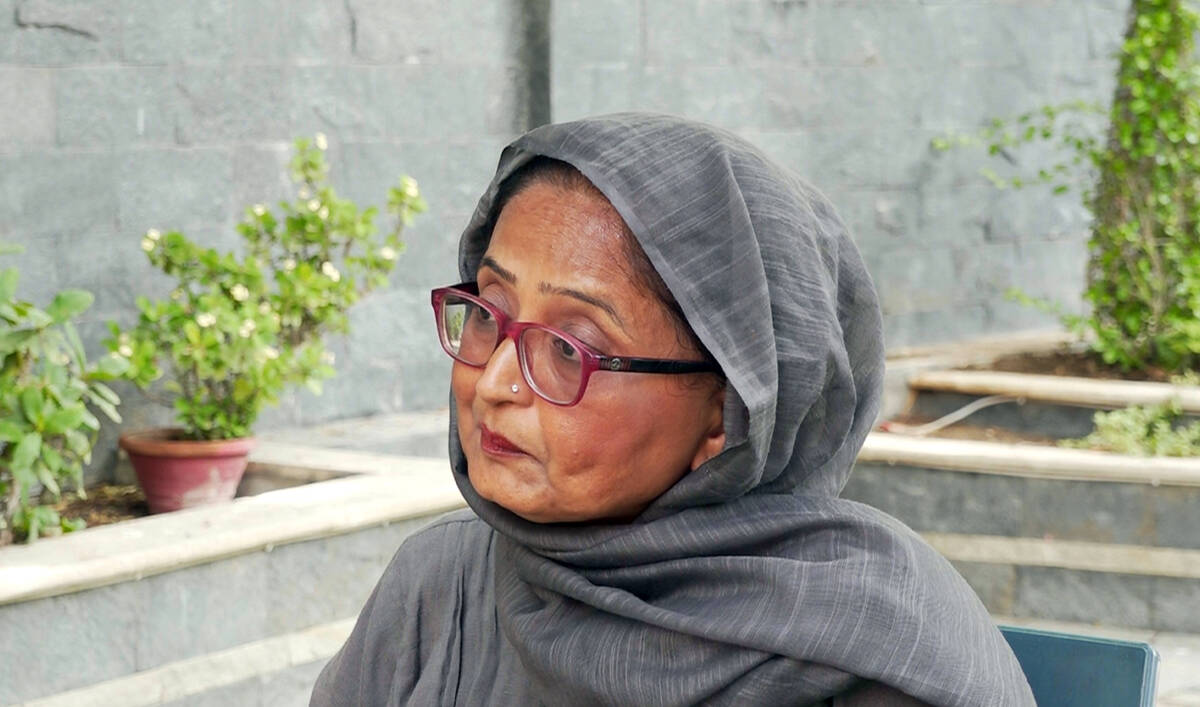
Maria Ismail, a female journalist, speaks during an interview with Arab News at the Karachi Press Club in Karachi, Pakistan, on July 3, 2026. (AN)
“Thanks to God, I had saved some money. So, I was spending it. But obviously, how long will it last?” Ismail said.
“If I don’t get a job, I will have to take a loan.”
Ismail’s struggle is echoed by Muhammad Yasir, who lost his job at a garment factory after he fell ill nearly a year ago.
“I have been jobless for almost a year. I go to find work from dawn to dusk,” he said.
“I have been to a lot of companies. Everywhere. They say that jobs are closed. Whichever company I go to, they say that they are already firing their employees.”
Yasir said unemployment has made it difficult for him to support his wife and four children.
“I have taken Rs50,000 ($180) loans from my relatives,” he shared. “I am appealing to them to get loan again. But everyone is refusing me.”

Muhammad Anas Habib, a research analyst at brokerage firm Arif Habib Limited, works on a laptop in his office in Karachi, Pakistan, on July 3, 2026. (AN)
Ubaidullah Shareef, a member of the Salaried Class Alliance of Pakistan (SCAP) advocacy group, says limited industrial expansion and the departure of multinational companies had constrained employment opportunities in the country.
“If you look at the economy and job scenarios, it is a very disappointing factor,” said Shareef, whose group operates countrywide to represent the interests of wage earners, private and government employees, and corporate professionals.
“The unemployment factor of the job is not matching the economic figures,” he said, adding that foreign investors were leaving Pakistan. “Many multinationals have wound up and left in the last 6-7 years. So, that factor is a burden on the economy.”
The SCAP official said attracting investment is essential to creating employment.
“As long as the youth has talent, skill and education, what they need is support from the government to diversify the policies so that either [foreign] investment comes in, or your local investor invests in your industry and generates it,” he said.
Muhammad Anas Habib, a research analyst at Karachi-based Arif Habib Limited, said Pakistan’s economy was in a recovery phase and would gradually improve employment.
“The economy is in a recovery phase. So that’s why I believe going forward we can also see much more jobs will be created in near future,” he said, adding that Pakistan would need an annual growth of up to 5 percent to adequately absorb new entrants into the labor force.
“Being a developing economy, I must say around 4 to 4.5 percent or might be aggressively 5 percent. That would be enough to create additional jobs.”


