

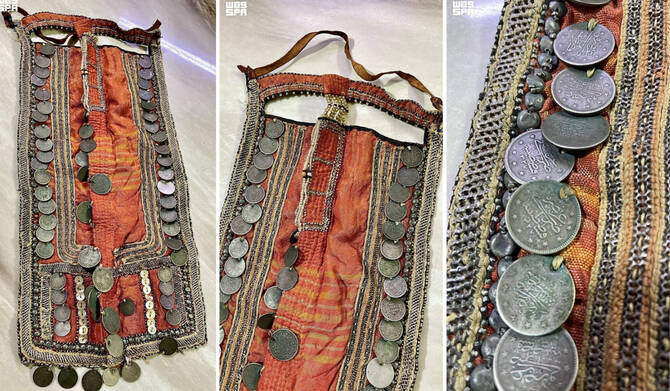

MAKKAH: The burqa of coins, a woman’s face veil, is a prominent symbol of traditional attire in Makkah. It is one of the city’s most distinctive historic artifacts and reflects its cultural identity.
The burqa was made from luxurious black or red fabric, with eye openings. Its front was adorned with rows of carefully attached gold or silver coins, from which it derived its name and distinctive appearance.
The coins were more than decorative ornaments: they represented a woman’s savings and jewelry. They were added to over time following joyful occasions such as weddings, childbirth, and Eid celebrations, making the burqa a symbol of social status, financial prosperity, and beauty.
Artisans in Makkah handcrafted the burqa with precise stitching and carefully arranged coins. Some families preserved it and passed it down through generations as a treasured heirloom.
Although they are no longer commonly worn, the burqa of coins continues to appear at heritage festivals and cultural events as a symbol of Makkah’s authentic traditional attire.
Specialists say documenting and preserving such pieces helps safeguard national identity while passing on cultural heritage to future generations.


