- Pakistan this month unveiled $67.5 billion federal budget targeting 4 percent economic growth
- The bill gives effect to the financial proposals of the government for the next fiscal year
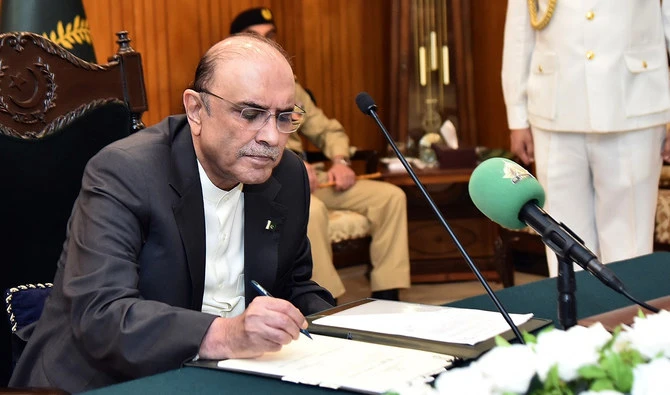
ISLAMABAD: Pakistan President Asif Ali Zardari on Friday gave his assent to the Finance Bill for the next fiscal year that starts July 1, formally enacting the country’s federal budget after its approval by parliament.
The Finance Bill is an annual piece of proposed legislation introduced by a government to outline how it will generate revenue to fund its national budget. It details the government’s fiscal policies, including proposals for new taxes, amendments to existing laws and incentives.
Pakistan this month unveiled a Rs18.8 trillion ($67.5 billion) budget targeting 4 percent economic growth and 8.2 percent inflation in the fiscal year, while raising defense spending by 18 percent to Rs3 trillion ($10.8 billion) and allocating Rs1 trillion for development projects.
“President Asif Ali Zardari has assented to the Finance Bill, 2026, relating to the Federal Budget for fiscal year 2026-27,” read a post on the president’s official X account.
On June 23, Pakistan’s parliament approved the federal budget for fiscal year 2026-27 by passing the finance bill through a voice vote after days of parliamentary debate on the country’s economic priorities and fiscal plans.
Treasury and opposition lawmakers discussed taxation measures, federal spending priorities, economic growth prospects and the distribution of resources between the federal government and provinces.
The debate also focused on the government’s decision to rely on provincial funds to help meet fiscal and defense-related requirements while remaining on track under a $7 billion International Monetary Fund (IMF) program.
Pakistan’s increase in defense spending came after last year’s military confrontation with India and ongoing security concerns along its western border with Afghanistan.
Some lawmakers, however, argued that repeated reliance on provincial funds could constrain development spending and public services at the local level.
The government has projected a fiscal deficit of 3.6 percent of gross domestic product in the coming fiscal year and set an ambitious revenue collection target of Rs15.264 trillion ($54.8 billion) as it attempts to strengthen public finances and sustain macroeconomic stability.