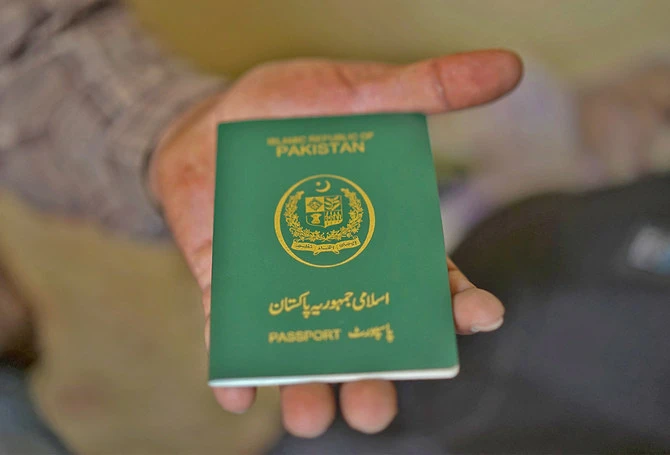
- Pakistan’s religion ministry says Iran has raised “serious concerns” over violation of visa conditions
- Thousands of Pakistani Shia Muslims travel to Iraq, Iran and Syria each year to visit holy sites there
ISLAMABAD: Pakistan’s religious affairs ministry this week directed pilgrimage tour operators to strictly enforce visa conditions for travelers seeking to visit religious sites in Iraq, saying that Baghdad had expressed “serious” concerns over recent violations.
In a circular released on Monday, the Ministry of Religious Affairs (MoRA) said the Iraqi government has raised serious concerns over Pakistani individuals obtaining visas as part of family groups but attempting to enter Iraq without them. The circular said Iraqi authorities suspect such travelers may be attempting to enter the country for purposes other than those stated in their visa applications.
Thousands of Shia Muslims in Pakistan travel to Iraq, Iran and Syria each year for religious tourism, including pilgrimages to holy sites for Muharram and Arbaeen events.
“Any violation of visa regulations may result in denial of entry, deportation, loss of visa fees, and other consequences under applicable laws and regulations,” the religious ministry said on Monday.
The ministry said Ziyarat Group Organizers or licensed tour operators have been directed to ensure visa applications by Pakistani nationals are accurate and verifiable. It said such operators must also ensure that travelers have complied with the purpose stated in their visas.
It added that men below 50 years of age traveling alone would not be allowed to enter Iraq, warning pilgrims against using pilgrimage visas to seek jobs.
The ministry said all religious travelers must have passports valid for at least six months from the date of their travel. Pilgrims’ passports will be retained by Iraqi authorities upon entry, while holders of official and diplomatic passports will be exempt from this.
The ministry said pilgrimage visas would be valid for 30 days and cannot be used to enter Iraq for multiple religious occasions, such as Ashura and Arbaeen.
The circular warned that Iraqi authorities have listed penalties of up to Rs107,037 ($385) for overstaying in the country for up to 60 days, and detention and deportation for those overstaying beyond this limit.
“In the event of non-payment of the prescribed fine, detention shall continue until full payment is made,” it added.
In July 2025, Pakistan abolished the decades-old Salar system, in which private caravan leaders managed pilgrims’ travel to holy sites in Iraq, Iran and Syria.
Under the new Ziyarat Management Policy, all religious pilgrimages to these countries must be arranged through licensed groups, with operators responsible for ensuring pilgrims’ timely return.
Pakistan has warned that non-compliant firms may face license cancelation.
The move came after officials confirmed last year that around 40,000 Pakistani citizens had overstayed or gone missing in Iran, Iraq, and Syria over the past decade.