

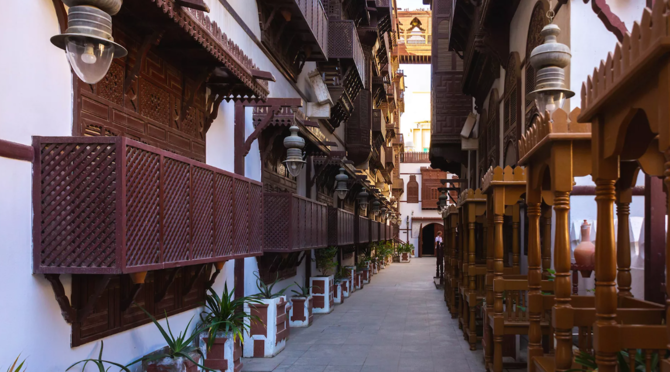

RIYADH: At Al-Tayebat International City of Science and Knowledge Museum in Jeddah, the Saudi Culture Pavilion opens a living window onto the nation’s heritage that captures the authenticity of the Kingdom’s identity and the richness of its many cultures.
The pavilion has emerged as one of the Kingdom’s most compelling educational and tourist draws, walking visitors through the story of the traditional dress and regional costumes that have set apart the different corners of Saudi Arabia across its long history.
The museum itself is a landmark: 12 heritage buildings raised in the old Hijazi architectural style, holding more than 365 exhibition halls.
A large share of that space is given over to the costumes, textiles, and handicrafts of each region, displayed in a way that pairs the scent of the past with the rigor of modern documentation.
The museum’s corridors present a striking visual range that runs the length and breadth of the country — north to south, east to west.
The western and Hijazi region leads the display with the women’s zaboun, the maharem headscarves, and the mudawwara, and the men’s daqla, sidiriyah waistcoat, and Hijazi turban — all set against the carved wooden rawasheen screens that are the signature of Jeddah’s historic houses.
Elsewhere in the pavilion, the central and eastern regions assert their legacy through the splendor of the Al-Ahsa bisht, hand-spun with gilded zari thread, and finely embroidered jalabiyas.
The southern region follows, seizing the eye with colors borrowed straight from nature — the mijnab and shirts stitched with bright cane thread, displayed beside fragrant garlands and traditional silver jewelry.
The north tells its story through the mhawthal and the heavy abayas built for the rigors of desert life.
Youssef Mohammed Kiki, general supervisor of the museum, said the garments are historical and social documents — records of how people lived, the trades they practiced, and the climate they endured in each region.
Through these rare pieces, safeguarded over decades, he added, the museum hopes to deepen the connection to the Kingdom’s national heritage with young people and visitors.


