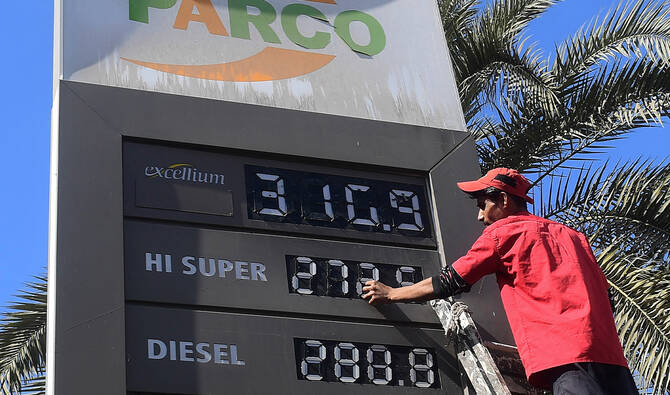

ISLAMABAD: Pakistan on Friday slashed fuel prices by up to Rs74 per liter after a peace agreement between the United States and Iran helped ease pressure on global oil markets, with Prime Minister Shehbaz Sharif saying the government was passing on the full benefit of lower international prices to consumers.
The announcement came hours after Sharif told parliament that a “significant” reduction in fuel prices would be announced later in the day as oil prices continued to fall following the US-Iran agreement that ended months of conflict between the two countries.
The conflict, which began in late February, disrupted energy supplies and shipping through the Strait of Hormuz, a critical artery for global oil trade, driving up oil prices and forcing import-dependent countries such as Pakistan to contend with sharply higher fuel costs.
“The price of petrol is being reduced by Rs74 per liter and the price of diesel by Rs67 per liter,” Sharif said in a statement circulated by his office.
“As a result, the price of petrol will come down from Rs373 per liter to Rs299, while the price of diesel will fall from Rs378 per liter to Rs311.”
The prime minister said improvements in the regional economic situation and the decline in global oil prices were being passed on immediately to the public, adding that the move fulfilled a commitment his government had made to the nation during the crisis.
Sharif said the government had sought to shield consumers from soaring energy costs throughout the conflict and had absorbed part of the price shock through budgetary savings and spending cuts.
“The federal government utilized Rs129 billion [$464 million] through savings from the development budget and austerity measures to provide the maximum possible relief to people from the extraordinary increase in oil prices,” he said.
Sharif noted Pakistan had managed to avoid the fuel shortages and rationing measures seen in some countries during the crisis despite concerns over disruptions to regional energy supplies.
“Thanks to the government’s planning, no energy crisis emerged,” he said. “There were no queues, no long lines and no shortage of petroleum products for the public.”
The prime minister also linked the fuel price cuts to Pakistan’s mediation efforts during the US-Iran crisis that culminated in the signing of the Islamabad Memorandum of Understanding between Washington and Tehran this week.
He also lauded the country’s economic managers, including Finance Minister Muhammad Aurangzeb, Planning Minister Ahsan Iqbal, Petroleum Minister Ali Pervaiz Malik and other officials, for helping steer the economy through the crisis.