

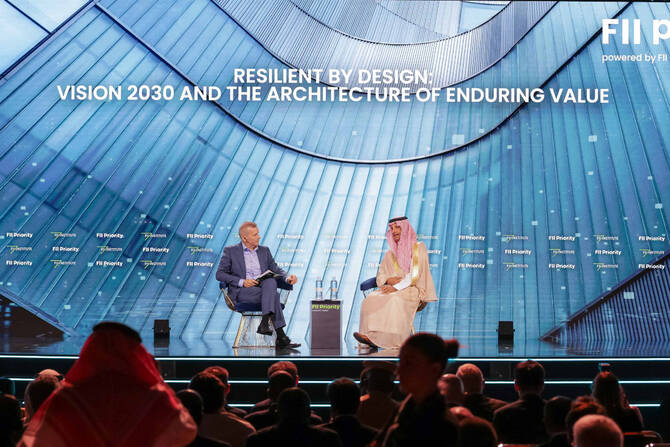
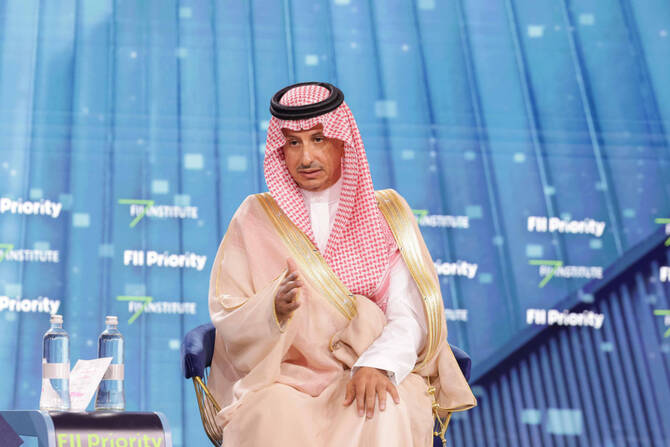

ROME: Stronger-than-expected results from Ramadan and Hajj visitors helped ease the impact of the disruption caused by the war in Iran, Saudi Tourism Minister Ahmed Al-Khateeb said on Thursday at the FII Priority Europe summit in Rome.
Discussing the status of the country’s tourism sector, Al-Khateeb said domestic and religious tourism provided a cushion despite a “quite tough four months.”
“We are blessed because Saudi Arabia is a very large country, and people travel to (the country) for many, many different reasons. One of those reasons is religious,” he said.
“Therefore we have experienced strong Ramadan and strong Hajj pilgrimage, finish(ing) the five months with a good performance, slightly less than (the) same period last year, down by about 5 percent to 6 percent — which is a great success.”
Al-Khateeb said he expects a fast recovery driven by strong domestic performance.
“We are bouncing back very fast,” he said, noting that despite signs of operations returning to normal, it is low season in the region.
“We have seen airlines moving and recovering very, very fast, and we’re happy with the numbers — at least we experienced controllable slowdown.

Saudi Tourism Minister Ahmed Al-Khateeb discussing the status of the Kingdom’s tourism sector at the FII Priority Europe summit in Rome on June 18, 2026. (Supplied)
Flight disruptions led many Saudis to spend Ramadan and Eid breaks in the Kingdom.
“We offer many destinations, and therefore domestic tourism is very, very strong here in Saudi Arabia, and it represents about 60 percent to 65 percent of our business.”
The war in Iran hit the region at a time when the global tourism industry had fully recovered from Covid.
The Kingdom recorded 10 percent growth in the first quarter of the year before slowing down due to regional tensions.
Al-Khateeb said that despite recent challenges, the Kingdom is committed to investing in building the sector’s infrastructure and growing a strategic sector that created 250,000 jobs in the past five years alone.
He said that as the Kingdom enters the second phase of Vision 2030, the focus will be on “open(ing) the doors and receiving guests.”
“We are entering the phase where we are operating a lot of new destinations, a lot of new assets, whether under Red Sea or Diriyah,” he said. “Therefore you will see an accelerated growth in the next three to five years.”
He noted that the launch of Riyadh Air this month is part of the broader scheme of making Saudi Arabia more accessible.
He also said that as the world rushes toward digitalization, tourism will be spared, at least in some parts.
“I expect the digitalization of other industries, maybe oil and gas manufacturing, but when it comes to tourism, tourism is all about people to give an interaction,” he said.
Discussing a recent UN meeting the minister attended in Madrid, he said: “We are trying our best in our sector to protect the humanity, the human people, and we always say we should digitalize the unnecessary and humanize the necessary.
“At the end of the day, you will remember the story told to you by the human.”


