
ISLAMABAD: Pakistan is preparing for the electronic signing of the US-Iran peace deal, which it expects will be signed today, Sunday, Prime Minister Shehbaz Sharif said as hopes grow for lasting peace in the region after months of conflict.
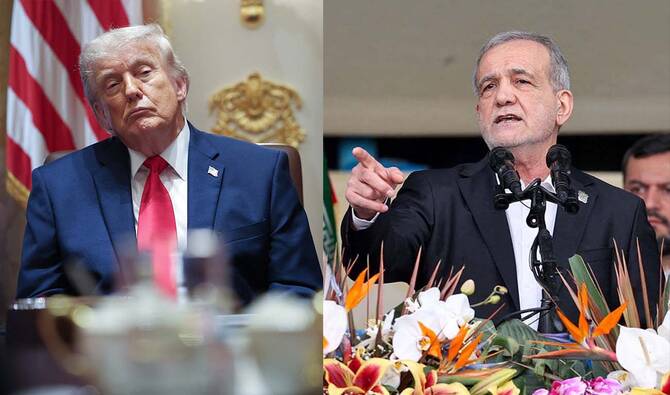
US President Donald Trump posted on social media on Saturday that the deal with Iran was scheduled to be signed the next day, his 80th birthday.
Sharif wrote on social media platform X on Saturday that the peace deal was “closer than ever before” and expected to be finalized in the next 24 hours.
“Pakistan is preparing for the electronic signing of the peace deal immediately after, followed by technical level talks next week,” Sharif wrote.
Sharif thanked the US and Iran for their commitment to peace, as well as other regional countries for their support.
“We are confident that this historic peace deal will form a strong foundation for lasting peace,” he said.
However, Iran did not confirm that the deal will be signed on Sunday. Iranian Foreign Ministry spokesperson Esmaeil Baghaei, speaking before Trump’s post on Saturday, cautioned against commenting on the timing of the signing.
He was quoted on state media as saying, “It will not be tomorrow,” but could happen “in the coming days.”
Trump wrote on Truth Social that after a framework deal is signed on Sunday, the Strait of Hormuz, a vital artery for global oil supplies that Iran has blocked, would immediately be “open to all.”
The new momentum came in spite of fresh skirmishes in the Strait of Hormuz, which Iran has blockaded since early in the war, throwing global markets into turmoil.
Since an April 8 truce paused the worst of the fighting, Trump has repeatedly insisted a deal was near only for the wrangling to drag on.
HORMUZ DRONES
Tehran has insisted it will maintain control over the Strait of Hormuz, a key maritime trade route for oil and gas shipments from the Gulf.
Since imposing its blockade, Iran has demanded vessels obtain permission from its armed forces before transiting the waterway, and has established a new body to oversee it and collect tolls.
The US has responded with its own blockade of Iranian ports.
Earlier on Saturday, the US military’s Central Command said Iran had “launched multiple one-way attack drones in an attempt to strike commercial ships transiting the Strait.”
It added that “US forces have downed all of them in recent hours.”
Araghchi, in an interview with state television Friday, had said the deal on the table called for the lifting of the US naval blockade.
He added that “the administration of Strait of Hormuz will no longer be the same as before,” calling the waterway one of Iran’s “main instruments of deterrence.”
The US has repeatedly said Iran remaining in control of the strait would be unacceptable, and Trump’s post made no mention of tolls or other arrangements.
NUCLEAR DUST
Another key sticking point in the talks has been the fate of Iran’s nuclear program, and particularly its stockpile of highly enriched uranium — believed to have been buried by US strikes last year during a previous short-lived war.
Iran has long insisted its nuclear program is peaceful and that it has a right to enrichment, but the United States, Israel and other Western governments suspect it of seeking a bomb.
Araghchi on Friday said the only way to deal with Iran’s enriched uranium “is to dilute it inside Iran.”
Trump, who has justified the war as necessary to prevent Iran from obtaining nuclear weapons, previously said the US would remove and destroy the uranium.
In his post on Saturday, he said that “when all is calm, we will go in and get the Nuclear Dust... and downblend and destroy it, whether in Iran, or the United States.”
“Hopefully, this process will all work out quickly, easily, and smoothly,” he added. “If it doesn’t, we have the ultimate alternative, hopefully never to be used again!“
Prime Minister Benjamin Netanyahu of Israel — which launched the war in tandem with the US in February — said Trump had promised him any agreement would include the removal of the enriched nuclear material.
In the streets of Tehran, there was skepticism the latest agreement would cross the finish line.
“I don’t think there is any deal soon,” said Saeed Sadeghi, 49. “I don’t trust their word.”
Another man in the city of Tonekabon, who identified himself only as Ali, said deal or no deal, Iranians would suffer.
“Neither outcome is in the people’s interest. If they reach an agreement and no longer have to worry about the international community, they’ll oppress people a thousand times harder,” he said of the Iranian authorities.