

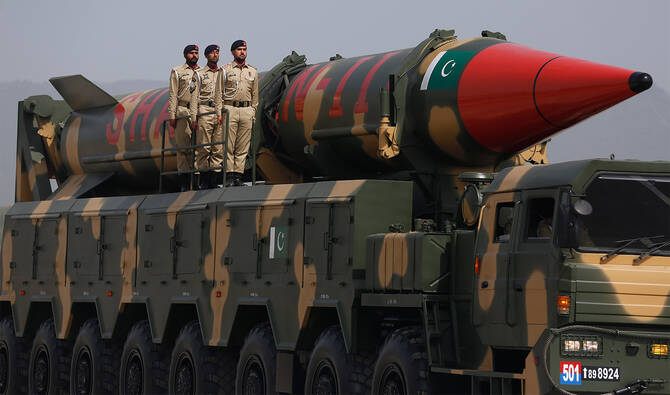

ISLAMABAD: Pakistan’s spending on nuclear weapons rose 18 percent in 2025 to an estimated $1.5 billion, outpacing neighboring India and contributing to a record year for global nuclear arms expenditure, according to a report released on Tuesday by the International Campaign to Abolish Nuclear Weapons (ICAN).
The findings come as nuclear-armed states continue to modernize and expand their arsenals amid heightened geopolitical tensions, with global spending on nuclear weapons rising 19% year-on-year to $118.8 billion, the highest level recorded since ICAN began tracking such expenditures in 2020.
“In 2025, the nine nuclear-armed states spent $16.8 billion (19%) more on their nuclear arsenals than the year before, a total of $119 billion, or $3,768 per second on nuclear weapons,” the report said.
“In the past five years, from 2021-2025, these countries spent $471 billion on their nuclear arsenals.”
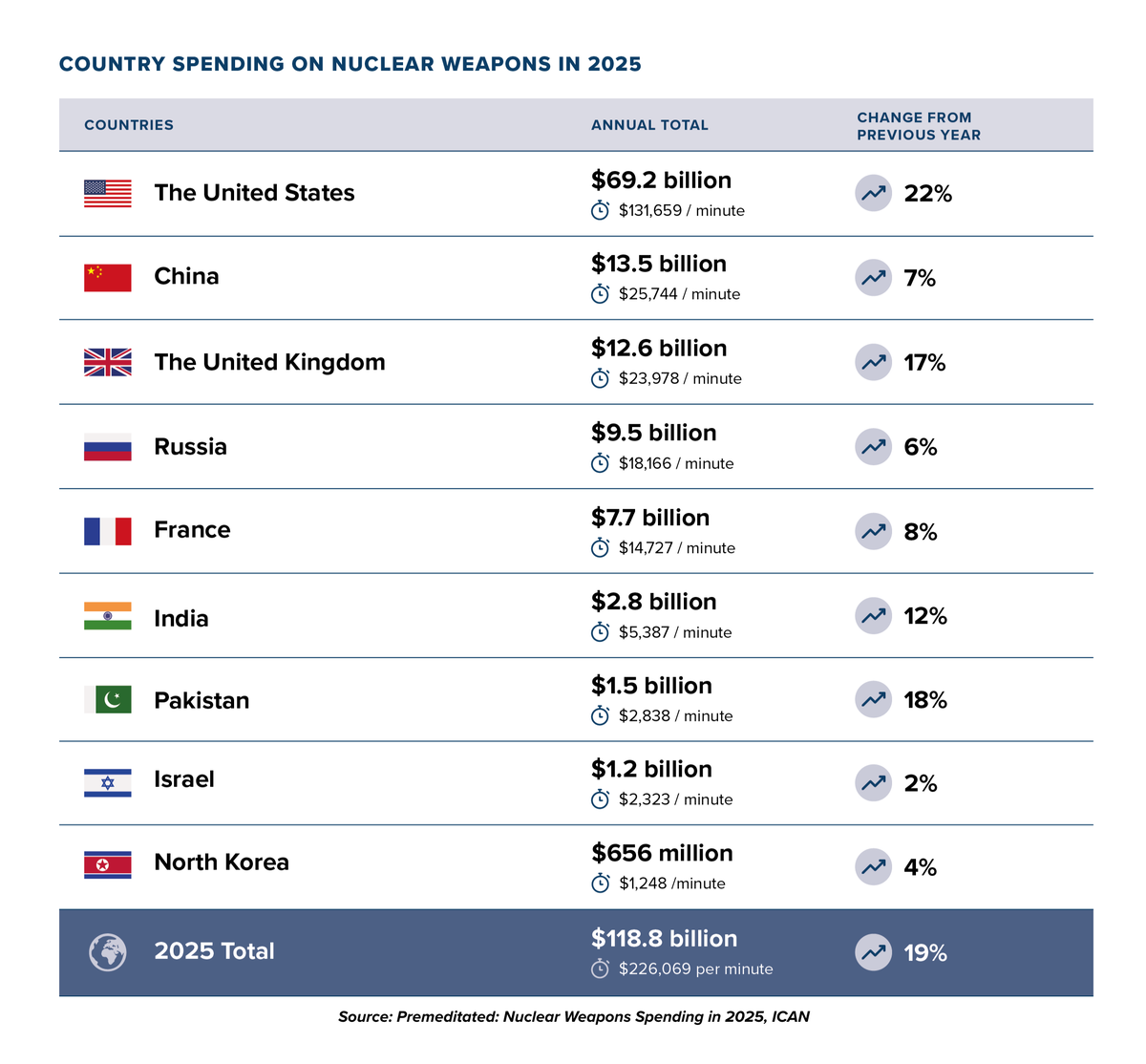
According to the report, Pakistan spent an estimated $1.5 billion on its nuclear arsenal in 2025, equivalent to about Rs358 billion at current exchange rates, compared with $1.3 billion the previous year. ICAN estimated the increase at 18 percent, the second-largest percentage rise among the world’s nine nuclear-armed states after the United States.
India, Pakistan’s nuclear-armed rival, spent an estimated $2.8 billion on nuclear weapons in 2025, up 12 percent from a year earlier, according to the report.
The report estimates India possesses about 190 nuclear warheads, while Pakistan has around 170. Both countries maintain nuclear-capable missile forces and are continuing to develop and modernize delivery systems as part of long-term deterrence strategies.
ICAN said the United States remained by far the world’s largest nuclear spender, allocating $69.2 billion to its nuclear arsenal in 2025, more than all other nuclear-armed states combined. China ranked second with spending of $13.5 billion, followed by the United Kingdom at $12.6 billion and Russia at $9.5 billion.
The Geneva-based advocacy group, which won the 2017 Nobel Peace Prize for its campaign against nuclear weapons, said all nine nuclear-armed states were investing in systems designed to remain operational for decades.
“Across the board, nuclear-armed states are making plans to retain their arsenals for decades to come,” the report said. “Several nuclear-armed states have published nuclear weapons spending projections of tens of billions or even past $1 trillion for the next decade or several decades.”
ICAN said Pakistan’s Shaheen-I missile system is believed to have entered deployment around 2022 and could remain operational through 2052, illustrating the long-term financial commitments associated with maintaining nuclear arsenals.
The report noted that while the nine nuclear-armed countries increased spending on their arsenals, 99 countries have now signed, ratified or acceded to the Treaty on the Prohibition of Nuclear Weapons, which seeks the eventual elimination of nuclear arms.


