

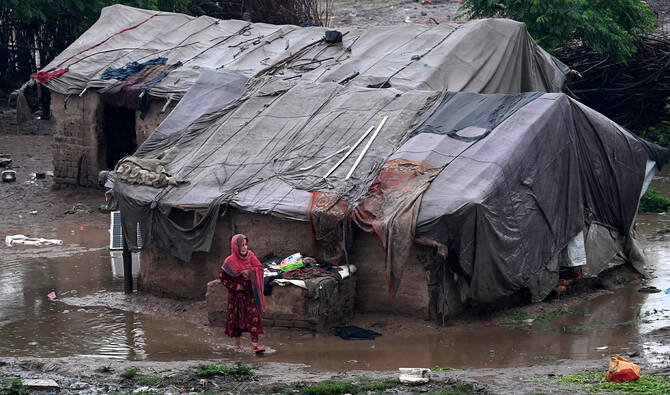

PESHAWAR: At least two people were killed and 31 injured after strong winds, thunderstorms and rain triggered house wall collapses and lightning-related incidents across Pakistan’s northwestern Khyber Pakhtunkhwa province, disaster management authorities said on Wednesday.
The latest incidents come as authorities remain on alert for heavy rain, flash floods, landslides and urban flooding across parts of northern Pakistan, with forecasts indicating the current weather system could remain active through June 5.
The casualties were reported in the districts of Peshawar, Charsadda, Nowshera and Bannu, according to the Provincial Disaster Management Authority (PDMA), which said the injured included seven women, 16 men and eight children.
“Two people have died and 31 others have been injured so far due to lightning strikes and the collapse of house walls caused by strong winds and rain,” the PDMA said in a damage assessment report.
The authority said its emergency operations center remained fully operational and urged residents to exercise caution during the ongoing weather spell.
“PDMA, district administrations and all relevant institutions are alert and in close coordination,” the authority said.
Officials also urged the public to avoid unnecessary travel in vulnerable areas and report emergencies through the PDMA helpline as intermittent rain, thunderstorms and strong winds continue across parts of the province.
Pakistan remains among the countries most vulnerable to climate change despite contributing less than 1 percent of global greenhouse gas emissions. Scientists have linked increasingly erratic rainfall, heat waves, glacier melt and extreme monsoon events in South Asia to rising global temperatures.
The latest weather-related casualties come less than a year after severe monsoon rains and flooding affected an estimated 7 million people across Pakistan and killed around 1,000, according to government disaster management authorities. The 2025 floods damaged homes, roads, crops and public infrastructure in several provinces, underscoring the country’s vulnerability to increasingly frequent extreme weather events.
The country is still recovering from the far more devastating floods of 2022, when record monsoon rains and glacier melt inundated large parts of Pakistan, affecting 33 million people and killing more than 1,700. The United Nations described the disaster as a climate catastrophe and estimated economic losses in the tens of billions of dollars.


