

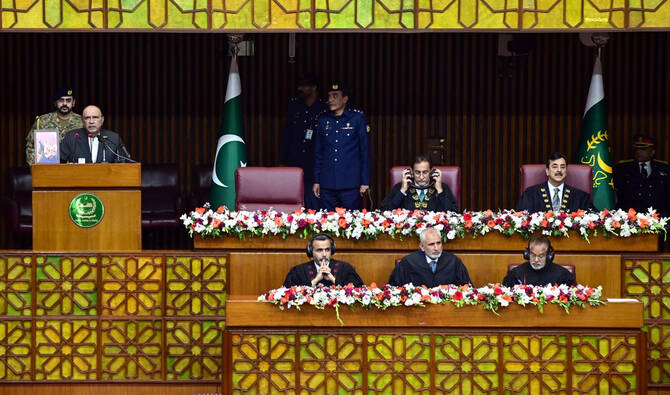

KARACHI: President Asif Ali Zardari on Friday summoned parliament for the federal budget session on June 5, as the government prepares to present the country’s annual fiscal plan amid economic uncertainty stemming from the Iran conflict and pressure to meet International Monetary Fund (IMF) reform targets.
Pakistan has spent recent years grappling with high inflation, dwindling foreign exchange reserves, a weakening currency, rising debt obligations and recurring balance-of-payments pressures that pushed the country to seek repeated financial support from the IMF.
While economic indicators have improved since Islamabad secured a $7 billion IMF bailout program in 2024, the government remains under pressure to widen the tax net, reduce energy sector losses and maintain fiscal discipline as it prepares to present budget for the next financial year.
“President Asif Ali Zardari has approved summoning the National Assembly’s budget session on Friday, June 5, at 5 p.m. and the Senate session on June 5 at 6 p.m.,” the president’s office said in a statement.
The announcement marks the beginning of the budget session rather than the presentation of the federal budget itself, which will be unveiled by Finance Minister Muhammad Aurangzeb later in the session.
The Pakistan Economic Survey, an annual document reviewing the country’s economic performance over the outgoing fiscal year, is traditionally released a day before the budget speech and is usually followed by a detailed briefing by finance ministry officials and economic managers.
The budget presentation is also accompanied by news conferences in which government officials outline fiscal priorities and explain proposed tax and spending measures.
Pakistan’s upcoming budget is being closely watched because it is being prepared under a $7 billion IMF Extended Fund Facility and a separate climate resilience lending arrangement, with the lender pushing Islamabad to continue fiscal reforms aimed at stabilizing the economy and rebuilding external buffers.
The budget is also being prepared against the backdrop of heightened regional uncertainty stemming from the US-Iran conflict, which has disrupted shipping routes and energy markets and raised concerns about Pakistan’s import bill.
The federal budget, once presented in the National Assembly, will be debated by lawmakers from both treasury and opposition benches before being voted on and passed ahead of the start of the new fiscal year on July 1.
Pakistan’s fiscal blueprint is expected to outline revenue targets, development spending, debt servicing allocations, defense expenditures and taxation measures for the next financial year.


