

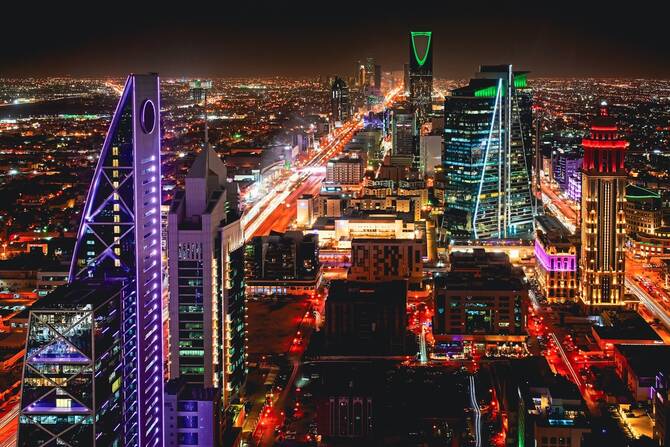

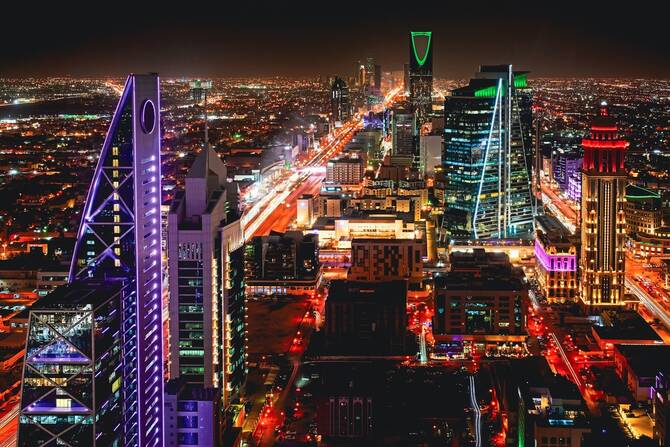
RIYADH: Saudi Arabia is no longer a market multinational companies cautiously test, but one they enter with clear strategies and long-term commitments, according to the CEO of business expansion platform AstroLabs.
In an interview with Arab News, Roland Daher outlined how the Kingdom’s investment landscape is shifting — not only in scale but in the seriousness and profile of companies entering the market.
The shift comes as Saudi Arabia advances its Vision 2030 agenda to diversify its economy and position itself as a regional business hub. More than 700 multinational companies had relocated their regional headquarters to Riyadh by early 2026, surpassing the government’s initial target of 500 by 2030.
“What we are seeing is not just more interest. It is more serious interest,” Daher said. “The companies entering Saudi now are more mature, better capitalized, and clearer on why they are here. They are not coming to test the market. They are coming to build in it.”
From Daher’s perspective, the transformation is evident in how quickly companies move from entry to execution.
He said firms are increasingly opening offices, establishing regional headquarters, hiring local staff and building operational capacity soon after entering the Kingdom, reflecting a stronger commitment to long-term presence.
The mix of companies is also becoming more global. Daher noted that more than half of the firms supported into Saudi Arabia through his platform now come from outside the Middle East, North Africa and Turkiye region, including the Americas, Europe and Asia.
“That tells you this is no longer a market companies add later,” he said. “It is becoming a market they organize around early and commit to more deeply.”
Demand across key sectors
The current wave of expansion is being driven by demand across sectors linked to Saudi Arabia’s large-scale development plans.
Construction and manufacturing are among the fastest-growing areas, Daher said, supported by major projects such as Diriyah Phase 2, Qiddiya and King Salman International Airport. More than $38 billion in contracts are expected to be awarded in the coming months, sustaining demand for international firms.
Saudi Arabia’s push into artificial intelligence and digital infrastructure is also drawing global companies. Daher pointed to the Kingdom’s expanding data ecosystem and recent investments in AI-related capacity as key factors attracting firms in cloud computing, enterprise systems and digital infrastructure.
Tourism remains another major driver. With 19.5 million pilgrims and Umrah performers recorded in 2025, Daher said the scale of religious tourism is creating sustained demand across hospitality, transport and travel services.
He added that mining and manufacturing are gaining momentum as the Kingdom works to localize supply chains and develop industrial capacity, supported by an estimated $2.5 trillion in mineral resources.
Looking ahead, Daher said the next wave of companies entering Saudi Arabia is likely to be more specialized, focusing on sectors such as IT and software, education, media, logistics and food security.
From incorporation to execution
While regulatory reforms have streamlined company formation, Daher said the focus has shifted toward operational readiness.
“Today, the question is less about how fast a company can get incorporated, and more about how quickly it can start operating properly,” he said.
He explained that while incorporation and licensing can take several months, the more significant challenge lies in building a functioning business — including hiring local talent, managing compliance and developing market traction.
“What serious companies increasingly understand is that establishment in Saudi is not a one-off milestone,” Daher said. “Getting the entity in place is only the start.”
He added that companies that approach entry as an ongoing process tend to achieve stronger results, with some reaching commercial viability within months once operations are established.
Daher said most firms entering Saudi Arabia through AstroLabs go on to build longer-term operations in the Kingdom, particularly as larger and more established companies form a growing share of new entrants.
Their commitment often includes launching regional headquarters, expanding hiring and investing in market-specific capabilities.
Economic impact taking shape
The growing presence of multinational companies is already reshaping parts of the Saudi economy.
Daher pointed to the increase in active investment licenses — from 6,000 in 2019 to 62,000 by the end of 2025 — alongside the creation of more than 1 million jobs, many filled by Saudi nationals.
He said the presence of major global banks has also strengthened the financial environment, giving incoming companies greater access to funding and services.
“The impact is not abstract,” Daher said. “It is showing up in jobs, financial depth, supplier demand, and the expansion of the non-oil economy.”
Non-oil sectors now account for around 56 percent of Saudi Arabia’s GDP, up from 40 percent before Vision 2030, reflecting the scale of the economic transition.
According to Daher, the next phase of impact is likely to concentrate in sectors that build long-term capacity, including logistics, manufacturing, mining, tourism and digital infrastructure.
Growing interest from global firms
Saudi Arabia is also attracting increasing interest from large international companies, including publicly listed firms.
Daher said this is particularly strong in sectors where the Kingdom’s scale and long-term direction are clear, such as technology and infrastructure.
“The companies coming in are increasingly sophisticated, and many already have established playbooks in other markets,” he said. “What they want now is to localize that capability effectively in Saudi.”
He added that interest is coming from multiple regions, including North America, Europe and Asia, as well as from institutions and brands across sectors such as education, aviation and retail.
A regional starting point
As more firms establish operations in the Kingdom, Saudi Arabia is increasingly becoming the starting point for regional expansion strategies.
“At least seven out of 10 multinational companies we engage with now see Saudi Arabia as the first market they consider in the region,” Daher said.
He added that once companies are established in Saudi Arabia, it becomes easier for them to expand into other Gulf markets, reinforcing the Kingdom’s role as a regional hub.
Operating through uncertainty
Despite geopolitical tensions in parts of the region, Daher said companies are largely maintaining their long-term strategies while adjusting execution.
“What we’re seeing is mostly a very practical reaction,” he said. “Many organizations are separating strategy from execution. Strategy stays steady if the fundamentals still make sense. Execution gets tightened.”
He explained that companies are becoming more deliberate in day-to-day operations, managing travel carefully and adjusting activity where needed to maintain continuity.
At the same time, business activity remains steady, with ongoing government tenders and continued hiring demand, particularly in sales, operations and technical roles.
“The pattern we are seeing is not a change in underlying intent,” he said. “It is a more disciplined approach to execution.”


