- The US-Iran war has forced Pakistan, which imports most of its energy needs, to raise fuel prices, impose measures to conserve it
- Official says the project will involve upgrades by five refineries to produce Euro-V standard petrol, diesel, fuel and furnace oils
KARACHI: Pakistan is accelerating a long-delayed $6 billion refinery upgrade project, officials and industry stakeholders said on Tuesday, following the realization of a need for stronger domestic capacity amid the ongoing Middle East conflict.
The United States-Israeli war on Iran, launched in late February, has disrupted global energy supplies and driven up prices worldwide, forcing import-dependent Pakistan to announce multiple hikes in petroleum prices in recent weeks.
In August 2023, Islamabad unveiled a brownfield refining policy to upgrade Pak-Arab Refinery Limited (PARCO), Attock Refinery Limited (ARL), National Refinery Limited (NRL), Cnergyico Pakistan Limited and
Pakistan Refinery Limited (PRL) to produce cleaner Euro-V fuels.
However, momentum slowed in fiscal year 2024-25 after refined petroleum products were exempted from general sales tax (GST). Effectively stalled since then, the project is expected to attract at least $6 billion to modernize Pakistan’s refining infrastructure.
“The longstanding issues of refineries’ upgrade projects are expected to be resolved soon as the importance of refineries came across the government amid Middle East crisis,” an energy ministry official privy to developments told Arab News, requesting anonymity.
“This $6 billion project will involve upgrades by the five refineries who will produce Euro-V standard products such as petrol, diesel, fuel oil, and furnace oil,” said the energy official.
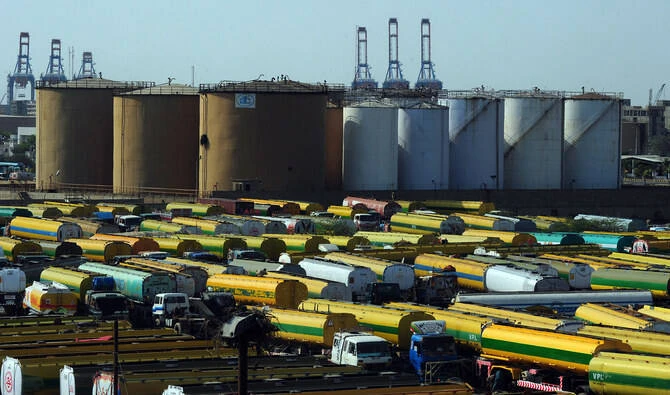
Pakistan’s refining capacity currently stands at 450,000-500,000 barrels per day, or 21-23 million tons annually, according to officials and industry insiders. Subject to upgrades, it may reach around 33 million tons per year by 2035.
Finance Minister Muhammad Aurangzeb is due to chair a meeting on May 7 with key stakeholders, including officials from the Oil and Gas Regulatory Authority and Federal Board of Revenue as well as PARCO, ARL,
NRL, Cnergyico Pakistan and PRL representatives to resolve financial issues linked to the 2023 policy, according to an energy ministry notification issued on Tuesday.
The meeting was initially set for May 5 but postponed for unspecified reasons.
“Once these policy hurdles are resolved, all five refineries are expected to sign agreements with the government, after which the upgrade work will begin,” the energy ministry official said, without giving a timeline.
While Petroleum Minister Ali Pervaiz Malik and Finance Adviser Khurram Schehzad did not respond to queries, the official said the government was “trying to expedite the project” given the urgency highlighted by the Middle East conflict.
“Had these refineries been upgraded, they would be net exporters of petroleum products today,” he added.
Pakistan spent $16 billion on fuel imports last year, mainly from the United Arab Emirates, Saudi Arabia, Kuwait and Qatar, according to official data.
Energy expert Muhammad Saad Ali said Pakistan’s demand for diesel and petrol is bound to rise with the growing population.
“This crisis has shown you that you are vulnerable if your fuel supplies are imported from outside and you do not produce them locally,” Ali, head of research at Karachi-based Luky Investments Limited, told Arab News.
“These refineries should be upgraded so that the furnace oil and unwanted products are produced less, and they can operate at maximum capacity and produce as much petrol and diesel as possible.”
Industry stakeholders remain optimistic about the refinery upgrade project.
“The government is likely to reintroduce GST exemptions, as is available in Greenfield Refining Policy, specifically on the import of equipment and materials required for refinery upgrade projects,” Usama Qureshi, vice chairman at Cnergyico Pakistan Limited, told Arab News, adding that this would help restore the input tax adjustment mechanism and reduce project costs.
“Addressing the GST issue is a major step toward reviving investment in the brownfield refinery upgrade policy.”
Local media reports earlier suggested that officials at the May 7 meeting will also consider a proposal to increase the Inland Freight Equalization Margin (IFEM) by Rs1.87 per liter for a period of six-seven years to stabilize refinery revenues, support oil marketing companies (OMCs), and enable firms to secure financing for long-delayed upgrades.
Asked about IFEM, Qureshi said it was not under discussion.
“The IFEM mechanism is already an established system used for operational purposes, particularly for sales tax adjustments between oil marketing companies and refineries,” he explained.
“It is not directly related to imports tied to refinery upgrades.”
Mahir Binici, the International Monetary Fund’s resident representative in Pakistan, did not respond to queries on whether Islamabad had sought IMF’s approval to formalize IFEM or legislate policy stability in the upcoming budget.
“The refineries have also requested a stability clause, which is critical for lenders and investors to ensure long-term policy consistency,” Qureshi said, adding that while tax relief was important, investor confidence ultimately depended on broader policy stability.