


ISLAMABAD: Prime Minister Shehbaz Sharif on Tuesday called for a shift toward renewable energy and stricter action against electricity theft as part of ongoing reforms in the country’s power sector, according to an official statement.
The directives came at a review meeting chaired by the prime minister on measures to improve efficiency, reduce costs and address structural weaknesses in the energy sector.
Pakistan has long struggled with high power generation costs, transmission losses and reliance on imported fuels, challenges that have contributed to periodic outages and rising electricity tariffs for consumers.
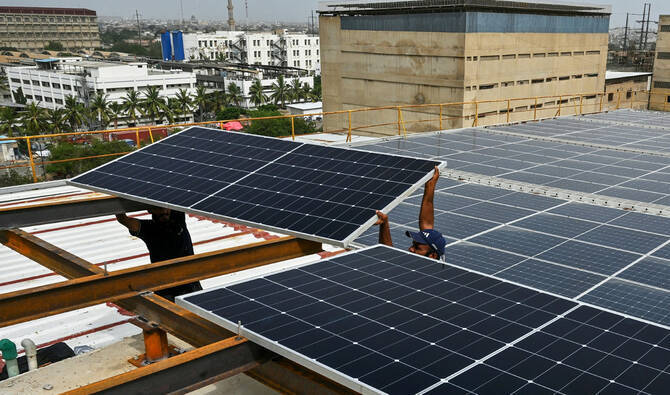
“A comprehensive strategy should be developed to meet future energy needs through renewable energy,” Sharif said during the meeting, according to a statement circulated by his office.
He directed authorities to accelerate efforts to cut dependence on imported fuels.
“Power generation through hydropower, solar energy, biogas and other renewable energy sources will reduce production costs and have a positive impact on economic growth,” he said.
Sharif also called for strict action against those involved in electricity theft, mostly done through illegal connections and meter tampering.
“No leniency will be shown to those involved in electricity theft,” he said.
He further ordered action against distribution companies found violating the country’s “economic merit order,” a system that prioritizes cheaper electricity sources to keep overall costs low.
The directive follows a government inquiry last month into utilities procuring power at higher-than-approved rates from smaller private producers, raising concerns about increased costs for consumers.
Officials told the meeting that losses in the power transmission system declined to 15.3 percent in March 2026 from 18.3 percent in June 2024, while bill recovery rates improved to 96.46 percent from 90 percent over the same period.
Sharif also called for faster rollout of smart meters, particularly in areas with high electricity theft, and urged progress on introducing a competitive electricity market.
He directed authorities to accelerate work on supplying 400 megawatts of electricity to the private sector under a wheeling framework, which allows power producers to sell electricity directly to large consumers using the national grid.
The meeting was also told that bidding for the privatization of three power distribution companies would be completed by November.


