

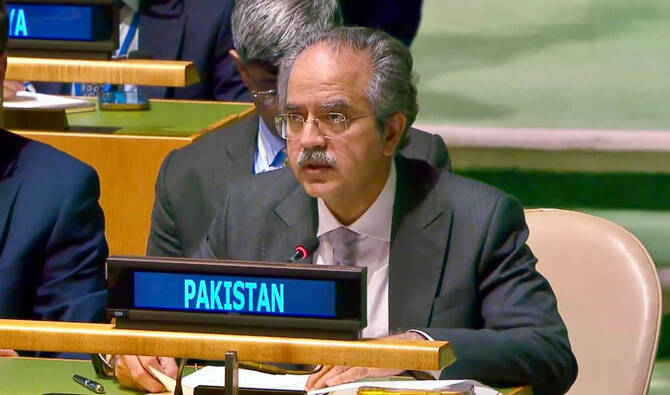

ISLAMABAD: Pakistan on Tuesday proposed a layered approach to reforming the veto power at the United Nations Security Council, calling for both long-term structural changes and immediate steps to limit its impact on global peace and security.
The proposal comes amid growing criticism of the veto, which has frequently been used during major global conflicts, at times blocking efforts to advance peace initiatives and prevent civilian casualties.
In recent years, the power has been exercised by opposing nations in wars such as Gaza and Iran, highlighting deep divisions within the Council.
Pakistan’s envoy to the UN said the recurring use of the veto has prevented timely action on pressing international crises.
“The paralysis that we see often at the Security Council leading to inaction on crucial matters related to international peace and security stems from the misuse or abuse of the veto power by the permanent members,” Ambassador Asim Iftikhar Ahmad said while addressing Intergovernmental Negotiations on Security Council Reform.
While outlining immediate and practical reforms, Pakistan emphasized that the most effective way to dilute the veto’s blocking power would be to strengthen the role of elected members.
“In our view, the most realistic way to raise the political cost of veto, and to counterbalance its blocking power, is not by creating new vetoes, but by increasing the number of elected members of the Security Council,” he said.
He added that a larger number of elected members would make it harder for any permanent member to override the will of the majority, thereby increasing accountability and reducing the influence of the veto.
Pakistan also backed measures to enhance transparency, including mechanisms that allow the United Nations General Assembly to review and debate the use of veto power, as well as proposals to increase the number of affirmative votes required for passing resolutions.
Another proposal put forward by Islamabad involved requiring regional consensus for decisions affecting specific areas, saying it would both raise the political cost of veto use and strengthen regional ownership in decision-making.
“Veto should either be abolished or, at a minimum, its use by the current permanent members severely restricted,” Ahmad added. “Any expansion of the veto or addition of new individual permanent members is firmly opposed, as more vetoes would only aggravate the problem.”
He noted that expanding the number of veto-wielding members would worsen gridlock rather than resolve it, arguing instead for a more representative and accountable Council.
Ahmad said reforms should be addressed comprehensively, warning against treating the veto issue in isolation, and called for a system based on broader representation and collective decision-making.
“If we want reform for all, there should be privilege for none,” he said.


