

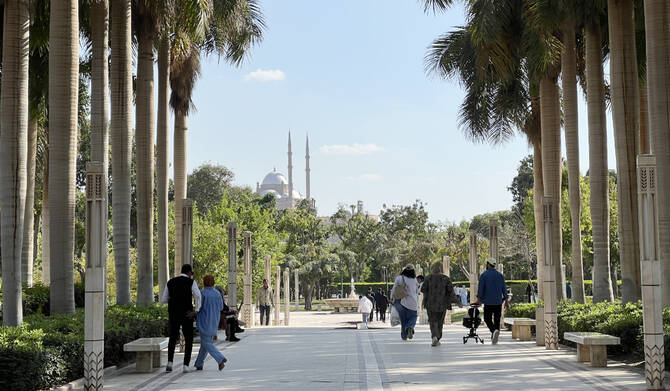
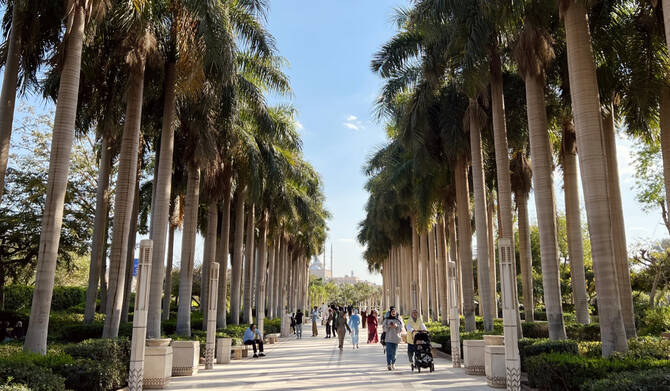

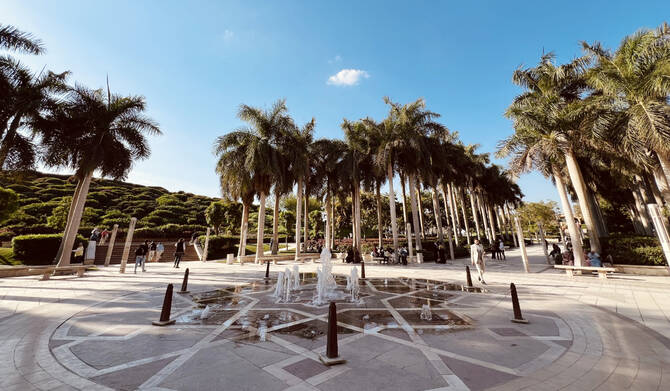


CAIRO: On a spring Monday, Egyptians gathered along the Nile and in public parks to celebrate Sham El-Nessim.
This Egyptian festival, with traditions dating back thousands of years, is held annually on the day after Coptic Orthodox Easter.
Prime Minister Mostafa Madbouly has declared Monday, April 13, an official paid holiday for Sham El-Nessim, applicable to employees in both the public and private sectors.

Egyptians maintain a strong connection to the Nile, celebrating by walking along its banks or taking boat rides on this day. (Suppled)
The day features several customs: Egyptians visit the Nile and gardens for breakfast with colored eggs, then gather for lunch to enjoy feseekh (salted fish), green onions, and lettuce.
Hussein Basssir, professor and Egyptologist, told Arab News that ancient Egyptians used these foods to celebrate spring during the harvest festival called “Shemu.”
These customs have been preserved to the present day.

Ancient Egyptian flowers at the Egyptian Agricultural Museum. (Supplied)
“The ancient Egyptian seasons were divided into three: ‘Akhet’ (flooding), ‘Peret’ (germination/emergence), and ‘Shemu’ (harvest). The Egyptians celebrated the harvest festival by the Nile, and it was on this foundation that the great civilization arose,” he added.
The area was famous for its diverse flora, including papyrus and lotus, which still exist today.
Egyptologist Hassan Selim told Arab News that many food customs in Egyptian celebrations today originated in ancient Egypt, when spring harvests provided fresh produce like lettuce and onions, which remain central to Sham El-Nessim traditions.

Egyptians maintain a strong connection to the Nile, celebrating by walking along its banks or taking boat rides on this day. (Suppled)
Egyptians maintain a strong connection to the Nile, celebrating by walking along its banks or taking boat rides on this day.
They also purchase ornamental plants and flowers.
The Egyptian Ministry of Agriculture announced the Spring Flower Exhibition 2026 at the Agricultural Museum in Dokki, coinciding with Sham El-Nessim celebrations.
The exhibition showcases a wide variety of plants and flowers and is open daily from 9 a.m. to 9 p.m.
Egyptians “head to markets to buy springtime plants and flowers such as jasmine, gardenia, basil, and roses. In modern times, the gardenia has become particularly popular,” Sherif Helal, professor and agricultural expert in ornamental plants and flowers, told Arab News.
The ancient Egyptians respected nature, as evidenced by their writings and drawings, and their spring festival customs have persisted for thousands of years.


