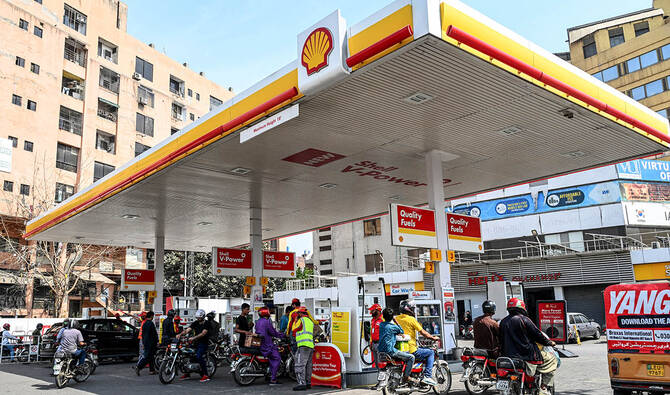

ISLAMABAD: Pakistan’s oil marketing companies are set to post windfall earnings as surging global oil prices and domestic fuel hikes boost margins, a top brokerage house said in a report on Friday, even as the sector grapples with mounting government receivables and potential demand slowdown.
The expected gains follow a sharp rise in global petroleum prices amid escalating tensions in the Middle East, where conflict involving the United States, Israel and Iran disrupted energy markets and raised concerns over supply through the Strait of Hormuz, a key global oil transit route. Gasoline prices climbed from around $72 per barrel in December to about $138 by end-March, while gasoil surged from roughly $79 to $234 over the same period.
Under Pakistani regulatory requirements, companies are required to maintain inventory equivalent to around 20 days of sales, allowing them to benefit from price increases by selling previously acquired stock at higher rates.
As a result, earnings for major players such as Pakistan State Oil and Attock Petroleum Limited are projected to rise sharply, with profitability expected to increase by roughly 7.3 times and 9.1 times on a year-on-year and quarter-on-quarter basis.
“Oil Marketing Companies (OMCs) are set to record windfall inventory gains during 3QFY26, supported by a sharp increase in prices of Motor Spirit (MS) and High Speed Diesel (HSD),” brokerage Insight Securities said in a report.
However, analysts cautioned that structural challenges remain, particularly the buildup of about 107 billion Pakistani rupees ($385 million) in price differential claims owed by the government.
“Recently one of the challenges for OMCs is the accumulation of ~PKR107bn in Price Differential Claims (PDC) receivables from the government,” the report said, adding that delayed recoveries could increase working capital requirements.
Higher fuel prices could also dampen consumer demand, though analysts expect inventory gains to offset some of the pressure in the near term.
The outlook comes as Pakistan navigates heightened volatility in global energy markets, with geopolitical tensions driving price swings that are reshaping both corporate earnings and the broader macroeconomic environment.