

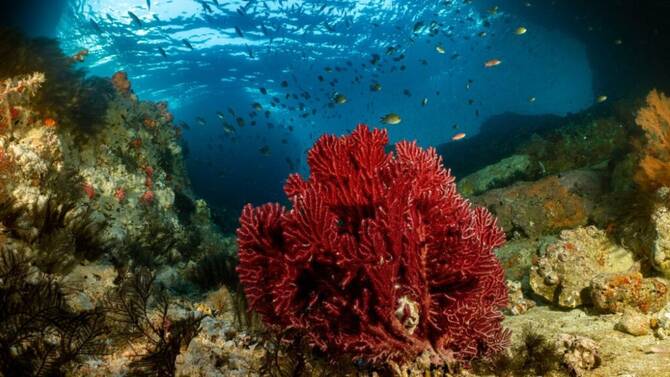
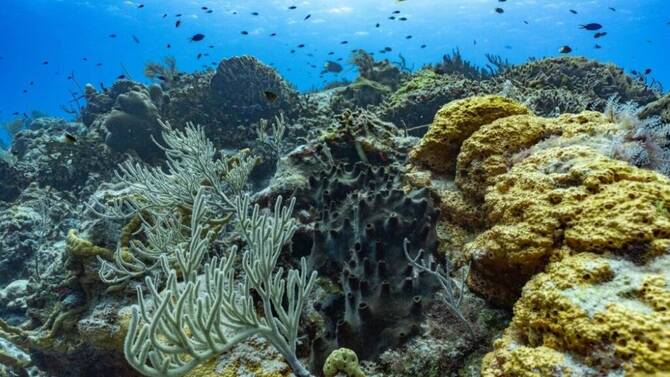

RIYADH: Coral reefs have emerged as a vital biological source for modern medicine and are revolutionizing the therapeutic system through bioprospecting, a process of discovering chemical compounds produced by marine organisms.
Often referred to as the “medicine cabinets” of the sea, coral reefs are a source of numerous compounds used in developing new medicines, including treatments for cancer, arthritis, and bacterial infections. Marine organisms found in coral reefs produce unique chemicals that have been harnessed for their medicinal properties.
According to the General Organization for Conservation of Coral Reefs and Turtles in the Red Sea (SHAMS), organisms such as sponges and brittle corals produce unique defense and communication compounds with significant pharmacological potential.
These substances are being studied for their anti-cancer, anti-inflammatory, anti-bacterial, and anti-viral properties, as well as their efficacy in potent pain relief, it said.
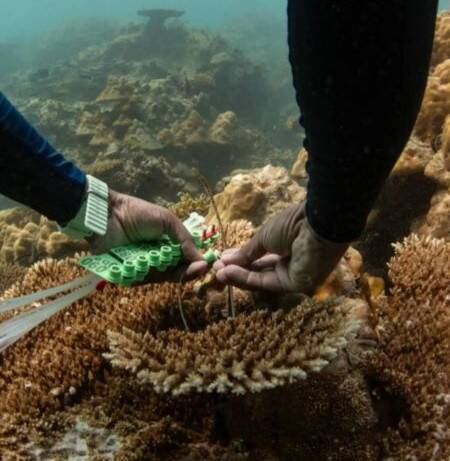
The development process involves carefully collecting samples and using advanced separation techniques to isolate active ingredients.
These compounds undergo rigorous laboratory and clinical testing to verify safety and efficacy.
Notably, calcium carbonate extracted from coral skeletons is already used in medical applications, particularly as a material in bone grafting surgeries.
Researchers believe that organisms found on reefs produce chemical compounds that have been used in treatments for cardiovascular diseases, ulcers, leukemia, lymphoma, and skin cancer, and many more remain undiscovered.
Mohammed Shamsul Ola, a biochemistry professor at King Saud University, and an associate editor of Saudi Journal of Biological Science told Arab News: “Coral reef bioprospecting is a rapidly expanding field at the intersection of marine biotechnology and pharmacology. Organisms like sponges and brittle corals, adapted to competitive and stressful environments, produce a diverse array of secondary metabolites, including terpenoids and alkaloids, which have significant therapeutic potential.
“These bioactive compounds can specifically target pathways involved in cancer, inflammation, and infectious diseases, making them promising for drug development,” he added.
“Advances in extraction, purification, and biosynthesis techniques further enhance their potential for practical application,” said the professor.
He added that coral-derived calcium carbonate has proven effectiveness in bone grafting due to its structural similarity to human cancellous bone, supporting osteoconduction.
However, sustainable harvesting and conservation strategies are critical to protect delicate reef ecosystems, he noted.
“Overall, coral reefs function as a ‘living library’ of complex molecules, connecting marine biodiversity with innovative biomedical solutions,” the professor told Arab News.
As corals are considered key to finding new medicines, many drugs are now being developed from compounds discovered in coral reef animals and plants as possible cures for cancer, arthritis, bacterial infections, viruses, and other diseases.
There is still much to be understood about coral reef organisms.
“We believe there is still a wealth of medical knowledge that remains undiscovered. Preserving coral reefs will likely lead to future medical breakthroughs,” said the professor.
More than half of all new cancer drug research focuses on marine organisms, many of which can be found on coral reefs.
Alongside the medicinal value of coral reefs, healthy reefs are living laboratories for scientific research and education. They provide insights into marine biology, climate science, and medicine.
The loss of these environments hampers scientific progress that could lead to innovations in health care and our understanding of the planet, indirectly affecting human health by limiting future discoveries.
Coral reefs are also home to important filter feeders, like sponges, that filter toxins and contaminants out of the oceans, and support large amounts of plant life that take in carbon dioxide and release oxygen.
Coral reefs play a critical role in maintaining clean, healthy oceans by acting as natural water filtration systems. They host a variety of organisms, such as sponges, bivalves, and other filter feeders, that help clear the water of harmful particles and pollutants. As these creatures feed, they trap and consume tiny organic particles, such as plankton, bacteria, and decaying matter, effectively “scrubbing” the water and keeping it clear.
This process not only improves water clarity but also enhances the overall health of marine environments.
By filtering out waste and harmful substances, coral reefs help reduce the risk of waterborne diseases that could affect both marine life and humans.
Healthy, clear water is essential for supporting thriving ecosystems that humans depend on for vital resources like food, livelihoods, and recreational activities. From fishing to tourism, clean, clear water keeps coastal communities vibrant and sustainable.
Coral reefs also protect shorelines by reducing the impact from waves, storms, and floods. This helps prevent loss of life, property damage, and erosion. When reefs are damaged or destroyed, coastal communities can suffer increased damage from severe storms, and even normal wave action in the sea.


