


LONDON: King Abdullah of Jordan welcomed the two-week ceasefire agreement between the US and Iran as a positive step toward deescalation in the region.
He also stressed the need to reopen the Strait of Hormuz to shipping and ensure freedom of navigation in accordance with international law, the Jordan News Agency reported.
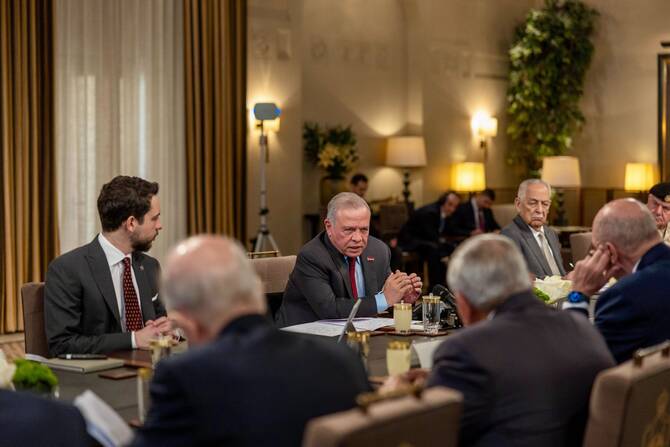
Addressing national security during a meeting with several former prime ministers and other officials at Al-Husseiniya Palace in Amman on Wednesday, he said: “I have complete confidence in our security agencies, and the interests of Jordan and Jordanians is our foremost priority.”
The king said Jordan was safe and would remain so, and he condemned “unjustified” attacks in recent weeks by Iran that had targeted the country, and others in the region, with missiles and drones.
The security of the Gulf states is essential to the stability and security of the wider region and the world, he said, adding that Jordan has made every possible effort to help reduce regional tensions and avert further conflict.
He warned of Israeli violations in the occupied Palestinian territories, and emphasized the need to end Israel’s aggression against Lebanon.
Despite the ceasefire agreement between Washington and Tehran, which was announced in the early hours of Wednesday morning in the Middle East, Iran launched a barrage of missiles hours later against neighboring countries including Kuwait, Saudi Arabia, the UAE and Qatar, targeting power stations, water plants and oil facilities.
Meanwhile, Israeli authorities announced that the ceasefire agreement did not apply to Lebanese territory and launched a heavy wave of airstrikes against southern Lebanon, parts of Beirut, and the Bekaa Valley in the east, killing at least 100 people. It marked the deadliest single day since Iran-backed Hezbollah drew Lebanon into a war with Israel following the start of the US-Israeli conflict with Iran on Feb. 28 and the killing of Supreme Leader Ali Khamenei in an early attack.
US President Donald Trump confirmed on Wednesday that Lebanon was not included in the ceasefire agreement with Iran, which was facilitated by Pakistani mediators.


