

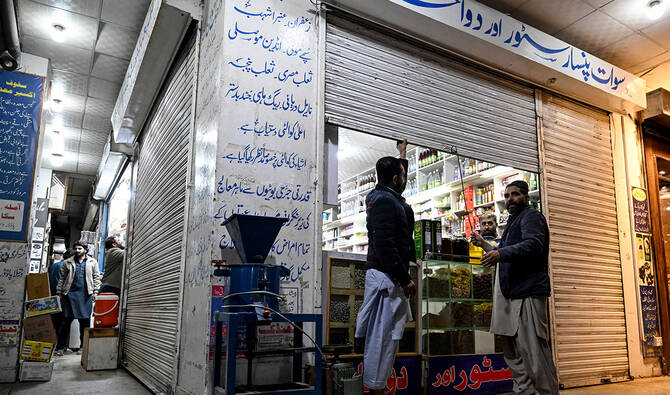

LAHORE: Shops and markets across Pakistan began closing at 8 p.m. on Tuesday under a nationwide energy-saving policy, drawing criticism from customers and traders who say the move is disrupting daily routines and hurting business.
The measure, announced this week, aims to reduce electricity consumption during peak hours amid rising fuel prices and an energy crisis triggered by the war in Iran, which has disrupted global supplies and pushed up costs.
While a two-week ceasefire has since been announced, a broader agreement is still needed to ensure lasting stability and prevent further disruptions to energy supplies.
“We have jobs,” said Moeez Anwar, a customer in Lahore. “We have to be at the office at 9 in the morning, and we get home around 7 or 7:30 in the evening.”
“We came to the market with our children to shop, but the shops are already closed since it’s 8 p.m.,” he continued. “People like us, who do private jobs or work in banks, find it difficult. What time will we do the shopping?”
Traders said the restrictions were cutting into peak business hours, particularly during the summer months when customers prefer to shop after sunset.
“In business, it is obvious that there is an impact [of reduced market timings],” said Bilal Ahmed, a shopkeeper. “The customers come at night.”
He mentioned scorching heat in summer, saying customers don’t come out in afternoons.
While most of the shops are expected to close at 8 p.m. under the new rules, bakeries, restaurants, food outlets and marriage halls can remain open until 10 p.m.
Business representatives also questioned whether the policy would deliver meaningful savings.
Shakeb Irshad, general secretary of Shehzadi Market, said people were still using money or transport and petrol.
“Every store is open,” he said. “Big stores are open. Small shopkeepers are being suppressed.”
The government has also cut fuel allowances for public sector departments and reduced the workweek to four days for a limited period as part of broader conservation efforts.


