


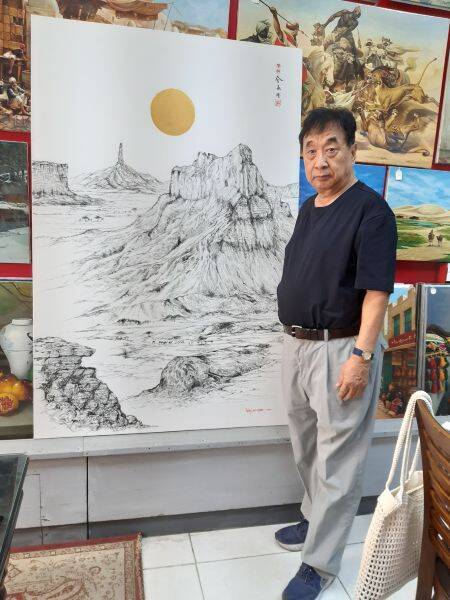

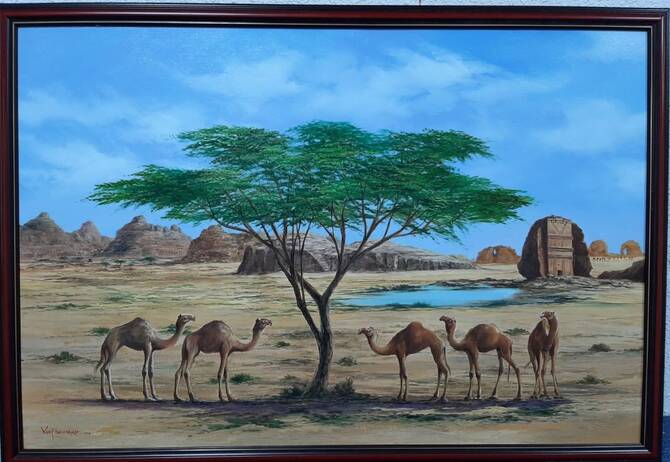

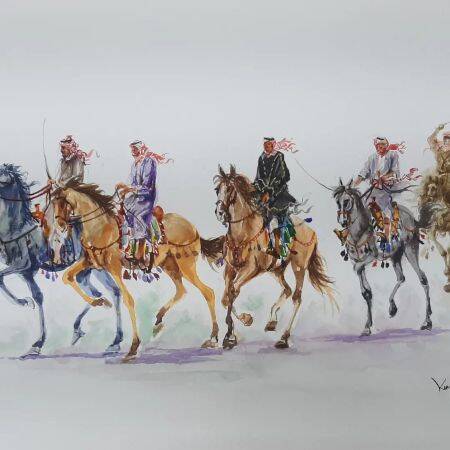
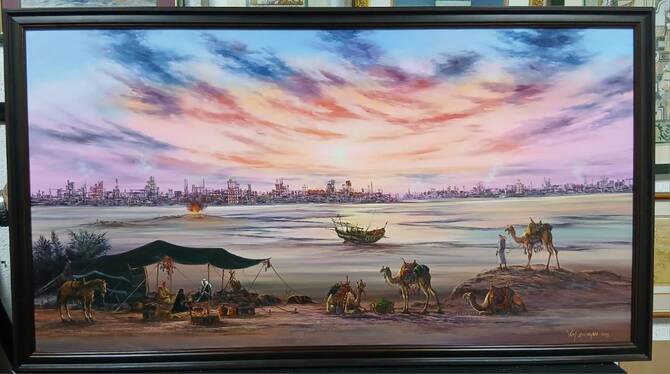
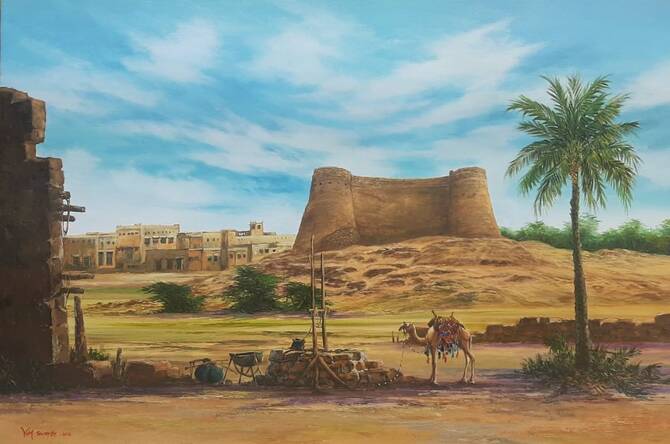
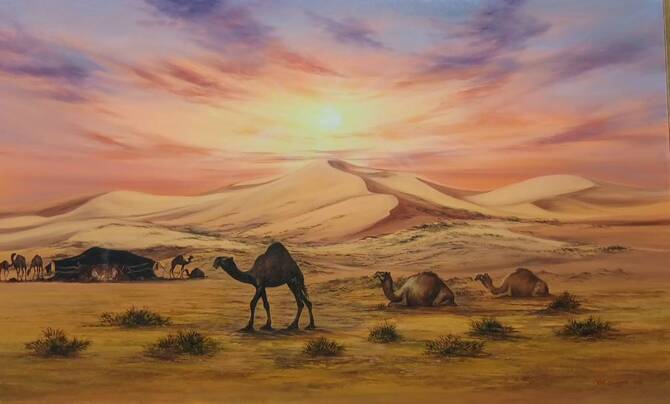

JEDDAH: For more than three decades Korean artist Kim Seungbae has chronicled the evolving landscape of Saudi Arabia’s Eastern Province, blending traditional Korean techniques with Arab cultural themes in a body of work that now exceeds 200 pieces.
Since 1990, Kim has been based in Alkhobar, where his long-standing relationship with Faisal Art Gallery has anchored his artistic journey.
His paintings are inspired by the culture, heritage and transformation of the Kingdom and are currently housed at the gallery on King Faisal Street.
In an interview with Arab News, Kim traced his connection to the region back to 1978 when he began creating oil-on-canvas works focused on Arab culture.
Rather than relying solely on secondary sources, he chose immersion.
He said: “There are limits to imagination; visiting the actual sites for field research is extremely important.”
That conviction led him to relocate to Alkhobar in 1985, spending two years traveling through Dammam, Riyadh and Jeddah to experience the Kingdom firsthand.
He signed a contract with Faisal Art Gallery In February 1990, a partnership that has continued through to the present.
Kim’s work stands out for its fusion of traditions. Drawing on the principles of oriental Korean painting, he emphasizes space and what he calls “the beauty of emptiness.”
He applies this compositional philosophy to Saudi subjects, often working on traditional Korean handmade paper known as hanji.
“Korean painting emphasizes the use of space,” he explained. “I apply this compositional style to Saudi subjects (creating a) very fresh perspective.”
His approach is deliberate. Kim pre-determines colors and compositions to avoid repetition and ensure that each piece offers something distinct.
He says he approaches his subjects with “accurate and inspired sensibility,” using color palettes that have earned positive responses from clients.
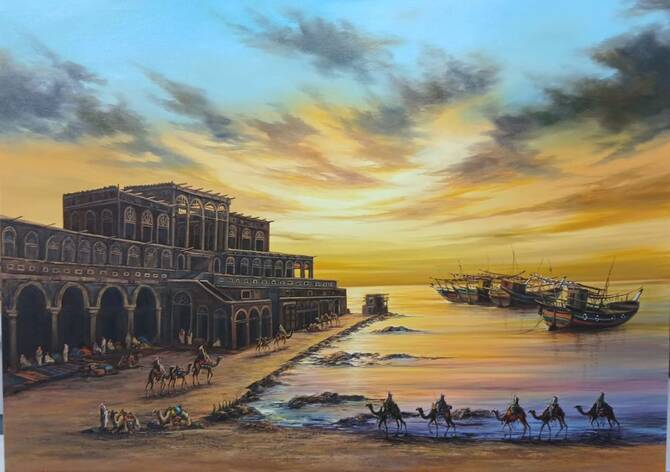
For Kim, each Saudi city carries its own aesthetic identity. From the fishing boats of Qatif to the old port of Uqair and the historic neighborhoods of Al-Ahsa, he finds pride and fulfillment in documenting diversity.
Alkhobar, in particular, has undergone what he describes as “remarkable changes due to rapid modernization.”
While today’s cityscape is sophisticated and smart, Kim remains drawn to the visual poetry of the past.
“I strive to find an artistic sense in the old traditional streets and vintage photographs of Alkhobar,” he said, citing King Khalid Street as it appeared in 1943 as one example.
Old cafes in historic shopping districts, in which photographs from 50 to 60 years ago still hang on the walls, serve as reference points for his canvases.
Positioning his art at the intersection of documentation and emotion, he said: “My work encompasses both the preservation of records and personal expression.
“As the city transforms into a modern and smart city, my own creative process also requires change.”
Kim has participated in numerous group exhibitions and workshops across the Kingdom over the years, and more than in his native Korea, he said.
He fondly recalls the Aramco bazaars in Dhahran, Ras Tanura and Udhailiyah, watercolor courses at Ithra, and art events at Prince Mohammad bin Fahd University and King Fahd University of Petroleum and Minerals.
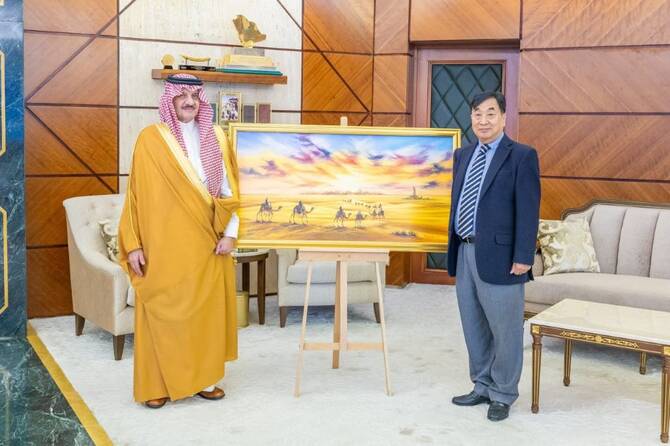
In March 2025 he was visited and commended by the Gov. of Eastern Province Prince Saud bin Naif bin Abdulaziz. Kim has also received letters of appreciation during group exhibitions alongside prominent female painters.
Among his notable works is “Warriors,” a depiction of camel-mounted fighters rendered using Korean painting techniques. The piece, he said, is “a blend of my soul and spirit.”
Despite his accomplishments, Kim acknowledges the personal and professional limits he faces.
He points to the need for broader public outreach and laments the lack of fellow artists with whom he can collaborate. He also expresses regret that he has not been able to train a successor.
“Achieving a career like mine is only possible through tireless effort and constant practice,” he said.
As a professional artist in Saudi Arabia, Kim says he strives not only for artistic excellence but also to embody “the virtues of leisure, tolerance and kindness as a way of life.”
He remains open to contributing further if called upon, and intends to continue working “as long as my health and circumstances permit.”


