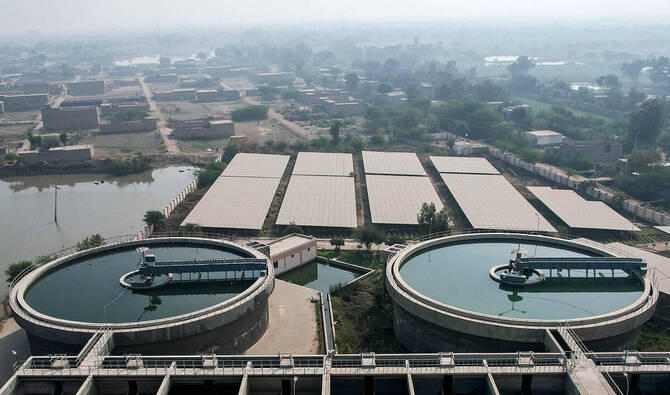

ISLAMABAD: Pakistan’s climate change ministry said on Tuesday it has kicked off work on the country’s "first-ever" National Water, Sanitation and Hygiene (WASH) Accounts to establish a unified national database for climate-resilient and sustainable delivery of water, sanitation and hygiene services.
Pakistan ranks among nations most vulnerable to climate change and has seen erratic changes in its weather patterns that have led to frequent heatwaves and droughts that have led to water shortages, while untimely rains and floods have displaced millions in recent years, causing disease outbreaks due to poor sanitation.
The landmark initiative, which would be hammered out in technical support from WaterAid, World Health Organization and United Nations Children’s Fund, seeks to address longstanding data gaps that have hampered evidence-based planning, financing and coordination in the sector at the national level.
“This is the first time Pakistan is moving toward a single national framework for tracking the state of water and sanitation services across the country,” said Mohammad Saleem Shaikh, the climate change ministry’s spokesperson and a WASH policy advocacy specialist, describing the initiative as a “major step toward evidence-based governance.”
Under the proposed system, federal and provincial authorities will be able to generate standardised and timely data to track investments, monitor service delivery and oversee the use of public funds, according to the official.
These WASH accounts would provide a comprehensive picture of water and sanitation services across the country, enabling policymakers to identify underserved areas and direct resources where they are needed most.
Shaikh said the system would strengthen coordination among provinces and improve oversight of projects and spending, adding that modern technologies, including artificial intelligence-based tools, will be incorporated into the system to improve data collection, verification, analysis and reporting.
Aisha Humera Moriani, federal secretary for climate change ministry, described the initiative as “a turning point in Pakistan’s WASH governance.”
“For years, fragmented and outdated data has undermined effective planning and resource allocation. Through a unified national system, we will now be able to identify gaps, direct investments where they are needed most and ensure that every province is working from the same evidence base,” she said.
Moriani said the initiative would not only strengthen transparency and accountability, but also help Pakistan build climate-resilient water and sanitation services in the face of mounting environmental pressures.
The coordinated effort to create a national, data-driven system for water and sanitation governance would lay the foundation for more effective policymaking and stronger institutional accountability across the country, according to Moriani.
Advanced digital tools and artificial intelligence would modernize the country’s WASH data architecture and enable faster and more accurate reporting.
“Pakistan cannot achieve climate resilience without reliable information on who has access to clean water and sanitation, where the gaps are and how public resources are being used,” she said.
“The National WASH Accounts will provide that clarity and help transform water and sanitation policy from reactive decision-making to proactive, evidence-based planning.”
The initiative would also strengthen Pakistan’s reporting on United Nations Sustainable Development Goal 6, which calls for universal access to safe water and sanitation, she added.