


ISLAMABAD: Pakistan is devising a new strategy to increase labor exports to Middle Eastern countries, an official said this week, noting that the number of Pakistani workers leaving for other countries declined by 10,000 in March due to flight disruptions and regional tensions caused by the Iran war.
Gulf Cooperation Council (GCC) countries such as Saudi Arabia, UAE, Bahrain, Qatar and Oman are preferred destinations for millions of Pakistani laborers. Every year, thousands of Pakistani skilled and unskilled workers leave the country for these Gulf nations to seek employment and repatriate income to their families back home.
The US and Israel’s move to bomb Iran on Feb. 28 and Tehran’s subsequent strikes against US interests in the Gulf states and Israel have plunged the entire region into turmoil. Nadeem Aslam Chaudhry, secretary of Pakistan’s Ministry of Overseas Pakistanis and Human Resource Development, said the war has not yet triggered a mass exodus of Pakistani workers from the region.
Speaking to Arab News on Thursday, Chaudhry said the ministry has facilitates the departure of around 60,000 workers monthly, adding that the figure dropped to 50,000 in March. The official attributed this decline to not only regional tensions but also logistical hurdles, triggered by the limited availability of flights due to the war.
“To mitigate the impact of this crisis, we are proactively devising a new strategy through high-level government consultations,” Chaudhry said.
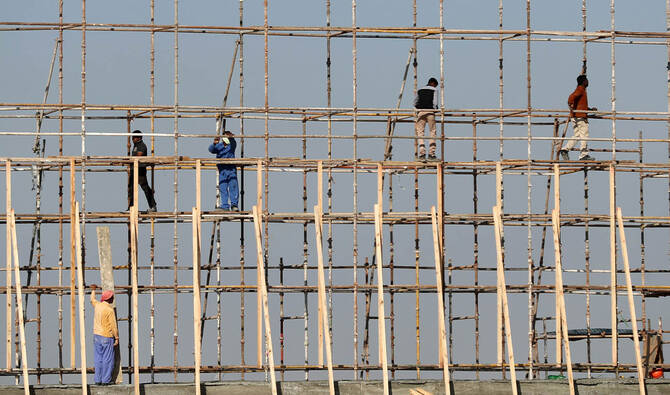
“We are currently identifying emerging opportunities in sectors like construction and health care that have expanded in the wake of the crisis.”
The remittances overseas Pakistanis send, especially from the Gulf countries, are vital for the South Asian country’s economy. Pakistan received $3.3 billion in foreign remittances in February, as per official data, with the UAE and Saudi Arabia as the largest contributors.
Chaudhry said a clearer picture of the economic impact of the war for Pakistan would be reflected in the upcoming remittances’ data.
“The April remittance data will reveal the true economic scale of this situation, but I am optimistic the disruption will be manageable,” he said.
“While we anticipate a slight dip, our assessment suggests that remittance inflows will remain resilient.”
He said Pakistan exported 763,000 workers to GCC countries last year. However, the official added that targets for the current year may need revision.
“While our initial target for this year was 800,000, the current geopolitical climate necessitates a strategic readjustment of those goals,” Chaudhry said.
’DRASTICALLY AFFECTED US’
Industry stakeholders say the decrease in manpower exports is being felt across the region, particularly in sectors such as hospitality that are sensitive to travel disruptions.
Issam Baig, chairman of “Jan Mohammed & Sons,” one of Pakistan’s top recruitment companies that exports workers to Saudi Arabia, Qatar, Oman and the UAE, said the impact of the crisis has been significant but temporary.
“It has drastically affected us,” Baig said. “The majority of the workers we recruit from Pakistan are going to the Middle East. And the epicenter is the Middle East right now.”
Baig, whose company has been in the business of exporting manpower since 1943, said over the past four to five years, Jan Mohammed and Sons has recruited between 15,000 to 20,000 workers and sent them to the Middle East. His company used to mainly recruit for the hospitality sector.
“And obviously, since there are no tourists coming in, the hospitality industry has gone really down,” Baig explained.
However, Baig was of the view that once the war is over, “hospitality will come back.”
“I am very optimistic about this, that this is a temporary phase,” Baig said, thanking the government for supporting his company as the Middle East war continues.
Asked what other avenues his company is exploring amid the war, Baig hoped “the construction industry would boom” again.
Baig noted that other countries that export manpower to the Middle East were also feeling the sting of the war.
“The numbers which have gone down are not only from Pakistan but across the subcontinent, from where they recruit these workers from,” he concluded.


