
JAKARTA: Indonesia and Malaysia are set to implement work-from-home measures for civil servants later this month in an effort to conserve energy, becoming the latest nations in Asia to make the move amid disruption to global fuel supply triggered by the US-Israeli war on Iran.
Governments in many Asian countries dependent on oil imports have moved to implement energy-saving measures to mitigate the ongoing supply crisis after the attacks on Feb. 28 led to the closure of the Strait of Hormuz — a critical chokepoint where around 80 percent of the crude oil and liquefied natural gas passing through is destined for Asian markets.
Indonesia announced Fridays as a remote workday for civil servants as part of a series of “adaptive and preventive” measures to address the global supply crisis.
“The government has established a work culture transformation policy to encourage a more efficient, productive and digital-based work culture,” Chief Economic Affairs Minister Airlangga Hartarto said during a virtual press conference earlier this week.
“This policy includes several key steps … (including) the implementation of a one day a week work-from-home policy for civil servants for both central and regional governments every Friday.”
The measure, which will come into force next week, will not apply to public service workers in essential fields like healthcare and security, or to those in strategic industries such as energy, transportation and finance.
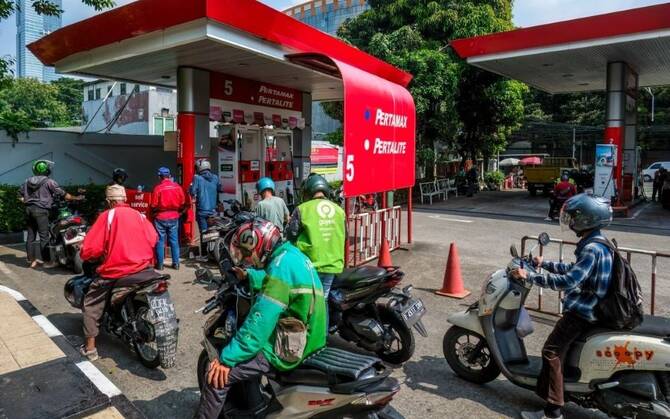
The Manpower Ministry is also urging the private sector and state-owned companies to implement a similar policy, as officials encourage Indonesians to be more “energy-efficient,” mainly through prioritizing the use of public transportation.
According to Hartarto, the work-from-home policy alone could save the government around 6.2 trillion rupiah ($364 million) in state budget, as the government expects its overall energy-saving measures to save a combined 59 trillion rupiah in public fuel spending.
Neighboring Malaysia will also introduce a work-from-home policy for civil servants starting from April 15, Prime Minister Anwar Ibrahim said late on Wednesday.
“The Cabinet has agreed to the work-from-home policy. It aims to reduce fuel consumption and ensure a stable energy supply,” he said during a special briefing.
The measures in Indonesia and Malaysia announced this week follow a series of similar policies taken by other Asian nations to try to mitigate energy crises resulting from the fuel shortages sparked by the Middle East war.
This includes Sri Lanka, which introduced a midweek holiday last month for those working in education, administration and public transportation, with the government encouraging the private sector to “follow suit.”
Officials in Laos, Vietnam and Thailand have also pushed for the return of online-based work to reduce energy consumption, while Pakistan has ordered remote work for half of its public sector employees.