

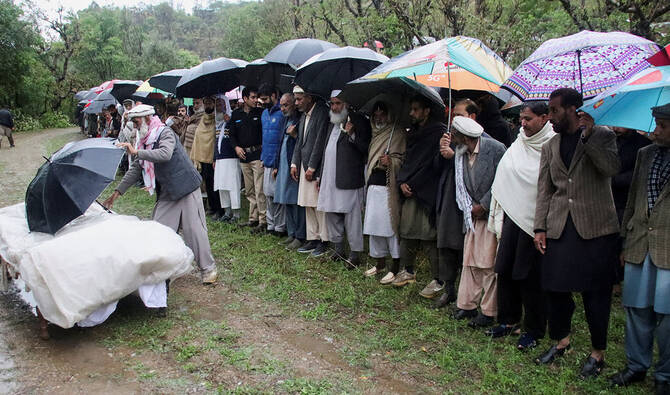

PESHAWAR: At least 25 people died and 77 others were injured in rain-related incidents across northwestern Khyber Pakhtunkhwa since Mar. 25, the Provincial Disaster Management Authority (PDMA) said on Thursday, urging authorities to speed up relief efforts as another spell of rain looms until Apr. 4.
Pakistan is among the countries most vulnerable to climate change and has in recent years experienced increasingly erratic weather patterns including extreme rainfall, floods and heatwaves that have exposed weak infrastructure and disaster preparedness gaps.
“Among the deceased, there are 18 children, 2 men, and 5 women, while the injured include 33 men, 9 women, and 35 children,” the PDMA KP said in a statement.
“Rainfall continues intermittently across the province, and a new spell of rain is expected to persist from April 1 to April 4.”
A total of 88 houses have been damaged, including 71 partially and 17 completely destroyed, the authority added.
These incidents occurred across several districts of the province, including Bannu, Abbottabad, Kohat, Peshawar, Nowshera, Bajaur, Lakki Marwat, Kurram, Hangu, Shangla, Buner, Malakand, Upper Dir, Battagram, North Waziristan and Tank, the PDMA said.
The PDMA said it was coordinating with Rescue 1122 and district administrations to speed up relief efforts and provide immediate aid to people. It directed Bannu authorities to ensure families of the deceased were assisted without delay.
The PDMA also urged the public to avoid unnecessary travel, steer clear of vulnerable tourist areas and follow government adviseries.
Pakistan has witnessed stormy weather conditions in recent weeks, with at least 21 people killed in Karachi as well.
In 2022, catastrophic floods triggered by unprecedented monsoon rains killed more than 1,700 people and affected over 33 million nationwide.
Last year, heavy monsoon rains again caused widespread flooding across Pakistan, killing more than 900 people, with Punjab among the hardest-hit provinces where millions were affected and vast stretches of agricultural land were submerged, damaging crops and livelihoods.


