


NEW YORK CITY: Lebanon has become “a shadow of its former self,” as escalating hostilities between Hezbollah and Israel continue to exact devastating human and physical tolls, the UN’s top official in the country warned on Monday.
Jeanine Hennis-Plasschaert, the UN’s special coordinator for Lebanon, described a country that was buckling under the weight of sustained violence, mass displacement and deepening instability.
“Lebanon is a shadow of its former self,” she said, citing as evidence the widespread destruction across large parts of the country. Once vibrant communities have been reduced to rubble, she added, with entire areas now resembling ghost towns.
The humanitarian toll of the current crisis continues to climb. Three UN peacekeepers were killed in southern Lebanon in the past 24 hours alone. Earlier in the weekend, nine Lebanese paramedics lost their lives in a single day.
Since the latest escalation in Lebanon began on March 2, shortly after the US and Israel attacked Iran on Feb. 28, at least 1,247 people have been killed. The victims include healthcare workers, journalists, civilians and Lebanese soldiers who were not engaged in combat.
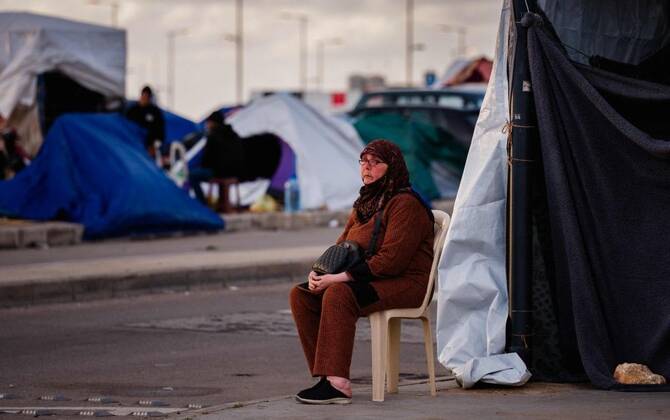
More than 1.2 million people have been displaced, further straining a country already grappling with years of economic and political crises.
Hennis-Plasschaert said the violence showed no signs of abating. Hezbollah continues to launch rockets and missiles into Israel and carry out ground operations in southern Lebanon, citing “myriad justifications.” Meanwhile, the Israeli military has intensified its campaign, pushing deeper into Lebanese territory and conducting targeted strikes and assassinations across the country.
She also warned of growing internal tensions; voices challenging Lebanon’s long-standing tradition of cross-confessional coexistence are growing louder, while others calling for a stronger, more unified state are also causing alarm.
“The longer this goes on, the harder it will be to come back from,” Hennis-Plasschaert cautioned, noting that increasingly hard-line rhetoric on all sides makes the prospect of a negotiated settlement ever more difficult.
Despite the bleak outlook, however, she outlined a possible path forward, beginning with an immediate truce to halt the violence and prevent further loss of life. She also called for confidence-building measures, stronger efforts by Lebanese authorities to assert control over decisions affecting war and peace, and renewed dialogue between Lebanon and Israel.
“These are the first, mutually reinforcing steps needed to end recurrent cycles of violence,” she added.
While military actions might yield short-term tactical gains, Hennis-Plasschaert warned, they risk irreversible long-term damage to both Lebanon and Israel.
“It is time to think in the long term,” she said. “It is time to move toward a process which builds, rather than destroys.”


