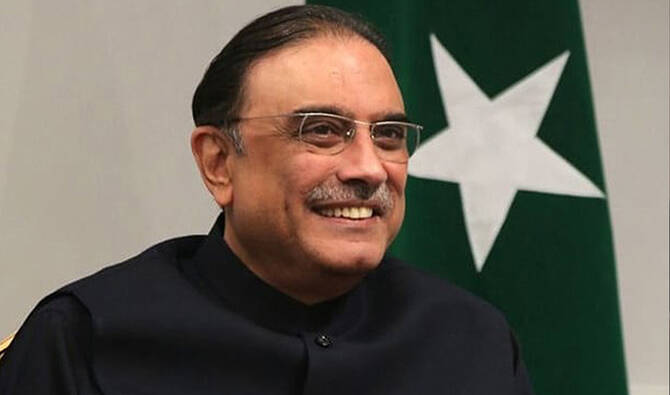

ISLAMABAD: Pakistan President Asif Ali Zardari has called for steps to protect citizens from price hikes due to oil and gas supply pressures, escalating energy costs and the evolving regional environment, the Pakistani information ministry said on Monday.
Pakistan, which has been facing oil and gas supply pressures due to disruptions resulting from US-Israeli war on Iran, this month raised petrol and diesel prices by Rs55 per liter.
Pakistan’s inflation has eased to around 6–7 percent in recent months after peaking at 38 percent in 2023, but fuel costs continue to drive broader price increases across the economy.
On Monday, President Zardari presided over an expanded consultative meeting, which was attended by Prime Minister Shehbaz Sharif and the leadership of all provinces as well as Gilgit Baltistan and Azad Kashmir.
“The President reiterated that the economically vulnerable people would not be left alone in this difficult time. He directed that coordinated decision-making should be done, with alignment between economic management, energy planning, food security measures and security preparedness,” the information ministry said.
“The President also asked for the need for public awareness efforts, focusing on reducing fuel consumption, encouraging the use of public transportation and promoting shared mobility practices as part of a broader demand management approach.”
Pakistan this month announced austerity measures to conserve fuel as war against Iran and Tehran’s counterattacks in the Gulf continue to disrupt global energy and cargo supplies and threaten regional economies. Islamabad’s measures included a four-day work week, slashing of fuel quota for government vehicles, shifting of classes of higher education institutions online, and establishing an austerity fund.
Last week, PM Sharif’s government also issued a tranche of Rs27 billion [$97 million] for the Oil and Gas Regulatory Authority (OGRA) to settle price differential claims arising from Islamabad’s decision later to shield consumers from the impact of rising oil prices due to the Middle East conflict.
Officials briefed participants of Monday’s meeting on the measures to mitigate price pressures and to ensure availability of essential supplies.
“The meeting was informed that proposals to increase oil prices had repeatedly been rejected by the Prime Minister and that funds saved through austerity measures were being channeled toward public relief,” the information ministry added.