

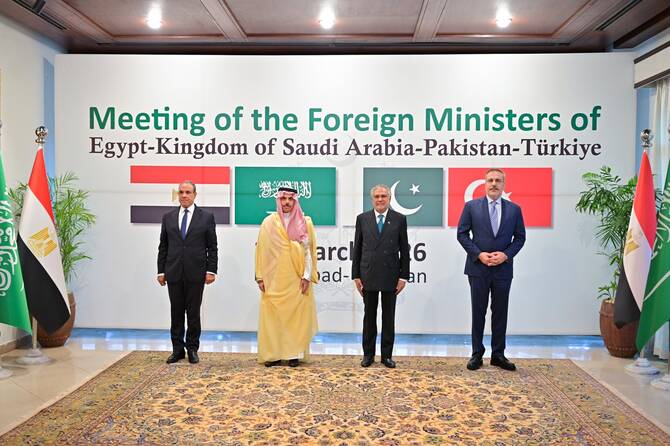


ISLAMABAD: Pakistan, Saudi Arabia, Turkiye and Egypt discussed “possible ways to bring an early and permanent end to the war” in the MIddle East on Sunday, Pakistan’s Foreign Minister Ishaq Dar said.
The four nations held joint talks to seek a de-escalation in the US Iran war in Islamabad.
In a video recorded statement, Dar said all sides had expressed confidence in Pakistan’s facilitation and that China “fully supports” the initiative to host the potential US-Iran talks in Islamabad.
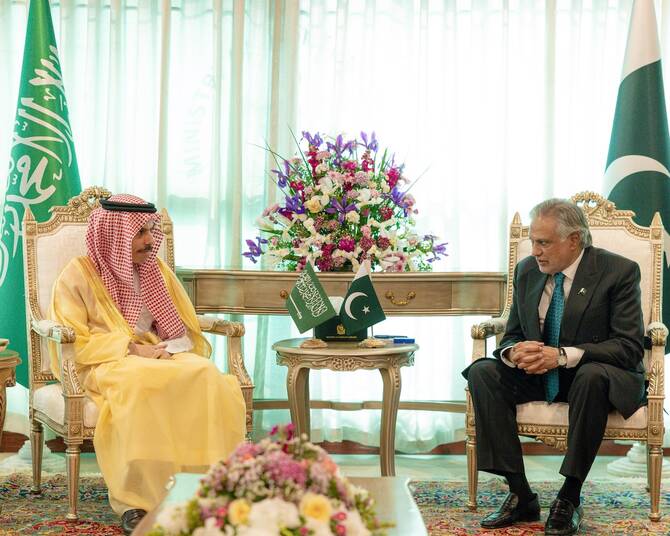
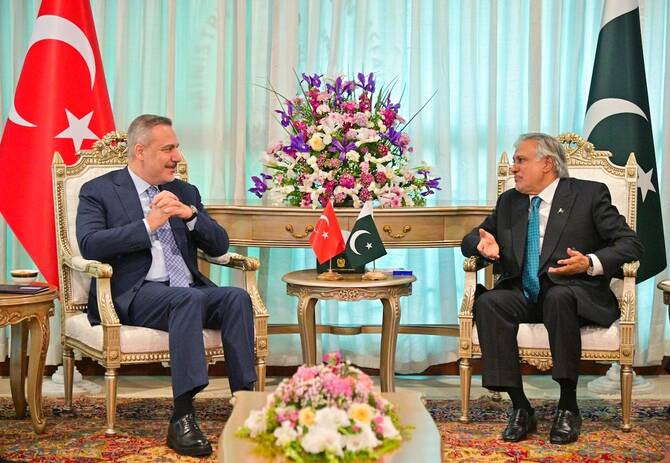
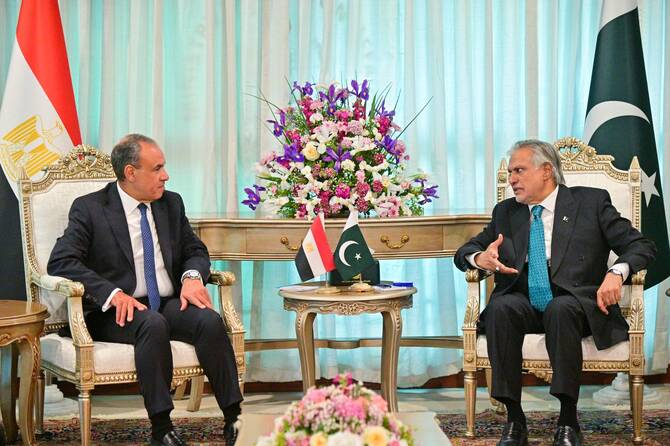
Saudi Foreign Minister Faisal bin Farhan, Egypt’s Foreign Minister Badr Abdelatty and Turkiye’s Hakan Fidan arrived earlier in Islamabad upon the invitation of Pakistan’s Foreign Minister Ishaq Dar.
The four-way meeting between the top diplomats of the Muslim nations convened “to review the evolving regional situation and discuss issues of mutual interest,” Pakistan's foreign ministry said in a brief statement.
Discussions focused on developments in the region, coordination and consultation regarding these developments, and the importance of intensifying diplomatic efforts to contain the crisis and enhance regional security and stability, the Saudi Press Agency reported.
Later on in the day, Prince Faisal was received by Pakistan’s Prime Minister Shehbaz Sharif.
Developments in the region and their repercussions on regional security and stability, as well as joint efforts in this regard, were discussed during the meeting.
Dar urged his Iranian counterpart Abbas Araghchi late Saturday, for “an end to all attacks and hostilities” in the region.
In a statement, the Ministry of Foreign Affairs said Dar told Araghchi that Pakistan remains committed to supporting efforts aimed at restoring regional peace and stability.
“The two leaders discussed the evolving regional situation and ongoing developments. DPM/FM emphasized the need for de-escalation, stressing that dialogue and diplomacy remain the only viable path for lasting peace. He also underscored the importance of an end to all attacks and hostilities. DPM/FM said that Pakistan remains committed to supporting all efforts aimed at restoring regional peace and stability,” Pakistan’s foreign ministry said on X.
Pakistan has emerged as a key mediator between Tehran and Washington since the United States and Israel began attacking Iran on Feb. 28, prompting counterattacks from Tehran on US interests as well as oil and other infrastructure in Gulf countries.
Islamabad has served as a go-between for messages passed between Iranian and US officials as the conflict drags on, severely disrupting oil and cargo supplies through the Strait of Hormuz as well as regional air corridors.
Iran will allow more Pakistani ships through Strait of Hormuz
Dar said late Saturday that Iran has agreed to allow 20 additional Pakistani-flagged ships to pass through the Strait of Hormuz.
Ishaq Dar wrote on X that two Pakistani ships would cross the strategic waterway daily under the arrangement.
“This is a welcome and constructive gesture by Iran and deserves appreciation,” Dar said. “It is a harbinger of peace and will help usher stability in the region.”
He said the move marked a meaningful step toward de-escalation and would strengthen efforts for peace.
– with AFP


