

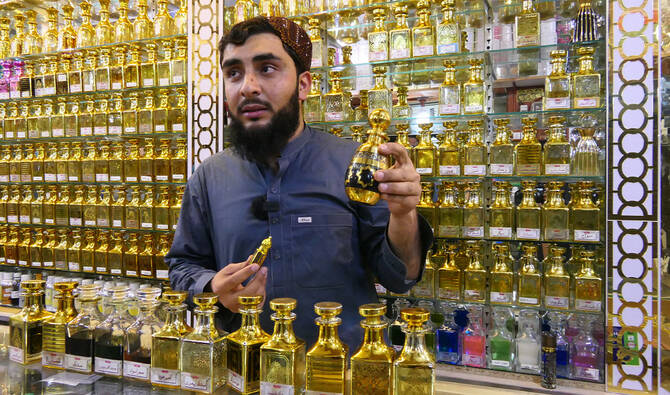

QUETTA: The shopkeeper sprayed a generous amount of perfume onto Bashir Ahmed’s wrist. Ahmed raised his arm, inhaled deeply and smiled at the familiar scent.
Scenes like this are common in perfume shops across the southwestern Pakistani city of Quetta as residents prepare for Eid Al-Fitr, the Muslim holiday marking the end of the fasting month of Ramadan. People traditionally celebrate by wearing new clothes, visiting relatives and attending communal prayers — often accompanied by carefully chosen fragrances.
In Quetta, the capital of the impoverished Balochistan province, affordable replicas of popular and costly Arabic perfumes are attracting growing numbers of shoppers seeking the scents associated with pilgrimage and celebration without the high price tags.
Ahmed, a 30-year-old resident of Kuchlak on Quetta’s outskirts, was searching for a clone of Ameer Al Oud, a fragrance he remembers from his visit to Saudi Arabia.
When he performed the voluntary Umrah pilgrimage in November 2024, the scent left a lasting impression. The fragrance is commonly used to perfume the Al-Hajjar Al-Aswad, or the Black Stone, in the Kaaba in Makkah.
“I want this perfume because whoever has a love for the Kaaba and has been blessed with a visit there knows how wonderful this fragrance is,” Ahmed, 30, told Arab News at a perfume shop at Quetta’s Bacha Khan Chowk.
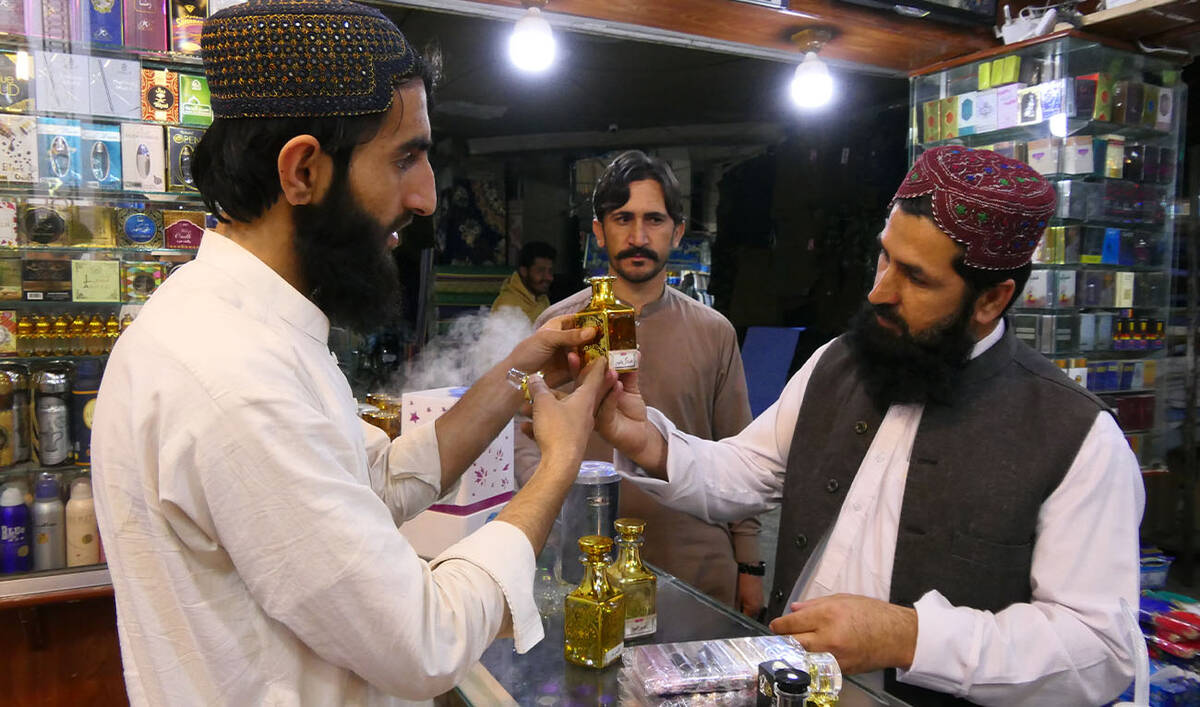
A shopkeeper explains the features of a perfume to a buyer in Quetta, Balochistan, on March 15, 2026.
He hopes the scent will remind friends and relatives of their own pilgrimage experiences.
“When my brothers and friends who have gone for Hajj or Umrah would smell this fragrance, they can experience that same feeling again that would double their joy,” Ahmed said.
Earlier this month, Mustafa Anwer, a 35-year-old resident of Quetta’s Toghi neighborhood, was browsing for an affordable and long-lasting fragrance at a shopping mall in the city.
“In Balochistan and Quetta, you will find many varieties of locally made Arabic perfumes from Arabic oud to musk,” Anwer told Arab News.
For him, wearing perfume on Eid carries religious significance as well as it is considered Sunnah or practice of Prophet Muhammad (peace be upon him).
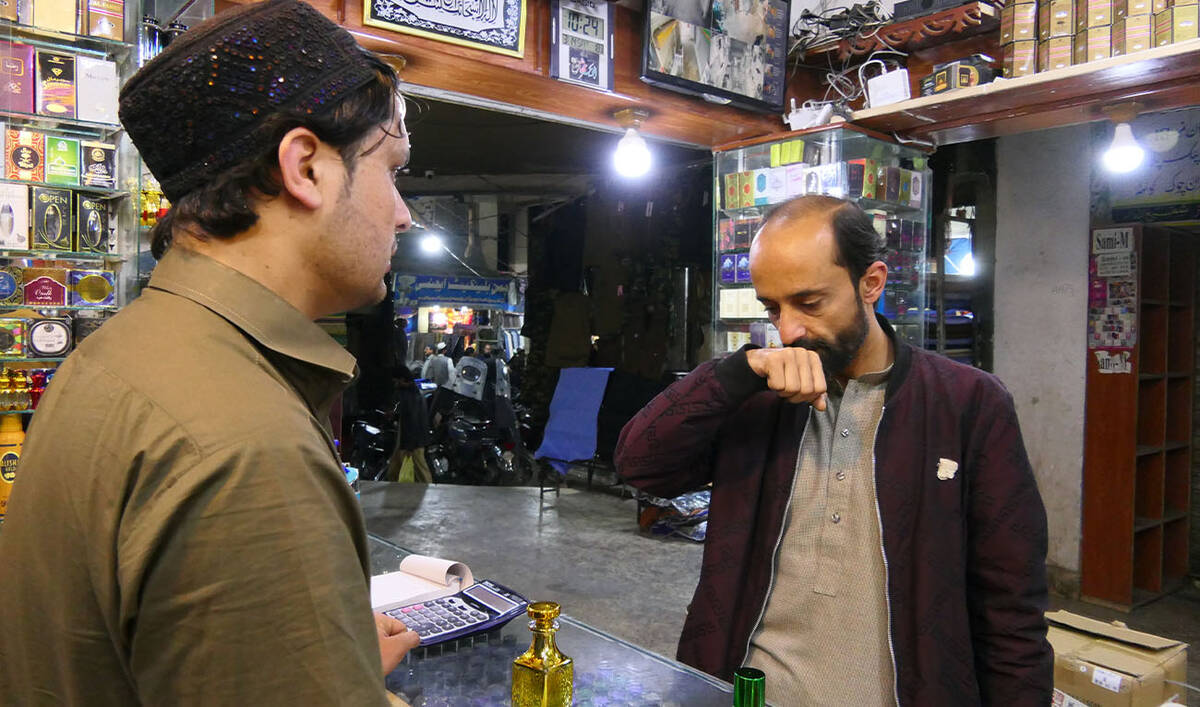
A buyer (right) smells an Arabic perfume at a shop in Bacha Khan Chowk, Quetta, on March 15, 2026.
Lower prices are another major attraction, though Anwer acknowledged that cheaper perfumes may not last as long.
“Naturally, if the rate is lower, the longevity will be slightly less,” Anwer explained. “If a high quality, expensive item gives you ten hours of lasting, a knock-off perfume might give you seven hours of lasting.”
He described Arabic Musk as an “excellent choice,” saying its fresh fragrance suits Quetta’s dry climate.
HOW THE REPLICAS ARE MADE
Munawar Khan, a perfume seller at Quetta’s Baldia Plaza, explained that producing a replica fragrance involved blending imported oils with other ingredients.
To create a knock-off version of a well-known scent, sellers mix about 40 percent of the original fragrance oil with ethanol and other stabilizing ingredients such as galaxolide, a musk compound, and dipropylene glycol.
The mixture is then frozen for 24 hours and stored in darkness for about a week, allowing the ingredients to combine and settle.
Khan said the process helped produce fragrances that remain fresh and long-lasting.
One vendor is Sami Ullah, 27, who has been involved in the perfume business since childhood. His father opened an ittar shop in the 1990s, and Ullah now sells dozens of replicas of Arabic and international fragrances.
Demand rises significantly in the days before Eid, he said.
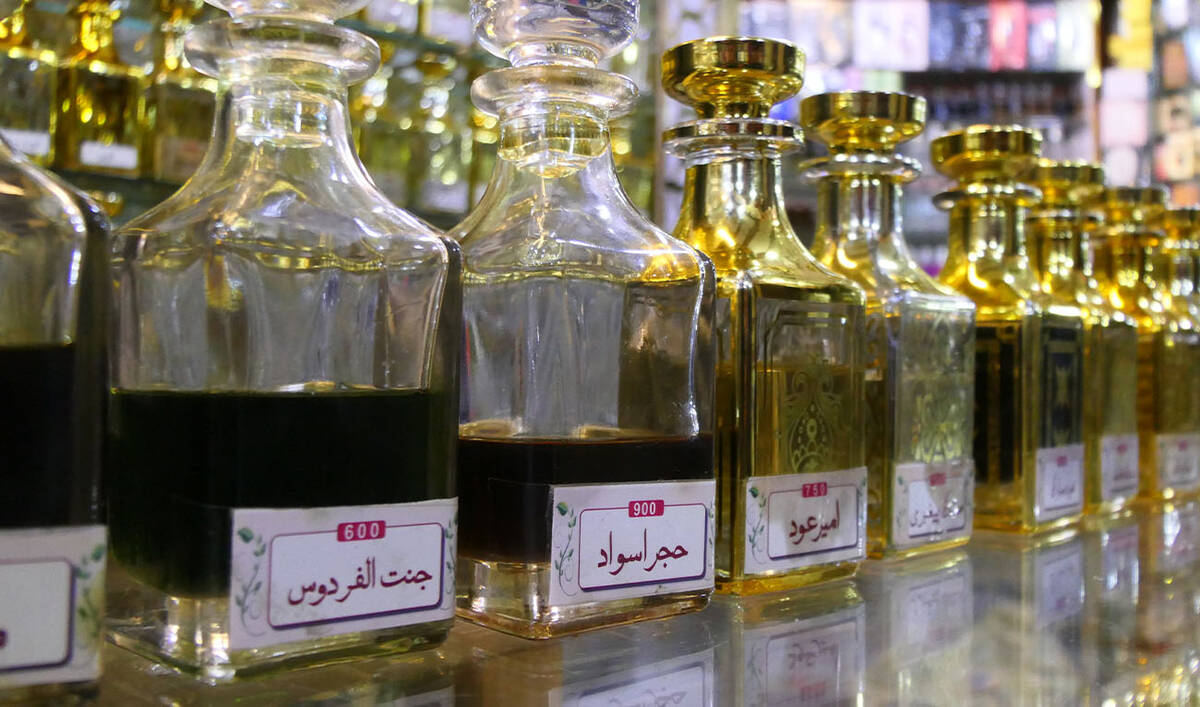
Perfume bottles on display at a shop in Quetta, Balochistan, on March 15, 2026.
“We have been selling here Musk Al-Pighambari, also known as Silk Musk, Oud Sufi, Oud-e-Mubarak, and one called Dehn Al-Oud Cambodi which are very pleasant, long-lasting scents and are in high demand for this Eid,” Ullah said.
He noted that authentic Dehn-Al-Oud perfumes, a well-known Saudi brand, could cost around 2,000 Saudi riyals ($266) for a 12 milliliter bottle, while a locally produced replica could cost about Rs20,000 ($71).
“We even have other varieties of good Arabic fragrances that cost Rs2000 ($7.16) for a 12ml bottle,” he added.
Ahmed, however, had already made up his mind. He purchased five bottles of Ameer Al Oud replicas as gifts for relatives:
“I want to make the people feel this fragrance when I will meet them for the Eid congregational prayer.”


