

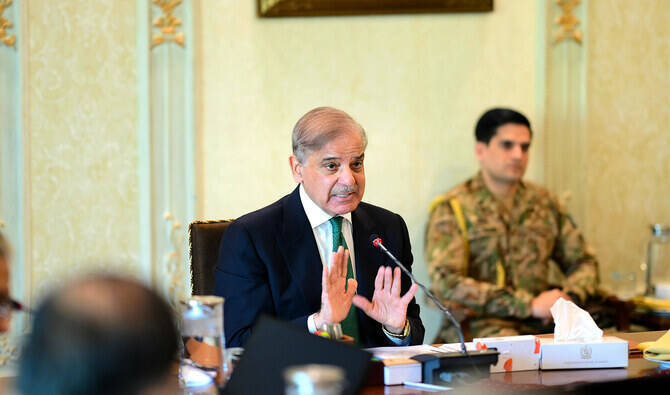

KARACHI: Prime Minister Shehbaz Sharif used a series of Eid Al-Fitr telephone calls with regional leaders on Friday to press for de-escalation in the Middle East, as rising hostilities involving Iran and the Gulf threaten to widen into a broader conflict.
Sharif’s outreach comes as a rapidly escalating conflict between the United States, Israel and Iran has triggered missile and drone exchanges across the Middle East, including strikes on energy infrastructure in Iran and Gulf states, and attacks on shipping routes near the Strait of Hormuz, a critical artery for nearly a fifth of global oil supply. The fighting, which began in late February, has disrupted oil and gas production and sent global energy prices sharply higher, raising fears of wider regional escalation and economic fallout.
Pakistan, which maintains close ties with Gulf states, Türkiye and other regional actors, has increasingly positioned itself as advocating restraint and dialogue, particularly as the conflict begins to ripple across diplomatic and economic spheres.
“The two leaders exchanged views on the ongoing hostilities in Iran and the Gulf region and stressed upon the need for an immediate de-escalation and use of dialogue and diplomacy for resolution of all disputes,” Sharif’s office said in a statement after his call with Uzbekistan’s President Shavkat Mirziyoyev.
In separate calls with Egypt’s President Abdel Fattah El-Sisi and Malaysia’s Prime Minister Anwar Ibrahim, Sharif reiterated concerns over the “evolving situation” in the region, with both sides agreeing on the urgency of diplomatic efforts to restore peace and stability.
The prime minister also spoke with Türkiye’s President Recep Tayyip Erdoğan, where he “strongly condemned the attacks on our brotherly country Turkiye as well as other brotherly countries in the region,” while reaffirming Pakistan’s “steadfast solidarity” and readiness to support de-escalation efforts.
In a call with Azerbaijan’s President Ilham Aliyev, Sharif similarly “reiterated strong condemnation of the attacks” and expressed solidarity, as both leaders called for restraint and dialogue.
Across the calls, Sharif emphasized diplomacy as the only viable path forward, reflecting Islamabad’s broader position that escalating tensions risk destabilizing an already fragile region.
Beyond the Middle East, Sharif’s conversation with Erdoğan also touched on Afghanistan, where he acknowledged Türkiye’s role in supporting recent ceasefire efforts between Pakistan and Afghanistan during Eid.


