


ISLAMABAD: Pakistan on Friday called on India to fully restore the Indus Waters Treaty, warning that unilateral attempts to suspend the agreement risk turning a vital shared resource into a political tool.
The remarks come nearly a year after India placed the 1960 World Bank-brokered treaty in abeyance following a sharp escalation in tensions between the two nuclear-armed neighbors.
The Indus Waters Treaty governs the distribution of waters from the Indus river system, allocating the western rivers, Indus, Jhelum and Chenab, primarily to Pakistan, which depends on them for most of its agriculture. The agreement has long been seen as one of the most durable arrangements between the two countries, surviving wars and decades of hostility.
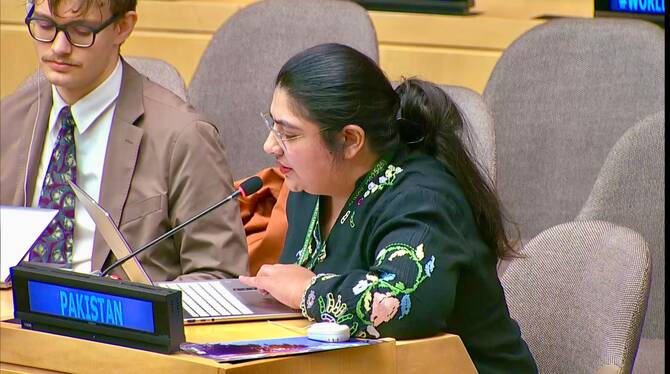
“No provision of the treaty permits unilateral suspension or modification or so-called abeyance. Such actions amount to the weaponization of water for narrow political gains, jeopardizing the lifelines of millions,” Pakistan’s Second Secretary Aleena Majeed said at a United Nations event marking World Water Day.
She said a 2025 supplemental award by a Court of Arbitration had affirmed that the treaty remains in force and that its dispute resolution mechanisms continue to be binding, rejecting the idea that either party could unilaterally suspend or render it inoperative.
Majeed called on India to “revert immediately to full and complete implementation” of the treaty, describing New Delhi’s move to hold it in abeyance as a departure from a long-standing legal framework that had endured despite conflict.
India placed the treaty in abeyance in April 2025 after a surge in hostilities following a militant attack in Indian-administered Kashmir that it blamed on Pakistan-backed insurgents. Islamabad denies the charge.
While water flows have not been fully halted, the move suspended key cooperation mechanisms, including data sharing and dispute resolution processes.
Pakistan has consistently rejected the move as unlawful, maintaining that the treaty contains no provision allowing unilateral suspension.
In her remarks, Majeed also rejected Indian allegations linking Pakistan to militancy, calling them “baseless” and accusing India of attempting to deflect attention from its own actions.
She reiterated that Pakistan remained committed to international law and to fulfilling its treaty obligations.


