

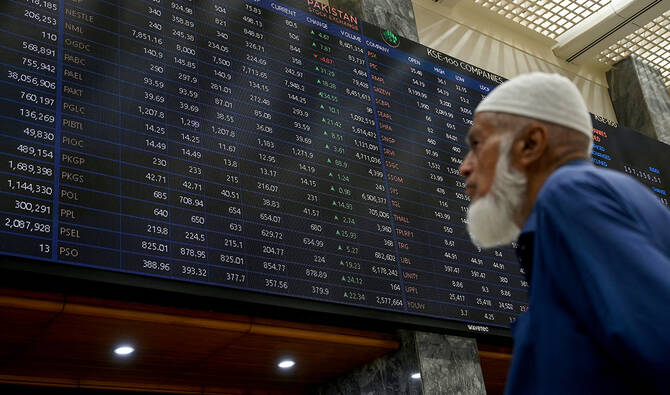

ISLAMABAD: Pakistan’s benchmark KSE-100 index fell 0.73 percent on a week-on-week basis, as escalating tensions in the Middle East pushed up global energy prices and weighed on investor sentiment, a brokerage report said in a weekly report.
The decline comes as conflict between the United States, Israel and Iran intensifies, raising concerns over oil supply disruptions and higher import costs for energy-dependent economies like Pakistan. Rising global crude prices typically feed into domestic inflation and widen external financing pressures, making equities less attractive.
The sell-off also coincided with tighter financial conditions at home, where government bond yields rose sharply during the week, reflecting expectations of sustained monetary pressure despite some improvement in macroeconomic indicators.
“KSE 100 Index declined by -0.73 percent on WoW basis, this weekly decline can be attributed to further escalation of Middle East conflict (US-Israel vs. Iran) and its resulting impact in energy prices,” Topline Securities Ltd. said in its weekly review dated March 19.
Despite the market decline, Pakistan’s external account showed signs of improvement, with the country posting a current account surplus of $427 million in February, compared to a surplus of $68 million in January, according to the report.
The real effective exchange rate (REER), which measures currency competitiveness, also eased slightly to 102.54 in February from 103.3 a month earlier, indicating some improvement in export competitiveness.
However, financial market indicators pointed to tightening liquidity. In a treasury bill auction held during the week, yields rose by 51 to 100 basis points across different tenors, signaling higher borrowing costs.
Investor flows reflected cautious sentiment, with foreign corporates and mutual funds emerging as net sellers, offloading equities worth $9.8 million and $4.6 million, respectively.
In contrast, local banks and individual investors provided some support to the market, purchasing equities worth $8.2 million and $2.5 million during the same period.
Trading activity remained moderate, with average daily volumes recorded at 321 million shares and a total traded value of Rs20 billion ($71.4 million).
On the economic front, large-scale manufacturing output rose 10.5 percent year-on-year and 12.1 percent month-on-month in January, while IT exports stood at $365 million in February, up 20 percent annually but slightly down 2 percent from the previous month.
Analysts say the market outlook will remain closely tied to geopolitical developments and their impact on global energy prices, as well as domestic monetary conditions.


