

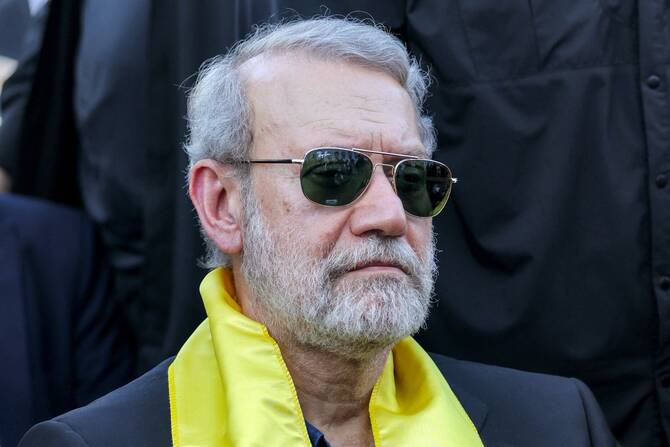
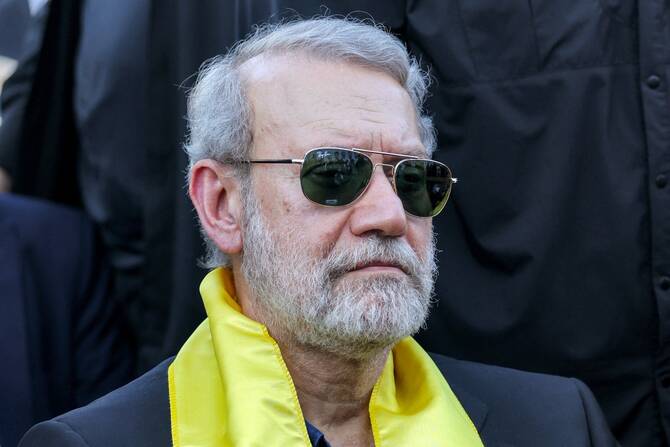
JERUSALEM: Israel said Tuesday it had killed Iran’s powerful national security chief, Ali Larijani, with Prime Minister Benjamin Netanyahu calling him the leader of “the gang of gangsters” that runs the Islamic republic.
Larijani’s death would be a massive blow to Iran just weeks after US-Israeli strikes on February 28 killed Ayatollah Ali Khamenei, the republic’s long-serving supreme leader, throwing the Middle East into war and upending global markets.
Israeli Defense Minister Israel Katz said Larijani was “eliminated last night,” although this has not been confirmed by Iran.
به مناسبت مراسم تشییع سلحشوران نیروی دریایی ارتش جمهوری اسلامی ایران: یاد آنان همواره در قلب ملت ایران خواهد بود و این شهادتها بنیان ارتش جمهوری اسلامی را برای سالها در ساختار نیروهای مسلح استوار مینماید. ازخداوند متعال علو درجات برای این شهدای عزیز خواستارم. pic.twitter.com/dvTdhyDYbY
— Ali Larijani | علی لاریجانی (@alilarijani_ir) March 17, 2026
“This morning we eliminated Ali Larijani, the boss of the Revolutionary Guards, which is the gang of gangsters that actually runs Iran,” Netanyahu said in a televised statement.
He said the overthrow of Iran’s authorities by the people “will not happen all at once, it will not happen easily. But if we persist in this — we will give them a chance to take their fate into their own hands.”
An AFP reporter had earlier Tuesday reported blasts in Tehran, and the reported assassination comes as strikes shook countries across the Middle East from the Gulf to Iraq and Lebanon.
Iranian authorities called on people to rally nationwide on Tuesday to defy enemy “plots” on a night usually marked by Persian new year celebrations.

A picture collage shows top Iranian security official Ali Larijani (L) and Iranian Gen. Gholam Reza Soleimani, the head of the Revolutionary Guard’s all-volunteer Basij force. (Source: AP and AFP)
Larijani, 68, has been described as a key pillar in the ruling system, close to the late ayatollah and central to the government’s nuclear policy and strategic diplomacy over decades.
After the war broke out, he became even more powerful.
While the new supreme leader, Mojtaba Khamenei, has not been seen in public since he was appointed to replace his slain father, Larijani walked with crowds at a pro-government rally last week in Tehran.
‘Right hand man’
“He has effectively been the figure in charge of the regime’s survival, its regional policy and its defense strategy,” David Khalfa, co-founder of the Atlantic Middle East Forum, told AFP.
“It’s the supreme leader who gives the order, but he is the one who carries it out. He is the right-hand man.”
Shortly after Israel said it had killed him, Larijani’s official social media profiles posted a handwritten note by him paying tribute to Iranian sailors killed in a US submarine attack this month.
The note was not dated, nor did the post address the claim of his death.
Israel also said Tuesday it had killed Gholamreza Soleimani, head of the Basij paramilitary force of Iran’s Revolutionary Guards, in a strike in Tehran.
And it said it had targeted Akram Al-Ajouri, head of the military wing of the group Palestinian Islamic Jihad, in a strike in Iran, though he was not confirmed dead.
Israel has since the October 7, 2023 attacks by Hamas pursued what analysts have described as a policy of decapitation, targeting the leaders of its enemies.
The whereabouts of Iran’s new supreme leader is the subject of much speculation. US President Donald Trump said Monday that “we don’t know... if he’s dead or not.”
Iran has retaliated by targeting US interests, energy facilities and civilian infrastructure of its energy-rich neighbors, and all but closed the Strait of Hormuz through which a fifth of global crude oil passes.
Oil prices surged Tuesday after several countries pushed back on Trump’s demand they help secure the strait by sending warships to escort tankers.
The war has also drawn in Lebanon, after Tehran-backed Hezbollah militants struck Israel over Khamenei’s killing.
Israel has stepped up strikes and deployed ground troops to its northern neighbor, including targeting Beirut’s southern suburbs on Tuesday, and later, conducting an air strike near the city’s airport.


