

 Marid resisted and Al-Ablak stood proud
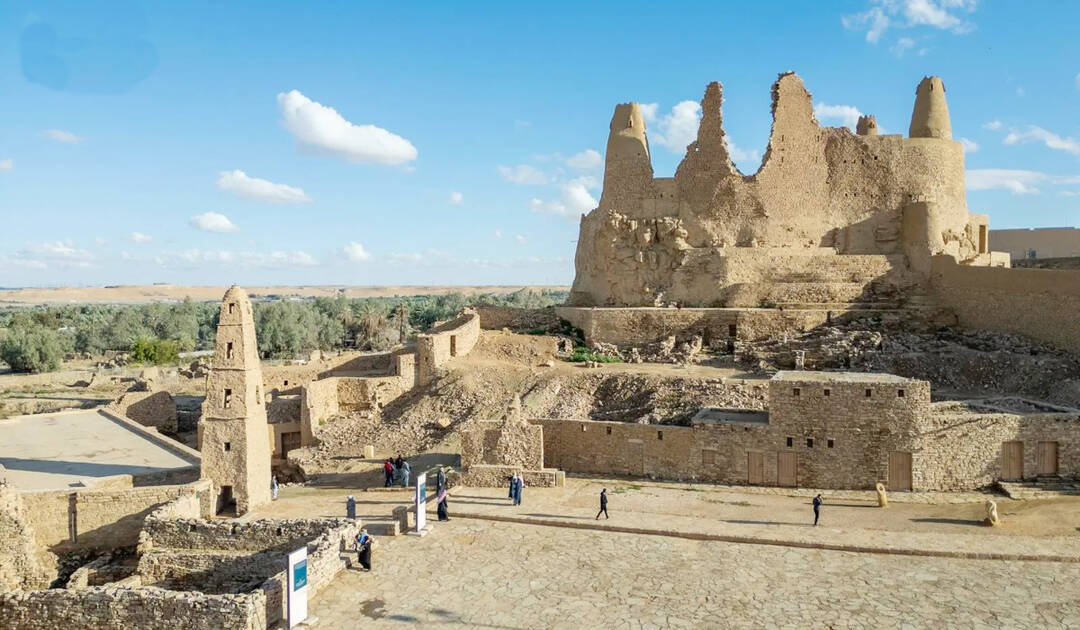

In the northern oasis of Al-Jouf in Saudi Arabia, where the desert opens into a quiet landscape of palms and olive trees, the rhythm of life has long been shaped by the responsibility of guardianship.
Guardianship not only of land, but of people, culture and the fragile continuity of history itself.
Recent interceptions in the skies above the region, threats halted before reaching the ground, remind us that even in the 21st century the protection of life and heritage remains an urgent task.
Yet in Al-Jouf this moment resonates within a much older story, one captured in a line of northern Arabian lore:
Marid resisted and Al Ablak stood proud.
The saying refers to the ancient fortress of Marid Castle in Dumat Al-Jandal, one of the most enduring historical sites of Arabia.
Rising above the oasis, Marid has watched over the region for centuries as caravans crossed the desert between Mesopotamia, the Levant and the Arabian Peninsula.
But the castle’s significance has never been purely defensive. Its stones overlook an oasis that sustained travelers, merchants and pilgrims for generations.
In desert societies, an oasis was more than a settlement. It was a shared refuge. Protecting it meant safeguarding not only those who lived there, but also the strangers who passed through.
Recent interceptions in the skies above the region remind us that even in the 21st century the protection of life and heritage remains an urgent task.
This tradition remains deeply embedded in the culture of Al-Jouf. The people of the region have long understood protection as a moral responsibility extending beyond tribe or origin.
A guest, a traveler, even a passerby seeking water or rest falls under the protection of the host.
It is an ethic that echoes through the centuries, defense not as hostility, but as a form of care.
Today Al-Jouf, in the northern region of the Kingdom of Saudi Arabia, is recognized as a landscape of profound historical significance.
Sites such as Dumat Al-Jandal, with its ancient castle, mosque, and archaeological remains, form part of Saudi Arabia’s rich cultural heritage and contribute to the broader human story of civilizations that met and moved across northern Arabia.
For this reason the protection of such places carries international relevance. The global community has long acknowledged the importance of safeguarding cultural heritage during times of tension or conflict.
The 1954 Hague Convention for the Protection of Cultural Property in the Event of Armed Conflict, adopted under the auspices of UNESCO, affirms that damage to cultural heritage anywhere is damage to the heritage of humanity.
Similarly, UNESCO conventions and United Nations resolutions emphasize the obligation of states and parties to conflicts to protect cultural sites and the civilian populations that live among them.
These frameworks are not abstract legal instruments. They reflect a shared recognition that heritage and human life are deeply intertwined.
Ancient stones are meaningful because they remain part of living landscapes, places where families reside, where communities gather, and where memories continue to unfold.
Al-Jouf embodies this relationship between past and present. Its archaeological sites rise beside thriving date groves and olive orchards, whose silver leaves have long been a quiet symbol of peace and continuity across the Mediterranean and the northern Arabian landscapes.
Its castles stand within view of homes, markets, and schools. The preservation of heritage here is inseparable from the preservation of daily life.
When defensive systems intercept threats above such landscapes they do more than prevent destruction. They protect the continuity of a place where history and humanity coexist.
And perhaps this is the quiet message carried by the old phrase about Marid and Al-Ablak.
It does not celebrate conflict. Instead it reminds us that vigilance can serve a gentler purpose, ensuring that places of refuge remain intact.
Across the oasis of Al-Jouf the view from Marid Castle still reveals the same horizon that travelers saw centuries ago, green palms and olive trees rising from desert sands, pathways that once welcomed caravans and continue to welcome visitors today.
To protect such places is to protect something universal, the possibility that landscapes of history remain landscapes of peace.
In this spirit the story of Al-Jouf offers a simple reminder to the international community. The safeguarding of heritage sites and the safeguarding of civilian lives are not separate responsibilities.
They are part of the same commitment, to ensure that the world’s cultural landscapes endure not as relics of the past but as living spaces where humanity continues to gather, pass through, and belong.
And so the old words endure softly across the northern desert.
Marid resisted, and Al-Ablak stood proud.
Not as monuments to conflict but as quiet guardians of a peace that has always depended on protecting people and the places that carry their stories.
• Abeer Al-Saud specializes in multilateral engagement, cultural diplomacy and peacebuilding through a systems-thinking lens. She was the first Arab selected for the Explorers Club 50 (2025), and is a Club of Rome member, Karman Project fellow and expert member of the World Economic Forum.


