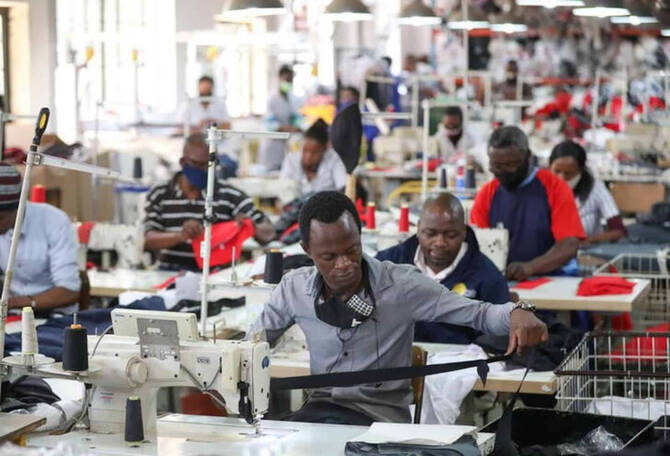
JOHANNESBURG: Extreme heat is not only harming the health of slum dwellers across Africa, but also damaging their ability to earn a living, with around a quarter reporting they had to take time off work, an independent research body said in a report this week.
Across the Global South, a growing crisis of overheating cities is impacting the health and livelihoods of more than 1 billion people living in informal settlements, a figure expected to increase seven-fold by 2050, the International Institute for Environment and Development said in a report.
“Heatwaves and other extreme weather can derail productivity, disrupt children’s schooling and cause health problems,” IIED principal researcher Anna Walnycki said in a statement. “Wherever you look, people with the fewest resources are bearing the brunt of the climate crisis.”
Together with Slum Dwellers International, a global movement of slum dwellers, IIED surveyed more than 1,000 people in three African informal settlements about the impact of extreme heat.
From Mathare in Kenya, to Kombo in Tanzania and Kariba in Zimbabwe, researchers found 25 percent of respondents lost workdays due to high heat conditions, while 40 percent said the heat prevented them from sleeping properly.
More than two-thirds of people (70 percent) overall said they had suffered health problems linked to heat, with some reporting indoor temperatures of 40 degrees Celsius, at times nine degrees higher than outdoor areas.
Across all three locations, more than a third of families interviewed said they were spending more money to cope with soaring temperatures – roughly one sixth of their monthly income during periods of extreme heat.
Typically, unplanned settlements have minimal green space and fewer trees as well as high density buildings made from low-quality building materials, all of which exacerbate heat compared to formal city areas, the research found. Wealthier residents may be able to invest in air-conditioning, better building materials, or live in areas with more trees and lower temperatures.
Poorer residents who may not have access to formal employment with social benefits such as sick leave bear the brunt of rising temperatures, research published in the International Journal of Environmental Research and Public Health found.
“Focus group participants said sometimes their only option is to leave windows open at night which leaves them vulnerable to crime,” said Mussa Raido, a researcher at the Centre for Community Initiatives in Tanzania who collected data for the survey.
While research is growing, there are still major gaps in how rising temperatures are impacting the poor in urban areas, the report found.
The report highlights the need for urgent and extensive data collection, early heat warning systems, low-cost building improvements to increase ventilation and planting of trees that bring both food security and shade to high density areas.
“Education for slum dwellers is key, particularly around planting and protecting trees that can give them the shade they desperately need,” he said.