


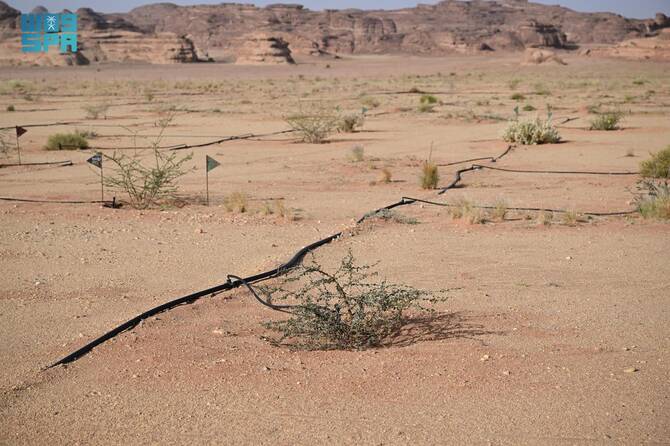
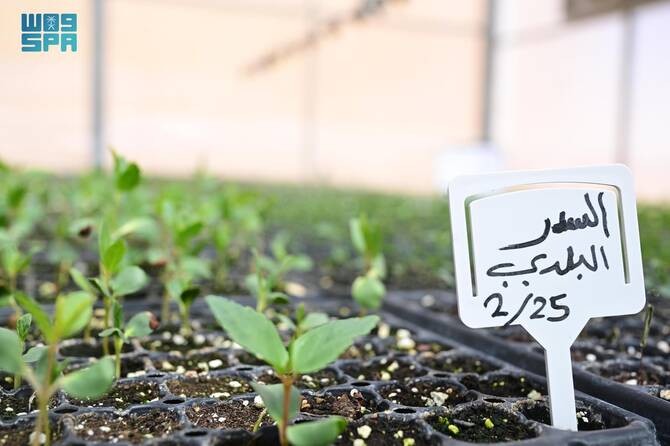
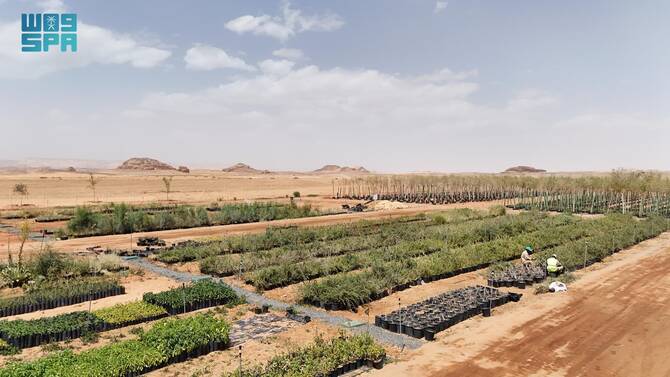


ALULA: AlUla governorate is strengthening its position as a model for ecological restoration through its native plant nursery and seed bank, which supply reserves and urban landscapes, with a target of more than 500 local plant species by 2030.
This reflects a shift toward building a sustainable environment that reshapes vegetation cover in the desert, the Saudi Press Agency reported on Sunday.
The initiative is part of the Royal Commission for AlUla’s integrated programs to restore ecosystems by producing over 1 million native seedlings to support vegetation recovery, ecological balance, and biodiversity conservation.
The commission is leading one of the region’s largest ecological restoration programs, based on a network of natural reserves spanning more than 12,000 sq. km.
Restoration efforts also include thousands of hectares of rangelands and the release of more than 1,700 animals through rewilding programs, with a focus on protecting endangered species, particularly the Arabian leopard.
Seedling production has supported more than 70 environmental projects and enabled the planting of over 700,000 trees and plants, with survival rates exceeding 90 percent.
The initiative includes more than 100 plant species adapted to AlUla’s environment. Sharaan Nature Reserve has recorded a 30 percent increase in vegetation cover over five years, improving soil quality, reducing desertification, and strengthening habitats.
The commission has also reported signs of biodiversity recovery, including the return and breeding of threatened species such as the sooty falcon, with AlUla hosting around 4 percent of its global population, along with positive results from wildlife reintroduction programs.
Its work follows an integrated scientific process, from seed collection and testing to propagation and replanting in natural sites. It also uses technologies such as EarthRanger, satellites, and drones to monitor wildlife and analyze environmental data, in cooperation with international partners and the International Union for Conservation of Nature.
These efforts align with Saudi Vision 2030 and the Saudi Green Initiative, aiming to enhance environmental sustainability, increase vegetation cover, protect wildlife, and improve quality of life, reinforcing the Kingdom’s role as a global model in environmental protection.


