



JERUSALEM/BEIRUT: The Israeli military launched a wave of airstrikes against Hezbollah positions across Lebanon on Monday, marking a sharp escalation following the group’s first rocket barrage since the onset of joint US-Israeli operations against Iran.
Explosions rocked the southern suburbs of Beirut, a known Hezbollah stronghold, shortly after the Israeli military (IDF) reported multiple projectiles crossing from Lebanese territory.
While Israeli air defenses intercepted at least one launch and others fell in open areas, the exchange shattered the relative quiet maintained since a 2024 US-brokered ceasefire.
Lebanese Prime Minister Nawaf Salam condemned the rocket fire launched at Israel, as the Israeli military launched a series of strikes across Lebanon in response.
“Regardless of who is behind it, the rocket fire from southern Lebanon is an irresponsible and suspicious act that endangers Lebanon’s security and safety and gives Israel pretexts to continue its attacks on it,” Salam said on X.
Hezbollah claimed responsibility for the rocket strikes, signaling a shift in its stance after previously expressing only “solidarity” with Tehran on Saturday.
In a statement, the group said it launched “a barrage of missiles and a swarm of drones” at Israel “in retaliation for the pure blood of... Ayatollah Imam Sayyid Ali Al-Husseini Khamenei... and in defense of Lebanon and its people, and in response to the repeated Israeli attacks.”
“The resistance leadership has always emphasized that the continuation of Israeli attacks and the assassination of our leaders, youth, and people gives us the right to defend ourselves and respond at the appropriate time and place,” Hezbollah said.
The IDF confirmed no injuries or significant damage from the incoming fire but emphasized that the retaliatory strikes aim to neutralize further threats from the Iran-backed group, which remains significantly weakened from the 2024 conflict.
“The IDF (Israel Defense Forces) will operate against Hezbollah’s decision to join the campaign, and will not enable the organization to constitute a threat to the State of Israel,” the military said.
Ahead of the strikes, the Israeli military issued an alert urging Lebanese people to stay one kilometer away from more than 50 villages in southern Lebanon.
Posting on X, Israeli Lt. Col. Ella Waweya said: "For your safety, you must immediately evacuate your homes and move away from the villages by at least 1,000 meters to open areas."
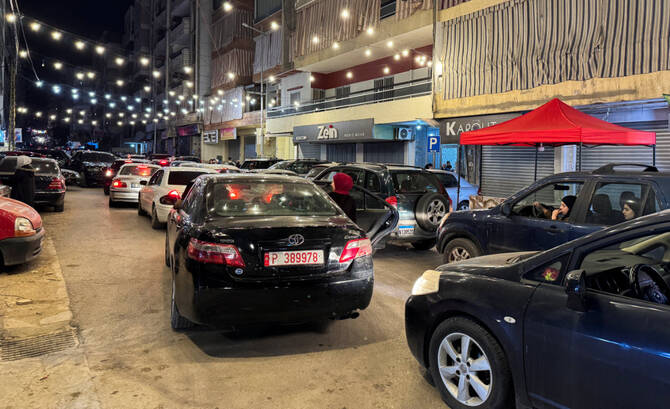
Some schools in Beirut opened their doors for those who fled the south and Dahiyeh, south of Beirut's municipal city limits.
Israel and Lebanon agreed to a US-brokered ceasefire in 2024, ending more than a year of fighting between Israel and Lebanese militant group Hezbollah that had culminated in Israeli strikes that severely weakened the Iran-backed group. Since then, the sides have traded accusations over violations.
Lebanon’s presidency said on Saturday it had been told by the US ambassador that Israel would not escalate against Lebanon as long as there are no hostile acts from the Lebanese side.


