

 Tuwaiq Sculpture Symposium and the role of sculpture parks in boosting cultural tourism
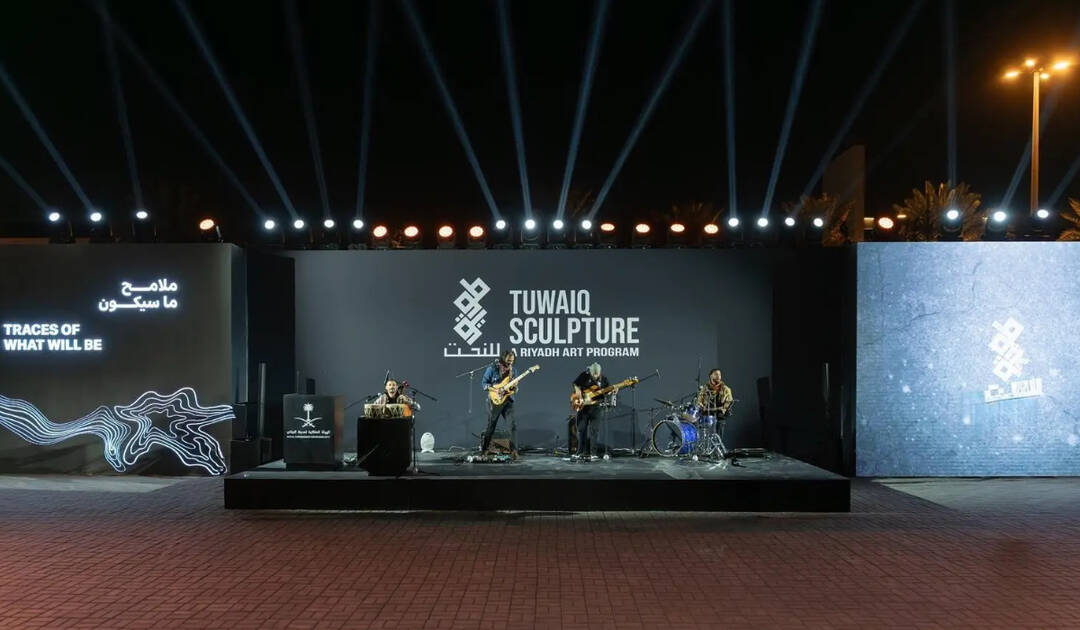

Cultural and sculpture parks are among the earliest forms of immersive experience. The cultural benefits they provide can be understood in terms of their positive impact on our interactions with the environment. Internationally, this model has gained increasing traction. These parks have been designated as cultural tourism belts and host annual events that welcome thousands of visitors.
The contribution of sculpture parks to local economies is well documented: they create employment opportunities and attract cultural tourism. Equally important, they form part of local green infrastructure, offering carefully designed landscapes that contribute to environmental and ecological well-being. Their social value should not be underestimated; sculpture parks serve as accessible cultural spaces where learning and leisure coexist.
This month, the Tuwaiq Sculpture Symposium plays a significant role in Riyadh’s cultural landscape, integrating 25 large-scale stone and metal works into the city’s public spaces. The annual international symposium brings artists together in an open-air studio environment to produce large-scale sculptural works.
Curated this year by Lulwah Al-Homoud, Sarah Staton, and Rut Blees Luxemburg, the symposium offers an experience in which observers can witness raw materials transform into permanent public artworks. All sculptures created during the program enter the Riyadh Art permanent collection and will be installed across key public sites in the capital, supporting the wider ambition to place 1,000 public artworks throughout the city.
I recently visited Roche Court New Art Centre in the UK, which offered a useful point of reference. The center integrates sculpture, architecture, and landscape. When it opened in 1994, it became a pioneer of the commercially run sculpture park in the UK. Its impact extends well beyond the site itself: visitors move through nearby villages, supporting local cafes and small businesses.
This relationship between culture and place demonstrates how art, when installed in a landscape setting, can generate sustained regional benefit rather than isolated cultural consumption. For instance, land art interventions further deepen the dialogue between art and place. They prompt us to think about regenerative practices and design that could further enhance our ecological and social systems.
During that visit, I found Peter Newman’s Skystation to be particularly unique; it invites visitors to pause, encouraging interaction with the landscape and with one another. There was also a special work, Richard Long’s Tame Buzzard Line, which explores themes of time and environmentalism. Long had previously participated in the Diriyah Contemporary Art Biennale, where he created the site-specific Red Earth Circle 1989/2021.
Across the UK, sculpture parks take many forms. Some are private, such as Lypiatt Park, the former home of sculptor Lynn Chadwick in Gloucestershire, accessible by appointment. On a recent visit to the park, I met the children of the celebrated British sculptor. They shared their father’s vision and explained how the estate contributes to the village’s local economy. His work is famously located in different parts of London, including atop the entrance of Fortnum and Mason on Piccadilly.
Other sculpture parks are well-established public destinations, including Yorkshire Sculpture Park, which contributes approximately £15 million annually to the local and regional economy and welcomes nearly 500,000 visitors per year. Whether open to the public or accessible by appointment only, what unites these sites is their ability to bring together landscape, architecture, objects, and land art within a single spatial experience. Many also provide community facilities, educational workshops, and spaces for hire. In this way, they remain embedded in everyday civic life instead of operating as purely cultural enclaves.
Sculpture parks are found in a range of settings — urban, rural, forest, coastal, and desert — each facing challenges related to location, climate, and management, such as material degradation: physical damage, corrosion, fading and flaking paint, and biological growth. In addition, sculpture parks face the ongoing challenge of remaining relevant and attracting new audiences.
Many seek to leverage their parkland through seasonal programming and temporary exhibitions. However, unlike museums, sculpture parks are unable to rotate their collections. This limitation can result in a sense of visual and experiential sameness over time. A well-established museological strategy for visitor engagement is therefore necessary and requires continuous research and assessment.
In cities like Riyadh, which is increasingly investing in sculpture and new landscapes, being mindful of these challenges at the point of conception is crucial to how such urban and rural settings are experienced over time. Most importantly, sculptural spaces would be reframed as strategic cultural assets. Their impact would extend beyond culture, generating social and economic benefits for surrounding areas and encouraging cultural tourists to explore different parts of the city. If this is realized, the potential for cultural and sculptural spaces in Saudi Arabia to play a similar role to their international counterparts would be hugely rewarding in the long term.
• Dr. Ghadah W. Alharthi is an international cultural adviser and an associate professor specializing in culture and innovation at Central Saint Martins, University of the Arts London. X: @ GhadahWA


