

Up to $600m in additional tariffs on Saudi exports to the US, according to analysis

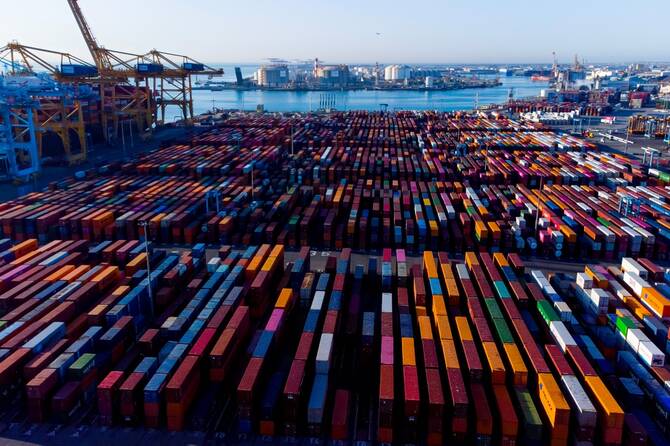
Gulf exports face higher US tariffs after President Donald Trump raises global duties to 15 percent following a Supreme Court ruling against his previous trade measures. Shutterstock.
Short Url
Updated 23 February 2026
Follow

Up to $600m in additional tariffs on Saudi exports to the US, according to analysis

RIYADH: Gulf exports have become targets of US President Donald Trump’s tariffs, which he raised from 10 percent to 15 percent on all countries.

The increase comes after the US Supreme Court ruled that the legal basis Trump had used to impose earlier tariffs was unlawful.

Previously, Gulf countries were among the few that had not raised their tariffs above 10 percent, while many other countries, most notably China, had already been subject to higher tariffs. However, with this latest increase, the Gulf states will be among those affected.

According to the financial analysis unit of Al-Eqtisadiah newspaper, Gulf exports to the US in 2024 amounted to about $26.2 billion, with Saudi Arabia accounting for roughly half of that, at $12.7 billion. These exports are subject to potential additional tariffs of SR637 million ($169 million).

It is likely that tariffs on Saudi exports will grow from $1.3 billion annually to $1.9 billion, a rise of 50 percent, following Trump’s recent increase.

Customs duties on Gulf exports will also increase, from $2.6 billion annually to $3.9 billion.

In 2024, Gulf exports are distributed as follows: $7.5 billion from the UAE, $1.8 billion from Qatar, and $1.6 billion from Kuwait, as well as $1.3 billion from Oman, and finally, $1.2 billion from Bahrain.

Gulf trade with the US in 2024 reached approximately $86 billion, comprised of $26.2 billion in exports and approximately $60 billion in imports, resulting in a Gulf trade deficit of $33.5 billion.

Trump responds to Supreme Court ruling

US President Donald Trump raised the global tariffs from 10 percent to 15 percent in response to the US Supreme Court ruling that his previous tariff implementation mechanism was unlawful.

Trump said in a post on his Truth Social account today: “As President of the US, I will, effective immediately, raise the global tariffs imposed on countries that have been taking advantage of the US for decades with impunity (until I took over!) to the legally permitted and tested level of 15 percent.”

Hours after the Supreme Court ruling on Feb. 20, Trump imposed a 10 percent global tariff on foreign goods, a move aimed at maintaining his trade agenda.

Trump had expressed his displeasure with the Supreme Court’s decision to overturn the tariffs imposed by his administration, asserting that the ruling would not restrict him. He vowed to impose tariffs far exceeding those struck down by the court, indicating that he had stronger alternatives to tariffs, raising questions about his future trade strategy.

The US Supreme Court struck down Trump’s sweeping global tariffs, undermining his signature economic policy and inflicting his biggest legal defeat since returning to the White House.

By a six-three vote, the court ruled that Trump exceeded his authority by invoking the federal emergency powers law to impose his reciprocal tariffs worldwide, in addition to targeted import duties that the administration claims are intended to combat fentanyl smuggling.


Acwa signs key terms to develop 5GW of renewable energy capacity in Turkiye

Updated 23 February 2026
Follow

Acwa signs key terms to develop 5GW of renewable energy capacity in Turkiye

JEDDAH: Saudi utility giant Acwa has signed key investment agreements with Turkiye’s Ministry of Energy and Natural Resources to develop up to 5 gigawatts of renewable energy capacity, starting with 2GW of solar power across two plants in Sivas and Taseli.

Under the investment agreement, Acwa will develop, finance, and construct, as well as commission and operate both facilities, according to a press release.

The program builds on the company’s first investment in Turkiye, the 927-megawatt Kirikkale Independent Power Plant, valued at $930 million, which offsets approximately 1.8 million tonnes of carbon dioxide annually, the statement added.

A separate power purchase agreement has been concluded with Elektrik Uretim Anonim Sirketi for the sale of electricity generated by each facility.

Turkiye aims to boost solar and wind capacity to 120GW by 2035, supported by around $80 billion in investment, while recent projects have already helped prevent 12.5 million tonnes of CO2 emissions and reduced reliance on imported natural gas.

Turkiye’s energy sector has undergone a rapid transformation in recent years, with renewable power emerging as a central pillar of its strategy.

Raad Al-Saady, vice chairman and managing director of ACWA, said: “The signing of the IA (implementation agreement) and PPA key terms marks a pivotal moment in Acwa’s partnership with Turkiye, reflecting the country’s strong potential as a clean energy leader and manufacturing powerhouse.”

He added: “Building on our long-standing presence, including the 927MW Kirikkale Power Plant commissioned in 2017, this step elevates our partnership to a new level,” Al-Saady said.

In its statement, Acwa said the 5GW renewable energy program will deliver electricity at fixed prices, enhancing predictability for grid planning and supporting long-term industrial investment.

By replacing imported fossil fuels with domestically generated clean energy, the initiative is expected to reduce Turkiye’s exposure to global energy market volatility, strengthening energy security and lowering long-term power costs.

The company added that the economic impact will extend beyond the anticipated investment of up to $5 billion in foreign direct investment, with thousands of jobs expected during the construction phase and hundreds of high-skilled roles created during operations.

The energy firm concluded that its existing progress in Turkiye reflects a strong appreciation for Turkish engineering, construction, and manufacturing capacity, adding that localization has been a strategic priority, and it has already achieved 100 percent local employment at its developments in the country.