- Transactions include early-stage seed rounds and growth credit facilities
RIYADH: Startups across the Middle East and North Africa have secured fresh capital spanning fintech, artificial intelligence, cybersecurity, and beyond, reflecting sustained investor appetite for technology-led growth.
The transactions include early-stage seed rounds, growth credit facilities, and multi-million-dollar series investments, alongside a strategic acquisition and a major cross-border AI stake.
Saudi Arabia-based fintech CASHIN has raised $16 million in a series A round led by Impact46. Founded in 2021 by Omar Al-Rammah, Abdulkarim Zrik, and Obay Al-Madi, the company provides an AI-enabled unified platform that connects financial and operational activities for fuel station operators, integrating pumps, tanks, payments, and auxiliary services into a centralized system.
CASHIN previously secured $1.6 million in a seed round in 2021 led by Investor Mine, with participation from BIM Ventures and several angel investors.
The company will deploy the new funding to expand fuel station networks across Saudi Arabia, enhance AI and advanced analytics capabilities, and deepen integrations with regulators, suppliers, vehicle operators, and banking institutions.
ZIWO secures strategic growth credit
UAE-based AI contact center platform ZIWO has secured a strategic growth credit investment from Ajeej Capital’s Amplify Growth Fund. The value of the investment was not disclosed.
Founded in 2010 by Renaud de Gonfreville and Eric Ouisse, ZIWO provides an Arabic-first, AI-powered cloud Contact Center-as-a-Service platform, enabling enterprises to manage voice, messaging, and digital customer interactions through a unified system.
The company closed a seven-digit pre-series B investment round in 2021. It will use the new funding to expand across the GCC, deepen regional partnerships and integrations, and accelerate the deployment of advanced AI automation and voice intelligence capabilities, following 6.6x revenue growth since its series A round.
Madfu raises $25.5m pre-series A to scale Shariah-compliant BNPL
Saudi Arabia-based fintech startup Madfu has raised $25.5 million in a pre-series A round led by Afaq Capital, with participation from angel investors.
Founded in 2022 by Abdullah Al-Ibrahim, Ahmed Al-Wusheel, and Anas Al-Shaqir, Madfu provides Shariah-compliant buy now, pay later solutions that allow consumers to split purchases into up to six interest-free installments.
The company will deploy the funding to expand its merchant network across Saudi Arabia, enhance its technology infrastructure, and develop new Islamic finance-aligned products, as it strengthens its position within the Kingdom’s digital payments ecosystem.
Solidrange raises $2.4m seed to advance AI-powered cybersecurity solutions
Saudi Arabia-based cybersecurity startup Solidrange has raised $2.4 million in a seed round led by Sharaka Capital, with participation from Sadu Capital, SEEDRA Ventures, and Tali Ventures, the investment arm of stc.
Founded in 2023 by Jamal Labani, Solidrange specializes in AI-powered Governance, Risk, and Compliance automation and cybersecurity awareness solutions.
The company will use the funding to accelerate regional expansion, advance product and technical development, and deepen the integration of artificial intelligence across its platforms.
Breadfast secures $50m pre-series C to expand across Africa
Egypt-based e-commerce platform Breadfast has raised $50 million in a pre-series C round backed by Mubadala Investment Co., a Saudi billionaire family, SBI Investment Co., Olayan Financing Co., and other institutional investors.
Founded in 2017 by Mostafa Amin, Muhammad Habib and Abdallah Nofal, Breadfast has evolved from a bread delivery service into a vertically integrated platform offering groceries, pharmaceuticals, payments, private-label products, and coffee shops.
The company will use the funding to expand infrastructure, scale logistics, and explore entry into new African markets ahead of a larger series C round expected in the first half of 2026, as it positions itself for long-term growth and a potential global IPO.
Stake raises $31m series B to expand fractional real estate platform
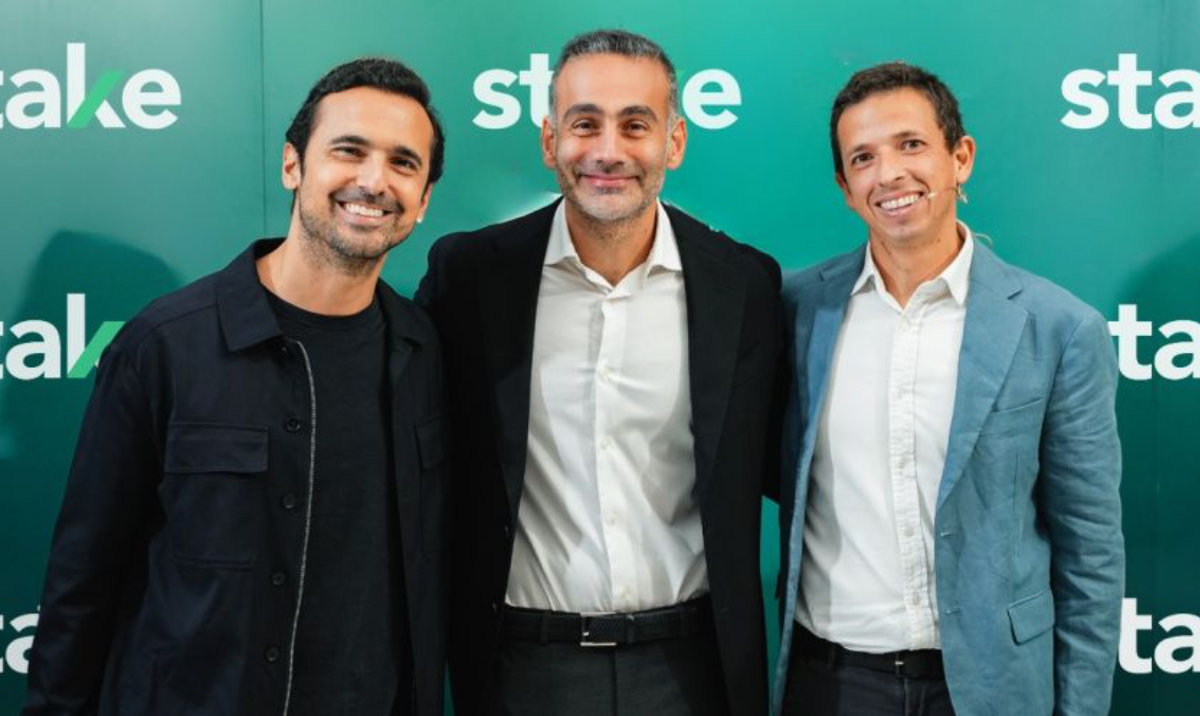
UAE-based proptech platform Stake has raised $31 million in an oversubscribed series B round led by Emirates NBD, with participation from Mubadala Investment Company’s MENA Venture Capital Fund, MEVP, and Property Finder, as well as STV NICE, Wa’ed Ventures, GFH Partners, and Ellington Properties.
Founded in 2021 by Manar Mahmassani, Rami Tabbara and Ricardo Brizido, Stake enables users to invest in fractional property ownership and private real estate funds starting from 500 dirhams.
With the latest round, the company’s total funding reaches $58 million. Stake will use the proceeds to expand its regulated offering in Saudi Arabia, scale its cross-border investment model, advance tokenization initiatives in collaboration with Property Finder, and grow new products such as StakeOne, as it deepens institutional partnerships and pursues international expansion.
Flextock raises $12.6m series A to strengthen e-commerce infrastructure
Egypt-based e-commerce infrastructure startup Flextock has raised $12.6 million in a series A round led by TLcom Capital, with participation from Conjunction Capital, Capria Ventures, and Access Bridge Ventures, as well as Foundation Ventures, BY Venture Partners, and JIMCO.
Alter Global, MSA Capital, and other investors also took part.
Founded in 2021 by Mohamed Mossaad and Enas Siam, Flextock operates across Egypt and Saudi Arabia, offering an integrated platform combining fulfillment, delivery aggregation, and cross-border enablement, as well as sales-channel access and embedded merchant financing through a unified technology system.
In 2021, the company closed a $3.25 million pre-seed round from regional investors including Foundation Ventures, Jameel Investment Management Company, and Bridge Ventures, alongside undisclosed angel investors in the GCC.
Flextock will use the new funding to expand infrastructure, enhance its end-to-end product suite, and accelerate merchant acquisition across core markets, supporting small and medium-sized enterprise growth and regional e-commerce expansion.
Deep.SA extends pre-seed round with Vision Ventures participation
Saudi AI startup Deep.SA has announced the participation of Vision Ventures in its pre-seed round, extending a previously raised SR4.5 million ($1.2 billion) from TAM and Raed Ventures.
Founded in 2025 by Mohammed Daggas, Deep.SA develops locally hosted AI platforms and models tailored for government and enterprise clients, focusing on operational efficiency, cost optimization, and secure data environments aligned with Saudi regulations.
The investment extends a $1.2 million pre-seed round announced in August led by Tam Development and Raed Ventures.
The company will use the funding to accelerate product development, expand Saudi-built AI infrastructure, and scale its recently launched “alPlatformai” platform, which enables secure, compliant access to artificial intelligence models.
Dawar acquires stake in BekyaPay to expand recycling traceability
Egypt-based circular economy platform Dawar has acquired a strategic stake in consumer recycling app BekyaPay, extending its digital oversight to the household level.
Founded in 2017, Dawar functions as a digital infrastructure layer for recyclable material flows, recording over 90,000 verified tonnes across 22 governorates and connecting collection points, aggregators, and traders within a unified traceability system.
The acquisition integrates source-level collection into Dawar’s architecture, enhancing data visibility and positioning the platform as compliance infrastructure amid tightening extended producer responsibility and environmental, social and governance reporting requirements.
Charikaty raises $150,000 on ‘Qui Veut Investir Dans Mon Projet?’
Morocco-based regulatory tech startup Charikaty has raised $150,000 during season three of “Qui Veut Investir Dans Mon Projet?” with backing from Ilan Benhaim and Karim Amor.
Founded by Amr Mouaqit and Driss Sijelmassi, Charikaty offers fully digital company formation services in Morocco, simplifying legal structuring, registration, modifications, and compliance processes for entrepreneurs.
The company will use the funding to enhance its technology, expand operations across Morocco, and scale services for small and medium-sized enterprises and the Moroccan diaspora, aligning with the country’s Maroc Digital 2030 strategy.