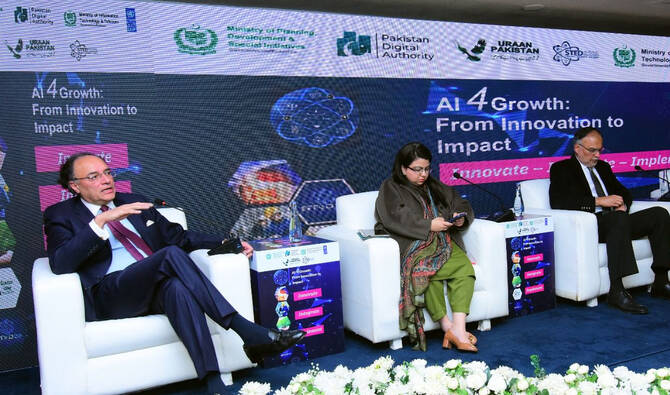

KARACHI: Pakistan is deploying artificial intelligence-driven systems to strengthen tax compliance and enforcement as part of a broader reform push, Finance Minister Muhammad Aurangzeb said on Tuesday, adding the country must focus on applied AI solutions.
He was speaking during a panel discussion at the National Artificial Intelligence Workshop in the capital, as Pakistan undertakes sweeping fiscal and structural reforms under a $7 billion International Monetary Fund loan program aimed at stabilizing the economy and boosting revenue collection.
The government has pledged to widen the tax base, curb leakages and digitize administration, with technology playing a central role in its tax transformation agenda.
“AI-enabled systems are playing an increasingly important role in strengthening compliance, enforcement, and decision-making,” Aurangzeb said, according to a statement released by the finance division.
“The Government’s ongoing tax transformation, anchored in reforms to people, processes, and technology, is leveraging AI-led CRM [Customer Relationship Management] systems, AI-led production monitoring, risk-based compliance tools, and faceless customer processes to enhance transparency, reduce leakages, and improve revenue outcomes,” he added.
The finance minister said the focus for a country like Pakistan must remain on applied AI solutions that deliver measurable gains in efficiency, transparency and productivity, rather than on adopting technology for its own sake.
Reducing discretionary human intervention through technology was central to curbing inefficiencies and corruption, he said, adding that AI-led systems had generated tangible fiscal gains that would not have been achievable through manual processes alone.
Aurangzeb said investing in human capital and skills development was essential to enable Pakistan’s youth to participate in higher-value segments of the global technology ecosystem, noting that technologies such as blockchain and data analytics could support productivity-led growth.
He maintained artificial intelligence offered opportunities in revenue mobilization, public service delivery and climate and population management, adding that realizing those gains would require clear policy direction, institutional readiness and a coordinated, whole-of-government approach.