PARIS: A Catholic community wedded to tradition is preparing to defy Pope Leo XIV by ordaining new bishops without his approval, raising the specter of a new schism within the Church.
It reignites a long-standing power struggle between Rome and traditionalists who are angered by threats to old-age rites, such as the use of Latin in church.
The Switzerland-based Society of Saint Pius X, which has about 600,000 followers worldwide, said this week it would go ahead with the ordinations on July 1, after a diplomatic outreach came to nothing.
The society (SSPX) said it had asked for an audience with the US pontiff, who was elected in May, but received an unsatisfactory response.
Ordaining bishops without the Vatican’s approval would mean excommunication — being expelled outright from the Catholic Church.
It would not be the first time: the society was founded in 1970 by French Archbishop Marcel Lefebvre, but clashed with Rome almost immediately.
It rejected the reforms introduced under the Second Vatican Council in the 1960s, which sought to bring the Church into the modern era, including by restricting the Tridentine mass.
SSPX refused to stop performing the mass, which is conducted in Latin by a priest who keeps his back to the congregation, in a ceremony marked by incense and Gregorian chants.
By 1975, the Vatican had stripped the society’s ministers of all authority.
Undeterred, Lefebvre illicitly ordained four bishops in 1988, resulting in immediate excommunication.
‘Force this through’
By threatening to ordain more bishops, the society risks undoing efforts to improve relations with the Vatican under recent popes.
Pope Benedict XVI lifted the excommunication in 2009 and his successor Francis said SSPX priests can celebrate marriages in traditionalist churches under some circumstances.
But since Leo was elected last year, “they haven’t stopped criticizing the pope,” Martin Dumont, head of the Institute for Research on the Study of Religions at the Sorbonne University, said.
And any fresh attempt to ordain new bishops would be seen by Rome as a direct threat to the unity of the Church.
“The act they are about to commit is schismatic in spirit,” Dumont said.
The society’s decision to forge ahead with ordaining its own bishops has not come as a surprise.
“They are trying to force this through, but it’s been in the works for several years now,” Dumont said.
SSPX, which has 720 priests but now only two bishops, claims its survival is at stake.
It needs more bishops because it has around 600,000 followers worldwide and the number is “growing in a number of countries,” notably France, Germany and the United States, Dumont said.
‘Bridge the gap’
Leo is keen to preserve Church unity and has made concessions toward traditionalists, notably by authorizing use of the Tridentine mass in St. Peter’s Basilica in Rome.
Cardinal Victor Manuel Fernandez, head of the Vatican’s department for doctrinal matters, has offered to meet with the society in Rome on February 12, it said.
“Rome has always extended a hand, saying: ‘Come back, we are ready to welcome you,’” Dumont said.
A canon lawyer who spoke on condition of anonymity said one solution could be to “find bishops to bridge the gap between the two sides.”
But he warned the bishop question masked “a much deeper problem,” namely “the fact that they do not recognize the Second Vatican Council.”
Pushing through with the ordination of new bishops means one thing only, the lawyer said.
“Canon law is very clear: if bishops ordain other bishops without a papal mandate, they are automatically excommunicated,” he said.


![]()

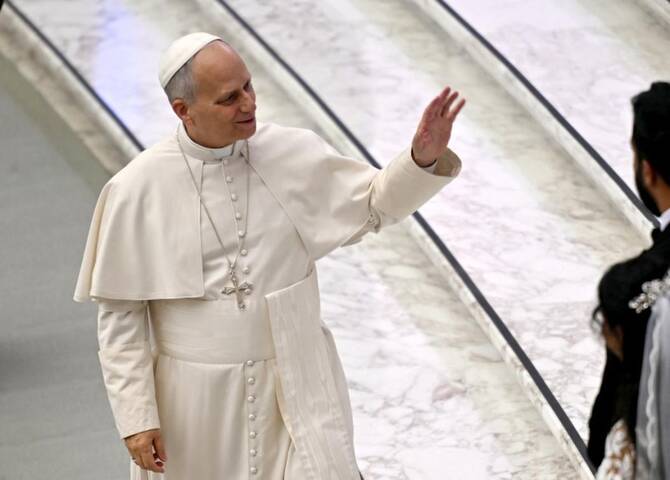
Rogue Catholic traditionalists risk showdown with Vatican
Short Url
https://arab.news/vrsmk
Rogue Catholic traditionalists risk showdown with Vatican
- Switzerland-based Society of Saint Pius X to go ahead with the bishop ordinations on July 1
- Ordaining bishops without the Vatican’s approval would mean excommunication


Latest updates


© 2026 SAUDI RESEARCH & PUBLISHING COMPANY, All Rights Reserved And subject to Terms of Use Agreement.