Saudi Arabia is reinforcing its role as a regional hub for halal food manufacturing and exports as global food company JBS expands its operations in the Kingdom, company executives told Arab News.
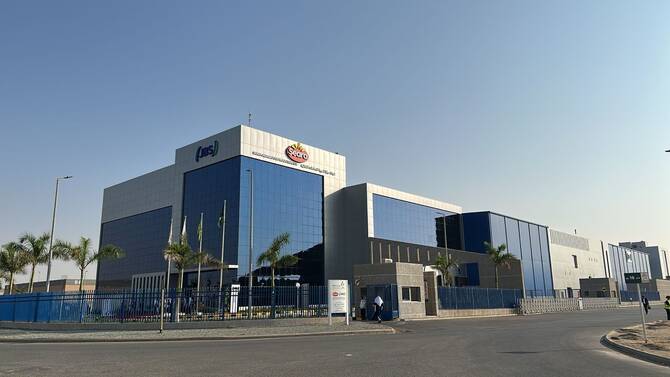
The expansion is anchored by a newly operational manufacturing facility in Jeddah, part of a total investment of SR303.75 million, which JBS says will support Saudi Arabia’s food security objectives under Vision 2030 while serving fast-growing halal markets across the Middle East, Africa and Southeast Asia.
JBS said the Kingdom is no longer viewed solely as an end market, but as a strategic base for production and exports within its global halal supply network. The Jeddah facility, which began operations in 2025, is already exporting to regional markets including the UAE, Kuwait and Oman, with plans in place to double output in 2026.
“Saudi Arabia is a strategic market for JBS, driven by strong population growth, rising protein consumption and the Kingdom’s Vision 2030 agenda,” said Gilberto Tomazoni, global CEO of JBS. “Beyond serving local demand, our ambition is to use Saudi Arabia as a global halal hub, exporting to regional and international markets from here.”
JBS operates in Saudi Arabia through its poultry brand Seara, which has steadily expanded its footprint over recent years. The company now operates two manufacturing facilities (Jeddah and Dammam), supported by a nationwide distribution network serving retail, foodservice and wholesale customers across the Kingdom.
Once current expansion plans are completed, JBS expects its total capacity to reach 45,000 tonnes annually, effectively quadrupling its local output compared to earlier stages of market entry. Company officials said the expansion will help reduce reliance on imported finished products while strengthening supply chain resilience.
“By investing in local production, we are strengthening halal capacity, supporting Vision 2030 objectives, and building a resilient platform to serve regional and global markets from the Kingdom,” Tomazoni added.
The Jeddah facility is located within the Jeddah Food Cluster on the Red Sea coast, offering logistical advantages for exports. JBS cited Saudi Arabia’s geographic position, infrastructure development and regulatory environment as key factors behind the investment.
Saudi Arabia’s Deputy Minister for Agriculture Dr. Suleiman Ali Al-Khatib highlighted the scale of domestic demand: “Chicken consumption in Saudi Arabia is among the highest globally, reaching around 45 to 50 kg per capita annually,” he said. “With population growth continuing, this sector will expand significantly, and investments like this are essential to securing future supply and supporting national food security.”
Beyond production capacity, the expansion also carries a strong employment component. JBS said the Jeddah project has created around 500 direct jobs, bringing the company’s total workforce in Saudi Arabia to nearly 950 employees.
João Campos, CEO of Seara, said the Saudi operations are integral to JBS’s wider halal strategy. “Saudi Arabia enables us to build a scalable halal hub that supports growth across MENA, Africa and Asia, while maintaining the highest standards of halal integrity, food safety and quality,” he said.
JBS also announced a strategic partnership with Arabian Company for Agricultural and Industrial Investment to launch locally produced whole chickens and poultry cuts for the Saudi market. The partnership combines JBS’s global expertise with local production capabilities, further advancing localization within the Kingdom’s food sector.
Seara’s product portfolio in Saudi Arabia has expanded rapidly, with more than 120 halal products tailored to local tastes, spanning frozen poultry, value-added foods and further processed products. The company currently ranks third in frozen chicken market share in the Kingdom, according to figures shared at the event.
Looking ahead, JBS said its focus will remain on expanding capacity, strengthening local partnerships and using Saudi Arabia as a base for halal exports to high-growth markets, reinforcing the Kingdom’s growing role in the global food economy.


![]()

JBS expands Saudi operations as Kingdom eyes global halal export leadership
Short Url
https://arab.news/pvv7e
JBS expands Saudi operations as Kingdom eyes global halal export leadership
Latest updates


Recommended


© 2026 SAUDI RESEARCH & PUBLISHING COMPANY, All Rights Reserved And subject to Terms of Use Agreement.