

Riyadh Marathon now part of Kingdom’s ‘social fabric,’ says Prince Khaled bin Al-Waleed bin Talal

1 / 5
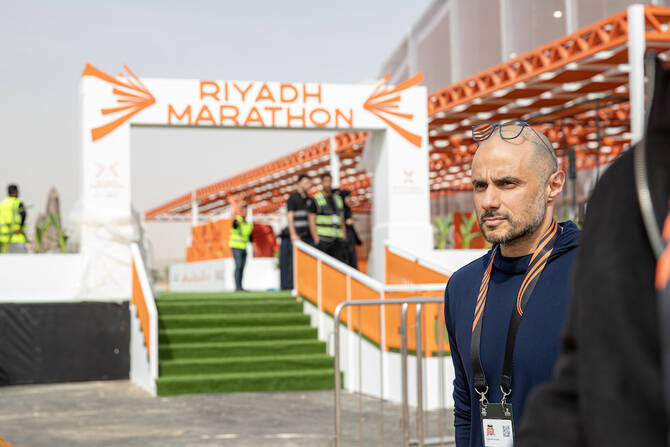
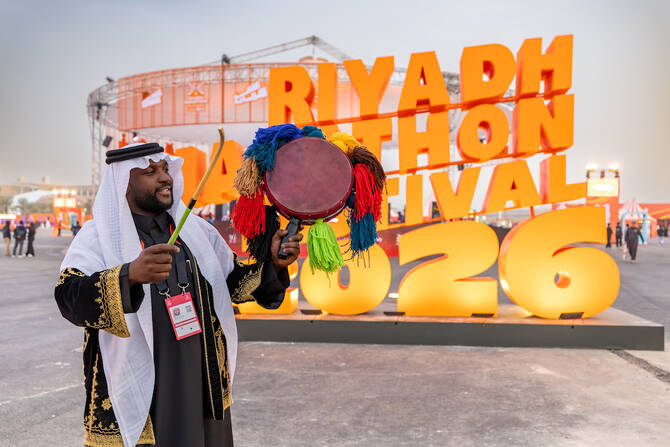
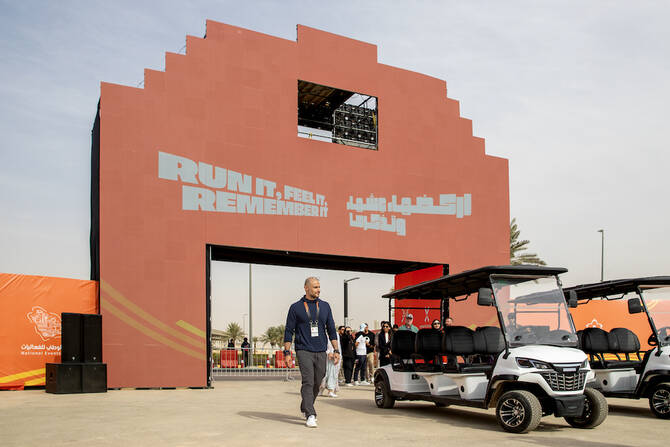
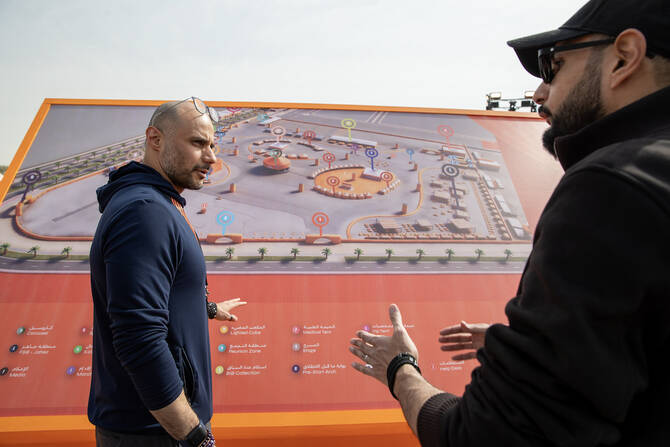
Prince Khaled bin Alwaleed bin Talal, President of the Saudi Sports For All Federation, will join thousands of local and international runners at the Riyadh Marathon 2026. (Supplied/SFA)
2 / 5
Prince Khaled bin Alwaleed bin Talal, President of the Saudi Sports For All Federation, will join thousands of local and international runners at the Riyadh Marathon 2026. (Supplied/SFA)
3 / 5
Prince Khaled bin Alwaleed bin Talal, President of the Saudi Sports For All Federation, will join thousands of local and international runners at the Riyadh Marathon 2026. (Supplied/SFA)
4 / 5
Prince Khaled bin Alwaleed bin Talal, President of the Saudi Sports For All Federation, will join thousands of local and international runners at the Riyadh Marathon 2026. (Supplied/SFA)
5 / 5
Prince Khaled bin Alwaleed bin Talal, President of the Saudi Sports For All Federation, will join thousands of local and international runners at the Riyadh Marathon 2026. (Supplied/SFA)
Short Url
Updated 31 January 2026
Follow

Riyadh Marathon now part of Kingdom’s ‘social fabric,’ says Prince Khaled bin Al-Waleed bin Talal

  • President of the Saudi Sports for All Federation spoke to Arab News ahead of 5th edition of the race on Saturday

DUBAI: As thousands of runners take part in the fifth edition of the Riyadh Marathon, no one will be prouder in the strides that the event has taken during that time than Prince Khaled bin Al-Waleed bin Talal.

The president of the Saudi Sports for All Federation, organizers of the race, has long championed marathon, as well as many other community sporting activities and competitions across the Kingdom.

“We’re on our fifth year, this is five years of increased participation from across Saudi,” he told Arab News as he prepared to join thousands of participants of Saturday. “Just this morning (Friday) I was tagged on social by a group of people flying in from Madinah to take part in the marathon. I love that we have people that come from all over the world for the marathon, but it really moves my heart when I am seeing people from all over the country make their way here to join us.”

Sports and wellness events like the marathon festival and the actual marathon itself, according to Prince Khaled, do so much “for community unity, for social fabric, for bringing together different cultures even within the Kingdom.”

Considering the sheer scope of the country’s landscape and the travel distances between cities, this is no small feat.

“As anyone would understand, Saudi is a massive landmass, and when you look at something as simple as different language habits and little social norms, you see them all coming together to intermingle for the marathon, and that brings us together even closer as a culture, as a country,” said Prince Khaled. “The SFA is proud to be the vehicle of unity and pride and togetherness for Saudi; there’s nothing like the feeling of seeing us all moving en masse with energy and excitement.

“We are supposed to be the body developing and strengthening Saudi community infrastructure, associations, and cultivating and creating resources that allow for a Saudi Arabia that doesn’t stop moving,” he added. 

“The SFA sees our Saudi leadership as a catalyst for this all; we are so fortunate to have King Salman and Crown Prince Mohammed bin Salman pushing for a health-centric citizenry and society.”

The success of the past four editions has raised the profile of the Riyadh Marathon in double quick time; it is no longer the novelty it was five years ago, but a highlight of the sporting calendar.

“Saudi now has the marathon baked into its social fabric, the country’s leadership has transformed the country from even a infrastructural perspective to make Saudi a wellness nation — today, and for the past four years of the Riyadh Marathon,” Prince Khaled said.

“When we see people all over social media asking for registration to reopen after we cleared 50,000, we knew the change has reached all level of society. The change is a marked shift towards physical activity being a main driver of entertainment and excitement in the Kingdom, alongside, of course, all of the physical benefits, healthwise.”

A sign of the importance of the race can be seen in a the list of partners that has grown year on year, including the Ministry of Sport, Saudi Olympic & Paralympic Committee, Saudi Athletics Federation, National Events Center, Riyadh Municipality, Princess Nourah bint Abdulrahman University, Riyadh Metro, the Royal Commission for Riyadh City and the Saudi Tourism Authority.

It is also sponsored by Alawwal Bank, Asics and Red Bull, among many other local and international names.

“I don’t want to tell you who just yet, but there’s a few ministers and vice ministers signed up to run,” said Prince Khaled.

“How cool is this? How engaged are our ministers that they have planned to join our people in this public expression of what it means to be Saudi in 2026. These are the people that are one with us, and lead with health and unity as an example. Look out for them during the 5 and 10 km, and two during the 21 km, but that’s all the hints I am giving as to which ministers are signed up to participate. It makes me really proud as president of SFA, and as a Saudi on a personal level.

“I also want to highlight our own Minister of Sports Prince Abdulaziz bin Turki Al-Faisal, who is always laser-focused on the success of the Riyadh Marathon, and SFA’s activations in general,” he added.

“Vision 2030 set a goal of increasing the national level of physical activity from 13 percent to 40 percent by the end of the decade. We have far exceeded that goal, with physical activity levels already reaching 60 percent.”


Spin-heavy Pakistan hit form, but India boycott risks early T20 exit

Updated 04 February 2026
Follow

Spin-heavy Pakistan hit form, but India boycott risks early T20 exit

  • Pakistan face must-win group matches, leaving no margin for error in T20 World Cup progression
  • Recent series wins have restored confidence, but batting volatility remains Pakistan’s biggest risk

LAHORE: Pakistan’s spin-heavy squad are in winning form ahead of the T20 World Cup, but a controversial decision to forfeit their marquee clash against India could still trigger another early exit.

Pakistan came close to withdrawing from the tournament in solidarity with Bangladesh, who pulled out after refusing to play in India, citing security concerns.

The Pakistan government eventually cleared the team’s participation but it barred them from facing India in Colombo in a blockbuster clash on February 15.

With two points for a win, a forfeit of the match will leave Pakistan with no margin for error if they are to progress as one of the top two from a five-team Group A.

It means they must win their opening game against the Netherlands in Colombo on Saturday and beat the United States three days later to stay in contention.

Their final group game will be against Namibia on February 18.

Captain Salman Agha said the move to boycott the India game was out of the team’s hands.

“That is not our decision. We have to follow what our government decides,” he said.

The Pakistan government has not said what their stance might be if the team were to end up facing India again in the semifinals or final. Agha was not thinking about that.

“Our job is to win, and we are capable of doing that,” he said.

Pakistan will be keen to avoid a repeat of the last T20 World Cup in 2024, where a shock super over defeat to co-hosts the United States led to them failing to get out of the group.

The side has since faced criticism for failing to adapt to the modern demands of T20 cricket, with the batting, particularly Babar Azam’s low strike rate, under scrutiny.

The criticism was fueled by Pakistan’s record last year, where 21 of their 34 T20 international wins came against lower-ranked opponents.

CONFIDENCE RESTORED
Against elite teams, the results were sobering: three losses to India in the Asia Cup and a 4-1 series defeat to New Zealand.

However, Agha believes recent performances have restored confidence.

Pakistan beat South Africa 2-1, won a home tri-series, and then completed a 3-0 sweep of an under-strength Australia.

“We’ve had good preparation by beating Australia. We have the luxury of quality spinning all-rounders like Mohammad Nawaz, Shadab Khan and Saim Ayub.

“We’re ticking most boxes and believe we can win the World Cup,” Agha said.

The spin department has been strengthened by Abrar Ahmed and Usman Tariq, the latter known for his unusual, slingy action and exaggerated pause at the crease.

The pace attack is led by the experienced Shaheen Shah Afridi and Naseem Shah.

Faheem Ashraf provides seam-bowling all-round support and newcomer Salman Mirza has been impressive.

Batting remains Pakistan’s most volatile component.

When openers Saim Ayub and Sahibzada Farhan provide strong starts, the side can post competitive totals, but collapses remain a constant threat.

Head coach Mike Hesson has added another layer of risk by leaving out experienced wicketkeeper Mohammad Rizwan because of poor form, opting instead for makeshift options in Usman Khan, Khawaja Nafay and Farhan.

For Pakistan, the ingredients for a deep run are present, but with points potentially forfeited, there is little room left for error.
