


Bangladesh-Pakistan flights resume after 14 years

Governor Sindh Kamran Khan Tessori (R) welcomes a passenger from Dhaka arriving at Jinnah International Airport in Karachi on January 30, 2026. (AFP)
Short Url
Updated 30 January 2026
Follow

Bangladesh-Pakistan flights resume after 14 years

  • National carrier Biman Bangladesh Airlines departed for Pakistan’s Karachi city with 150 passengers
  • Since 2012, travelers between both nations have used connecting flights to reach their destinations

DHAKA, Bangladesh: Direct flights between Bangladesh and Pakistan resumed on Thursday after more than a decade, as ties warm between the two nations that have long had an uneasy relationship.

Bangladesh and Pakistan — geographically divided by about 1,500 kilometers (930 miles) of Indian territory — were once one nation. They split after a bitter war in 1971.

Since 2012, travelers between Bangladesh and Pakistan had to use connecting flights through Gulf hubs such as Dubai and Doha.

On Thursday national carrier Biman Bangladesh Airlines departed for the Pakistani city of Karachi, the first regular flight since 2012.

Mohammad Shahid, one of 150 Karachi-bound passengers on board, said he was happy to be able to travel more frequently than before, when he could only make the journey once every two or three years.

“We had been waiting for such an opportunity because we travel continuously,” he told AFP in Dhaka.



Passengers from Dhaka arrive at Jinnah International Airport in Karachi on January 30, 2026.(AFP)

“There are so many people waiting in Pakistan to come here, and some waiting here to go there.”

Direct flights will now operate twice weekly.

Biman said in a statement that their resumption would “play a significant role in promoting trade and commerce, expanding educational exchanges, and fostering cultural ties between the two countries.”
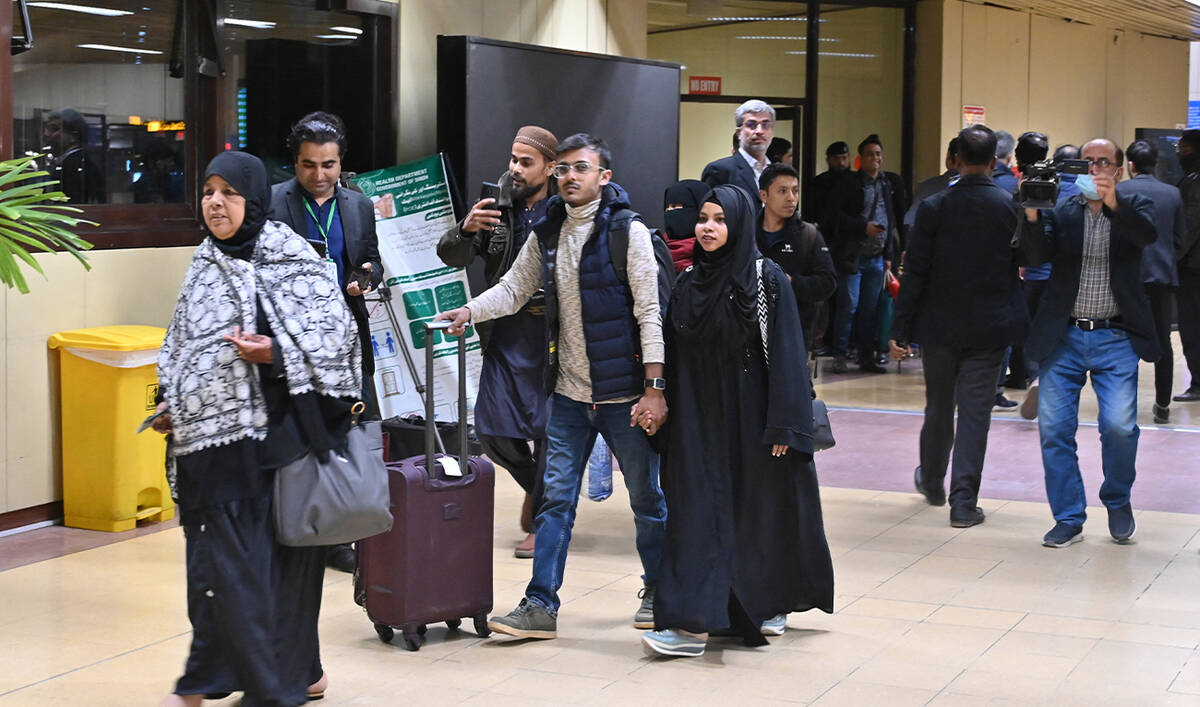


Passengers from Dhaka arrive at Jinnah International Airport in Karachi on January 30, 2026.(AFP)

Ties with fellow Muslim-majority nation Pakistan have warmed since a student-led revolt in Bangladesh overthrew Sheikh Hasina in 2024, ending her autocratic 15-year rule.

Over the same period, relations between Bangladesh and Hasina’s old ally India have turned frosty.

Cargo ships resumed sailing from Karachi to Bangladesh’s key port of Chittagong in November 2024.

Trade has risen since then and cultural ties have grown, with popular Pakistani singers performing in Dhaka, while Bangladeshi patients have traveled to Pakistan for medical care.
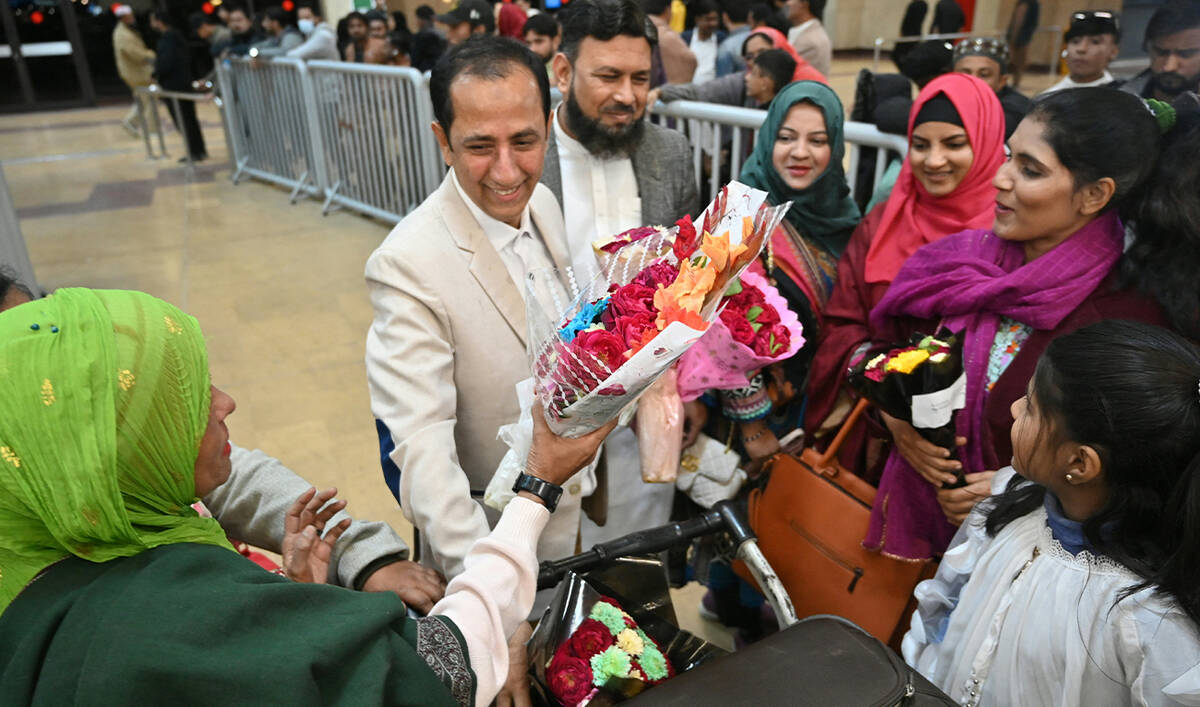


Passengers from Dhaka are welcomed by relatives as they arrive at Jinnah International airport in Karachi on January 30, 2026. (AFP)


Pakistan plans digital wheat tracking system, steps up Ramadan price monitoring

Updated 5 sec ago
Follow

Pakistan plans digital wheat tracking system, steps up Ramadan price monitoring

  • Government says adequate stocks available ahead of the upcoming harvesting season
  • It instructs provinces to prevent flour price spikes during the holy month of Ramadan

ISLAMABAD: Pakistan plans to introduce digital traceability and tighter supply chain monitoring in its wheat procurement system under a new long-term policy, the food security ministry said on Saturday, as authorities move to curb price volatility during Ramadan.

The announcement followed a meeting of the National Wheat Oversight Committee chaired by Federal Minister for National Food Security and Research Rana Tanveer Hussain to review procurement arrangements, stock availability and price stability measures ahead of the upcoming harvesting season.

The review comes after riverine floods during last year’s monsoon season damaged farmlands in parts of eastern Punjab, the country’s main wheat-producing region, raising concerns about crop output. Officials at the meeting, however, expressed satisfaction over existing wheat stocks, saying sufficient supplies were available across provinces to meet national consumption needs until the arrival of the new crop.

“The Federal Minister emphasized that the current procurement framework will remain applicable for one year,” the statement said. “He stated that the Federal Government is working on a comprehensive long-term wheat policy for the period 2026–2030, aimed at strengthening national food security through modern reforms.”

“He highlighted that the upcoming policy will focus on digital traceability mechanisms, improved supply chain monitoring, enhanced transparency, and sustained price stability, enabling better coordination between the federal and provincial governments,” the statement added.

The committee was informed that the illustrative wheat procurement price has been fixed at 3,500 rupees ($12.55) per 40 kilograms, and provinces have been asked to ensure smooth implementation of procurement operations.

Special emphasis was also placed on consumer protection during Ramadan.

“The Federal Minister directed all provinces to ensure strict market monitoring and take effective administrative measures to prevent any unnecessary increase in flour prices,” the statement continued.