PM calls for tapping gemstone reserves as Pakistan pushes for economic recovery

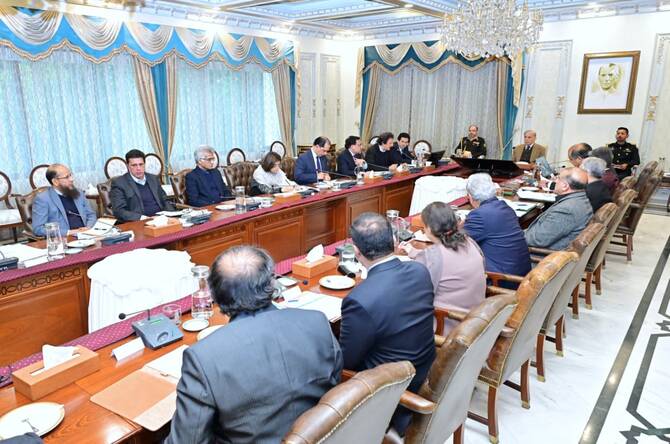
Pakistan Prime Minister Shehbaz Sharif chairs a meeting on Gemstones and Minerals at the Prime Minister House in Islamabad on January 25, 2026. (PMO)
Short Url
Updated 26 January 2026
Follow

PM calls for tapping gemstone reserves as Pakistan pushes for economic recovery

  • Pakistan this month approved first national policy framework for precious stones, aiming to lift annual exports to $1 billion
  • PM Shehbaz Sharif directs implementation of new policy framework, completion of Islamabad Gemstone Center by Aug. 2027

ISLAMABAD: Prime Minister Shehbaz Sharif on Monday called for tapping Pakistan’s vast gemstone reserves, Sharif’s office said, as Islamabad seeks to boost their exports to support economic recovery.

The development comes two weeks after Pakistan approved its first national policy framework for gemstones and precious stones, aiming to reform the sector, align it with international standards and lift annual exports to $1 billion within five years.

Pakistan has intensified efforts to monetize its untapped mineral resources, amid fiscal pressures and an International Monetary Fund-backed reform program. Over the past two years, Islamabad has hosted international minerals conferences and signed agreements with countries including the United States, Saudi Arabia and China to attract investment and move up the value chain in mining and minerals processing.

On Monday, PM Sharif presided over a meeting on the promotion of precious stones and minerals in Islamabad, at which he directed seeking services of relevant experts of international repute for the construction of proposed gemstone centers in Islamabad, Gilgit-Baltistan and Azad Kashmir, according to his office.

“There is a need to utilize the potential of gemstone reserves in Pakistan so that valuable foreign exchange can be earned from the exports of these precious stones,” Sharif was quoted as saying by his office.

Despite officials estimating Pakistan’s gemstone reserves at around $450 billion, formal exports remain negligible, at about $5.8 million annually, due to weak certification systems, limited domestic processing capacity, widespread smuggling and fragmented regulation across federal and provincial authorities.

Pakistan’s new policy framework includes geological mapping to accurately assess reserves, the establishment of internationally accredited laboratories and certification regimes and the creation of a dedicated authority to regulate and promote the sector. The government also plans to set up a National Warranty Office and centers of excellence to support training, research and value-added processing.

The prime minister directed the implementation of the policy framework and the completion of Islamabad Gemstone Center by Aug. 2027.

A location has been identified on the Constitution Highway for the establishment of a gemstone center in Islamabad, according to Sharif’s office. The center will provide international standard value addition services, certification, incubation center and trade center facilities.

“Exports should be increased through value addition in the gemstone industry,” he said, urging officials to work together with the governments of all provinces, Gilgit-Baltistan and Azad Kashmir to promote the industry.

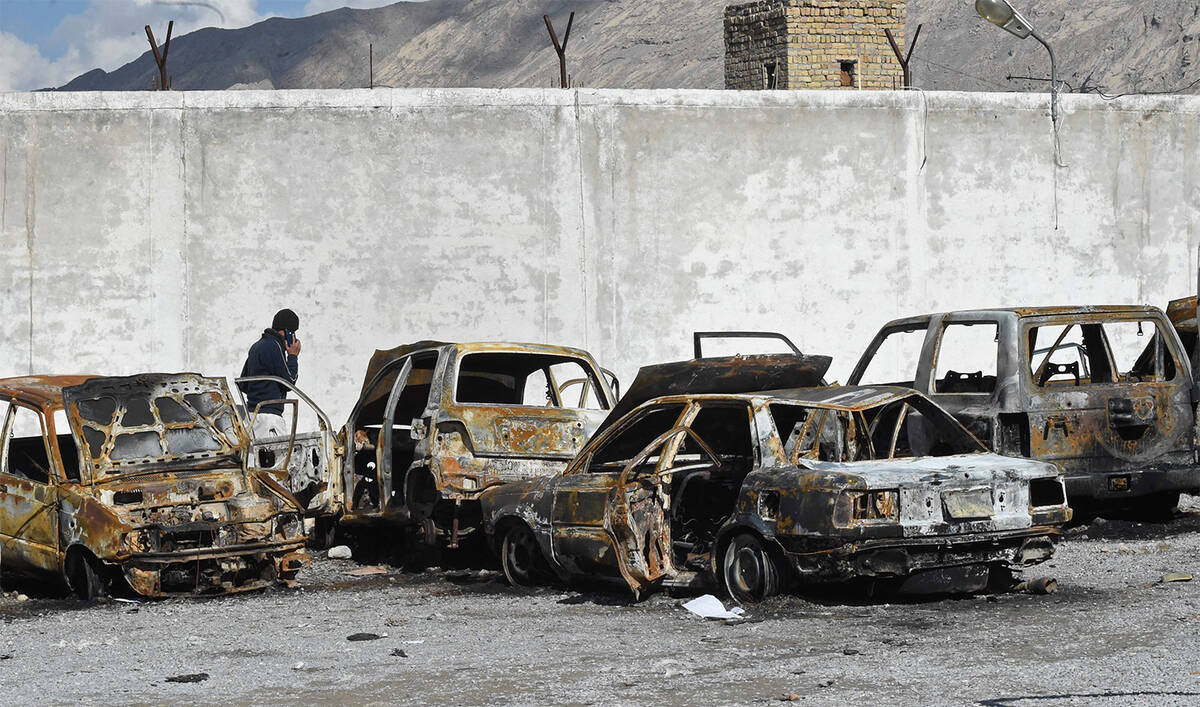
Pakistan says 177 militants killed in Balochistan counteroffensive after wave of attacks

Updated 7 sec ago
Follow

Pakistan says 177 militants killed in Balochistan counteroffensive after wave of attacks

  • Authorities say coordinated attacks last weekend killed 31 civilians, 17 security personnel
  • Separatist BLA group claimed responsibility as operations expanded across multiple districts

ISLAMABAD: Pakistan’s security forces have killed 22 more militants in overnight counteroffensive operations in the southwestern province of Balochistan, state media reported on Monday, taking the total number of insurgents killed over the past three days to 177 following a wave of coordinated separatist attacks.

Militants launched simultaneous assaults across multiple districts in Balochistan on Friday and Saturday, targeting security installations and government facilities. The attacks marked one of the deadliest escalations in recent years in the resource-rich but restive province, with at least 31 civilians and 17 members of law enforcement agencies killed.

The banned separatist group, the Baloch Liberation Army, claimed responsibility for the attacks, saying it had launched a coordinated operation dubbed Herof, or “black storm,” targeting security forces across the province. The assault included pre-dawn strikes on high-security installations in the cities of Quetta, Gwadar, Dalbandin, Pasni, Nushki, Kalat, Turbat and Mastung.

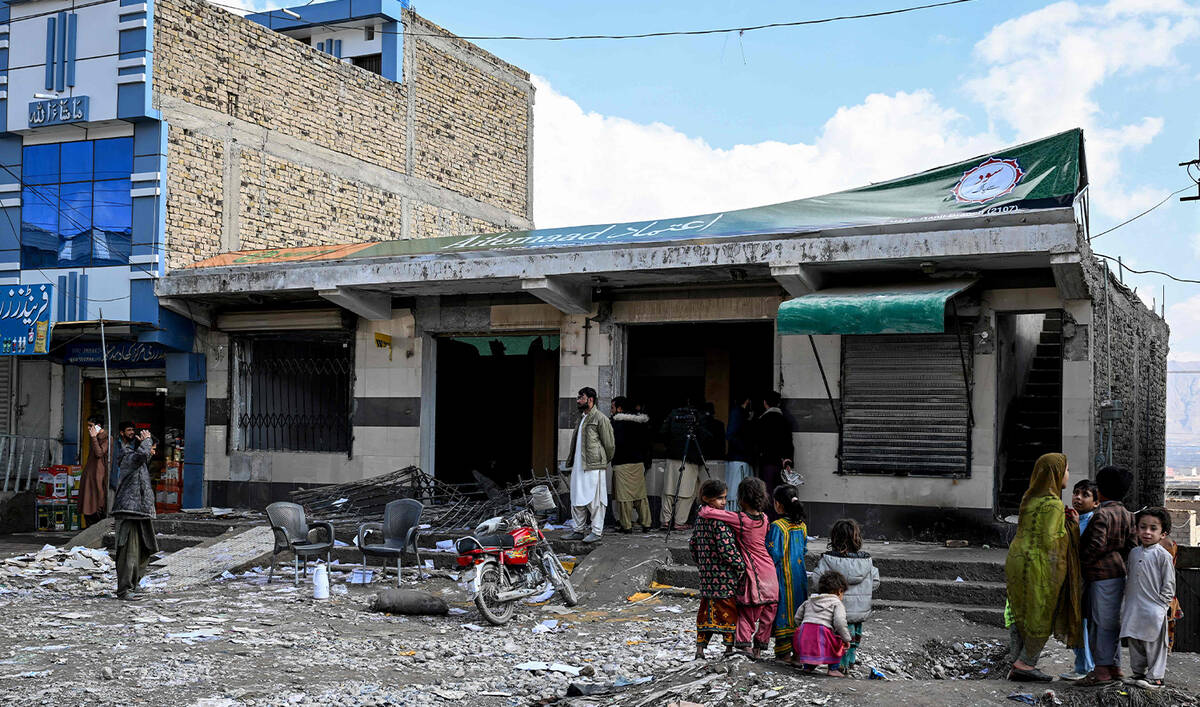
Local residents look at a damaged bank on the outskirts of Quetta on February 1, 2026 a day after an attack by Baloch separatists. (AFP)

On Monday, state broadcaster Radio Pakistan said security forces carried out the latest “sanitization operations” against what it described as “Fitna-al-Hindustan” in Balochistan late Sunday night. Pakistan’s military and civilian authorities use the term to describe separatist militants in the province whom Islamabad alleges are supported by India, a charge New Delhi denies.

“According to security sources, 22 more terrorists were killed last night during pursuit operations,” Radio Pakistan said. “At least 177 terrorists have been eliminated in the operations conducted over the last three days.”

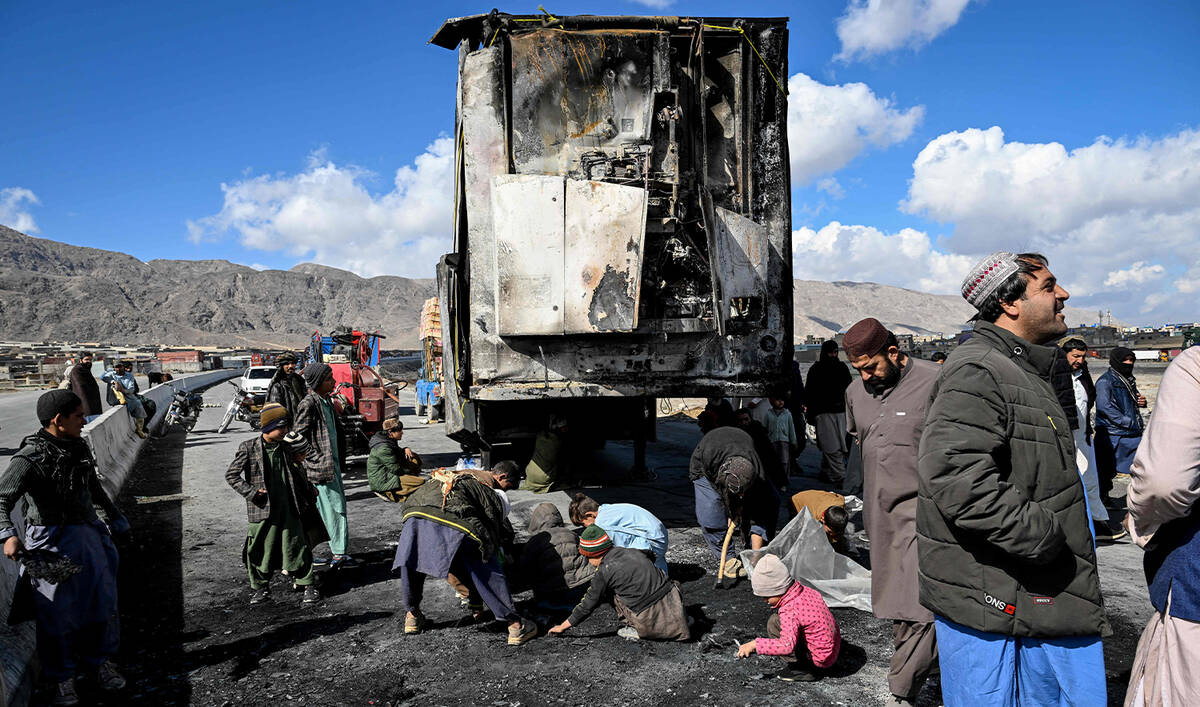
People gather as others collect recyclable items beside a burnt vehicle along a road on the outskirts of Quetta on February 1, 2026 a day after an attack by Baloch separatists. (AFP)

Balochistan, Pakistan’s largest province by area, has long been gripped by a separatist insurgency that has intensified in recent years. Militants frequently target security forces, government officials, infrastructure projects, foreigners and non-local workers.

Balochistan is strategically significant for Pakistan due to its vast reserves of minerals and hydrocarbons and its role as a transit hub for the multibillion-dollar China-Pakistan Economic Corridor (CPEC), a flagship component of China’s Belt and Road Initiative. The province is home to the deep-sea Gwadar Port on the Arabian Sea, which Islamabad views as critical to regional trade and energy routes linking China, Central Asia and the Middle East. 

Local residents look at a damaged bank on the outskirts of Quetta on February 1, 2026, a day after an attack by Baloch separatists. (AFP)

Separatist groups accuse the central government of exploiting the province’s natural resources while neglecting local communities. Islamabad rejects the allegations, saying it is investing in development and security to stabilize the province.