

Pakistan says 177 militants killed in Balochistan counteroffensive after wave of attacks

A police officer and a person stand amid damages at a police station, following militant attacks, in Quetta, Pakistan, on February 1, 2026. (REUTERS)
Short Url
Updated 02 February 2026
Follow

Pakistan says 177 militants killed in Balochistan counteroffensive after wave of attacks

  • Authorities say coordinated attacks last weekend killed 31 civilians, 17 security personnel
  • Separatist BLA group claimed responsibility as operations expanded across multiple districts

ISLAMABAD: Pakistan’s security forces have killed 22 more militants in overnight counteroffensive operations in the southwestern province of Balochistan, state media reported on Monday, taking the total number of insurgents killed over the past three days to 177 following a wave of coordinated separatist attacks.

Militants launched simultaneous assaults across multiple districts in Balochistan on Friday and Saturday, targeting security installations and government facilities. The attacks marked one of the deadliest escalations in recent years in the resource-rich but restive province, with at least 31 civilians and 17 members of law enforcement agencies killed.

The banned separatist group, the Baloch Liberation Army, claimed responsibility for the attacks, saying it had launched a coordinated operation dubbed Herof, or “black storm,” targeting security forces across the province. The assault included pre-dawn strikes on high-security installations in the cities of Quetta, Gwadar, Dalbandin, Pasni, Nushki, Kalat, Turbat and Mastung.
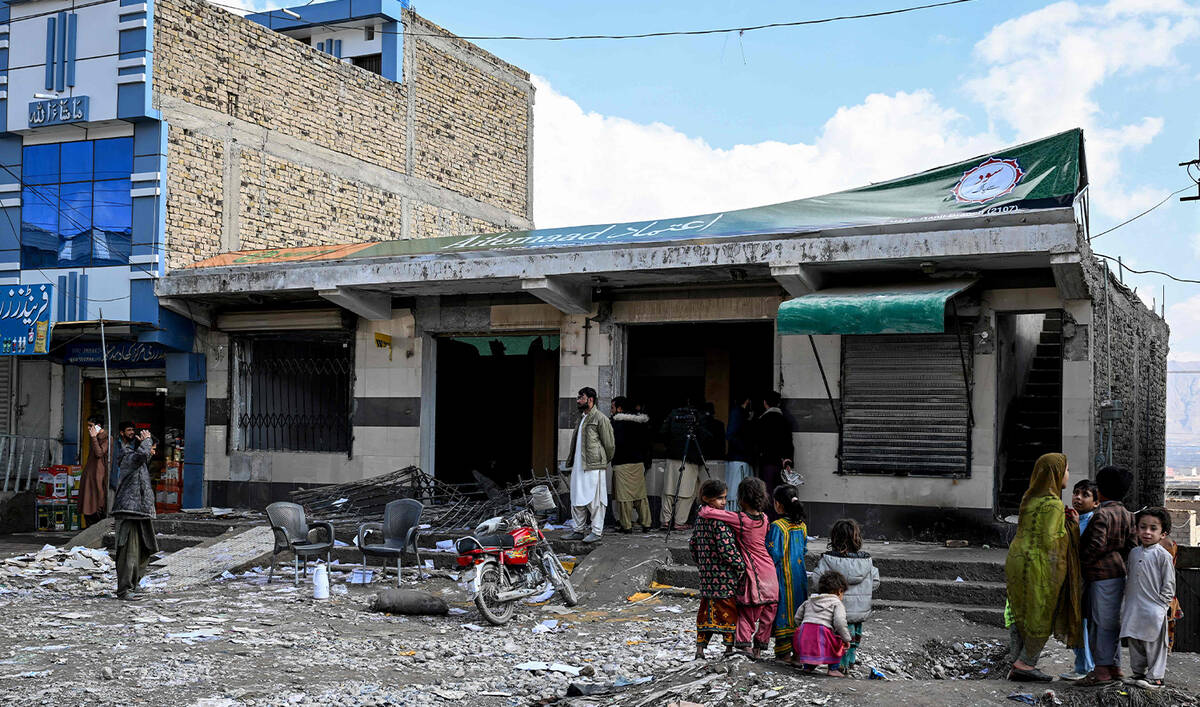


Local residents look at a damaged bank on the outskirts of Quetta on February 1, 2026 a day after an attack by Baloch separatists. (AFP)

On Monday, state broadcaster Radio Pakistan said security forces carried out the latest “sanitization operations” against what it described as “Fitna-al-Hindustan” in Balochistan late Sunday night. Pakistan’s military and civilian authorities use the term to describe separatist militants in the province whom Islamabad alleges are supported by India, a charge New Delhi denies.

“According to security sources, 22 more terrorists were killed last night during pursuit operations,” Radio Pakistan said. “At least 177 terrorists have been eliminated in the operations conducted over the last three days.”
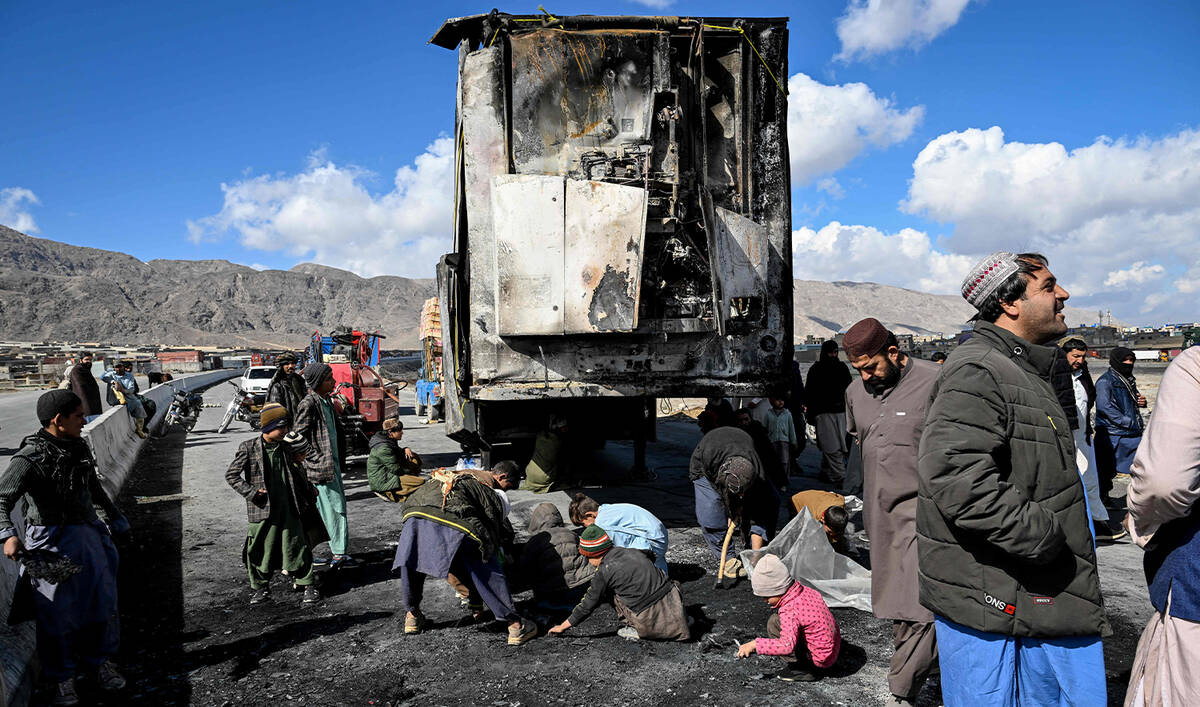


People gather as others collect recyclable items beside a burnt vehicle along a road on the outskirts of Quetta on February 1, 2026 a day after an attack by Baloch separatists. (AFP)

Balochistan, Pakistan’s largest province by area, has long been gripped by a separatist insurgency that has intensified in recent years. Militants frequently target security forces, government officials, infrastructure projects, foreigners and non-local workers.

Balochistan is strategically significant for Pakistan due to its vast reserves of minerals and hydrocarbons and its role as a transit hub for the multibillion-dollar China-Pakistan Economic Corridor (CPEC), a flagship component of China’s Belt and Road Initiative. The province is home to the deep-sea Gwadar Port on the Arabian Sea, which Islamabad views as critical to regional trade and energy routes linking China, Central Asia and the Middle East. 
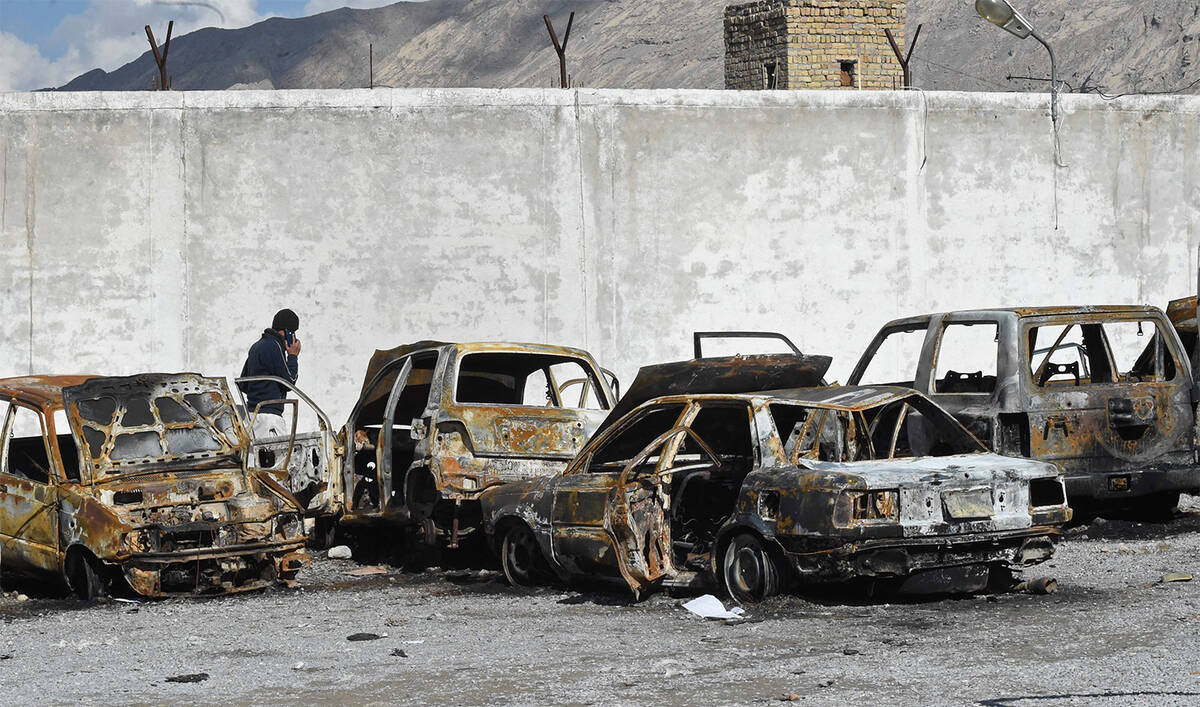


Local residents look at a damaged bank on the outskirts of Quetta on February 1, 2026, a day after an attack by Baloch separatists. (AFP)

Separatist groups accuse the central government of exploiting the province’s natural resources while neglecting local communities. Islamabad rejects the allegations, saying it is investing in development and security to stabilize the province.


Pakistan PM to visit Qatar today to explore trade, investment, energy cooperation 

Updated 4 sec ago
Follow

Pakistan PM to visit Qatar today to explore trade, investment, energy cooperation 

  • Shehbaz Sharif to lead high-level delegation comprising deputy premier, senior ministers and officials on two-day visit 
  • Sharif to meet Qatari amir, discuss economic collaboration, regional and global developments, says Pakistan’s foreign office

ISLAMABAD: Prime Minister Shehbaz Sharif will visit Qatar today, Monday, for a two-day visit to the country during which both sides will explore new avenues of cooperation in trade, investment, energy and manpower export, the foreign ministry said in a statement. 

Sharif will visit Qatar from Feb. 23-24 at the invitation of Qatari Amir Sheikh Tamim bin Hamad Al Thani, the foreign office said. The Pakistani premier will be accompanied by Deputy Prime Minister and Foreign Minister Ishaq Dar as well as other ministers and senior officials. 

Sharif is expected to meet the Qatari amir during his visit and review bilateral ties, political engagement, economic collaboration, energy partnership and people-to-people exchanges, it added. 

“The two sides will also explore new avenues of cooperation, particularly in the areas of trade, investment, energy, infrastructure development and manpower export,” the statement said. 

The foreign office said Sharif’s visit will provide both leaderships an opportunity to exchange views on regional and global developments, reaffirming their resolve to work closely for peace, stability and prosperity in the region.

Pakistan enjoys robust trade and investment relations with Qatar. In 2022, the Qatari amir’s office said that the Qatar Investment Authority aims to invest $3 billion in Pakistan to support the South Asian nation’s cash-strapped economy. This investment would focus on Pakistan’s transport, civil aviation, education, health, culture, media, communications, information technology and labor sectors, the amir’s office said.

Qatar is also host to almost 300,000 Pakistanis, which is a large part of the country’s total population, according to Pakistan’s foreign office. Qatar employs a large number of Pakistanis in the health, education, engineering, finance and public service sectors. 

A large number of semi-skilled and unskilled Pakistani work force also dominate the construction and transport sectors of Qatar. Pakistan’s efforts to expand employment opportunities for its skilled labor in Qatar have led to both sides signing several memoranda of understanding and letters of intent over the years. 

The two nations also promote bilateral cooperation through several forums such as the Bilateral Political Consultations (BPC), Joint Ministerial Commission, Joint Business Council and Working Group on Trade & Investment.

Qatar was also instrumental in easing tensions by hosting talks between Pakistan and Afghanistan in October last year, after both sides were involved in fierce border clashes that killed several and wounded dozens.