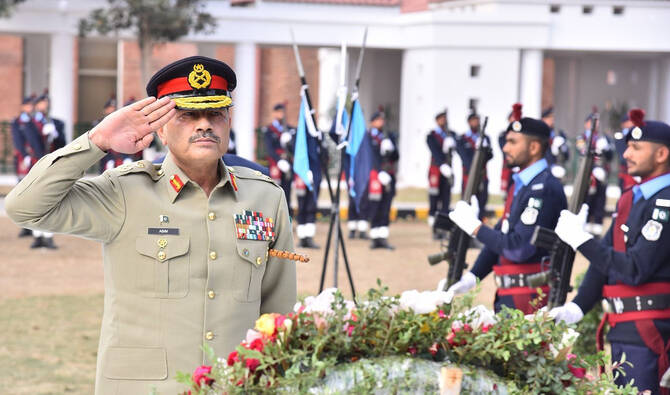

ISLAMABAD: Pakistan’s army chief has said strengthening policing at the community level was critical to countering internal security threats, as the country faces a mix of militant violence and routine law-and-order challenges, according to a statement circulated by the military on Tuesday.
Field Marshal Asim Munir, who also serves as chief of defense staff, made the remarks during a visit to the National Police Academy in Islamabad, where he met senior police officials from across the country.
Pakistan’s internal security landscape has been under strain for years, with a resurgence of militant attacks, particularly in its two western provinces.
The country’s police continue to shoulder primary responsibility for public order, counterterrorism and crime prevention, though they also carry out joint intelligence-based operations with the military frequently.
“A strong, professional and people-centric police force is indispensable for ensuring internal security and the rule of law,” the army chief was quoted as saying by the Inter-Services Public Relations, the military’s media wing, while addressing senior police officials.
He also stressed the importance of inter-agency cooperation, modern policing practices and fostering public trust in law-enforcement institutions.
The army chief paid tribute to police personnel killed in the line of duty, laying a wreath at the Police Martyrs’ Monument and acknowledging the “supreme sacrifices” of officers confronting militancy, crime and internal security threats.
During the visit, he was briefed on training and capacity-building initiatives, including the School for High-Impact Elite Law Enforcement Development, and interacted with cadet assistant superintendents of police, telling them the police served as the first line of defense in protecting citizens’ lives, property and dignity.
The army chief said enforcing law and order was a “sacred trust” and added that the armed forces would continue to fully support police personnel in meeting Pakistan’s evolving security challenges.
Senior police leaders present at the meeting reaffirmed their commitment to institutional reforms, professional development and modernization aimed at strengthening policing standards, the ISPR said.