The West Bank football field slated for demolition by Israel

Israeli military bulldozers drive along a road near the Nur Shams Palestinian refugee camp (unseen), which was evacuated in early 2025 during an ongoing Israeli military operation, in the Israeli-occupied West Bank on January 12, 2026. (Photo by Jaafar ASHTIYEH / AFP)
Short Url
Updated 17 January 2026
Follow

The West Bank football field slated for demolition by Israel

  • The move is likely to eliminate one of the few ​spaces where Palestinian children are able to run and play

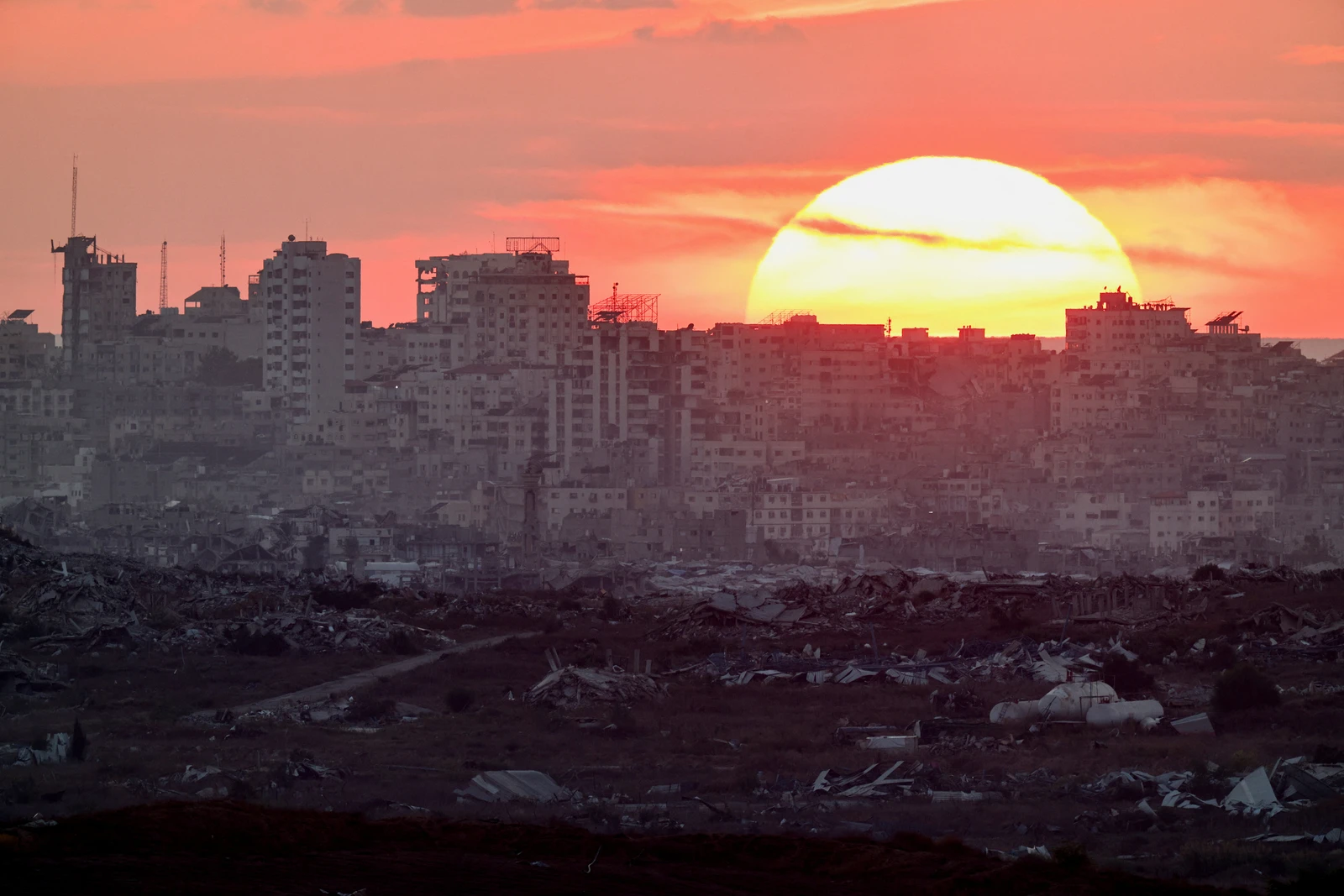
BETHLEHEM: Israeli authorities have ordered the demolition of a football field in a crowded refugee camp in the occupied West Bank, eliminating one of the few spaces where Palestinian children are able to run and play.

“If the field gets demolished, this will destroy our dreams and our future. We cannot play any other place but this field, the camp does not have spaces,” said Rital Sarhan, 13, who plays on a girls’ football team in the Aida refugee camp near Bethlehem.

The Israeli military ‌issued a demolition ‌order for the football field on ‌December ⁠31, saying ‌it was built illegally in an area that abuts the concrete barrier wall that Israel built in the West Bank.

“Along the security fence, a seizure order and a construction prohibition order are in effect; therefore, the construction in the area was carried out unlawfully,” the Israeli military said in a statement.

Mohammad Abu ⁠Srour, an administrator at Aida Youth Center, which manages the field, said the ‌military gave them seven days to demolish ‍the field.

The Israeli military ‍often orders Palestinians to carry out demolitions themselves. If they ‍do not act, the military steps in to destroy the structure in question and then sends the Palestinians a bill for the costs.

According to Abu Srour, Israel’s military told residents when delivering the demolition order that the football field represented a threat to the separation wall and to Israelis.

“I ⁠do not know how this is possible,” he said.

Israeli demolitions have drawn widespread international criticism and coincide with heightened fears among Palestinians of an organized effort by Israel to formally annex the West Bank, the area seized by Israel in the 1967 Middle East war. Israel accelerated demolitions in Palestinian refugee camps in early 2025, leading to the displacement of 32,000 residents of camps in the central and northern West Bank. Human Rights Watch has called the demolitions a war crime. ‌Israel has said they are intended to disrupt militant activity.

Sudan paramilitary advances near Ethiopia border

Updated 3 sec ago
Follow

Sudan paramilitary advances near Ethiopia border

KHARTOUM: Sudanese paramilitary forces have advanced on army positions near the southeastern border with Ethiopia, according to the group and an eyewitness who spoke to AFP Wednesday.
Control over Sudan’s southeastern Blue Nile State, bordering both Ethiopia and South Sudan, is split between the army and a faction of the Sudan People’s Liberation Movement-North, allies of the paramilitary Rapid Support Forces.
In a statement released Tuesday, the SPLM-N, led by Abdelaziz Al-Hilu, said they had “liberated the strategic city of Deim Mansour and areas of Bashir Nuqu and Khor Al-Budi.”
Since April 2023, the Sudanese army has been at war with the RSF. In February of last year, the RSF announced a surprise alliance with the SPLM-N, securing experienced fighters, land and border access.
Deim Mansour lies between the SPLM-N stronghold Yabus, birthplace of their deputy commander Joseph Tuka, and the army-held town of Kurmuk, which hosts a large army contingent.
Babiker Khaled, who fled to Kurmuk, told AFP that SPLM-N fighters began amassing in the forests around Deim Mansour on Sunday.
“The shelling began on Monday, they entered the city on Tuesday,” he said, adding that “some people fled into Ethiopia, others arrived in Kurmuk.”
From its foothold in the southern Blue Nile, a thin strip of land jutting south between Ethiopia and South Sudan, the SPLM-N maintains reported supply lines from both countries, building on decades-old links.
Close to three years of war in Sudan have left tens of thousands dead and around 11 million displaced, creating the world’s largest hunger and displacement crises.
It has also torn the country apart, with the army holding the center, north and east of Sudan while the RSF and its allies dominate the west and parts of the south.
Sudan’s Kordofan region, where the SPLM-N has its other foothold in the Nuba Mountains, is currently the war’s fiercest battleground.
On Tuesday, the army broke a paramilitary siege on South Kordofan state capital Kadugli, days after breaking another on the nearby city of Dilling.